Which Type of Dental Bridge Is Best?
Losing a tooth affects more than your smile — it changes how you chew, speak, and feel about yourself. If you’re exploring your options, understanding the different types of dental bridges is the first step toward making a confident, informed decision.
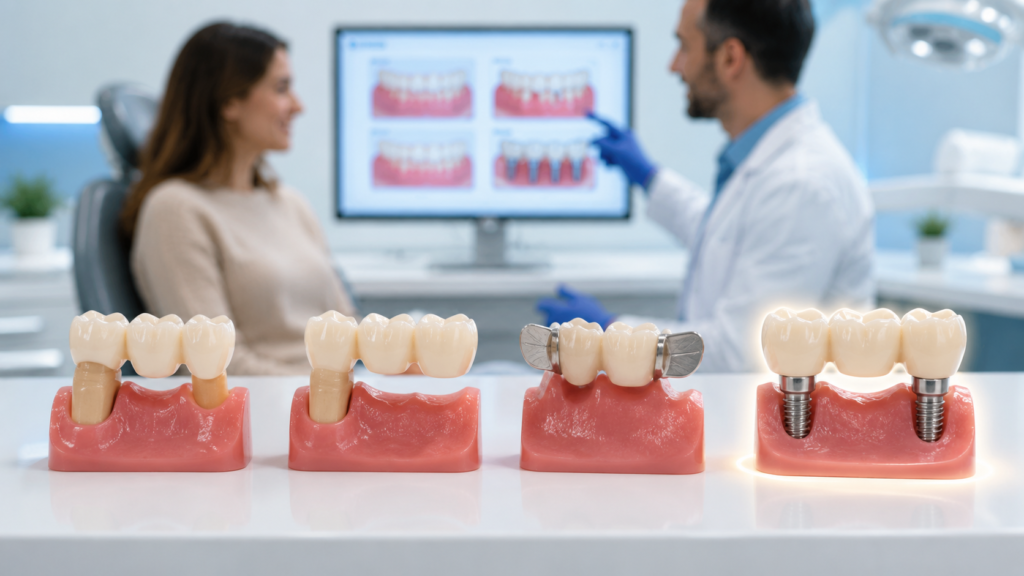
At Arasu Dental Care, we believe the right choice begins with knowledge, not pressure. There are four main types of dental bridges, and each suits a specific situation depending on your missing teeth, the health of nearby teeth, and your long-term goals.
In this guide, we’ll walk you through each option clearly — how it works, who it’s best for, and what to consider — so you can have a meaningful conversation with your dentist about your next step.
What Is a Dental Bridge?
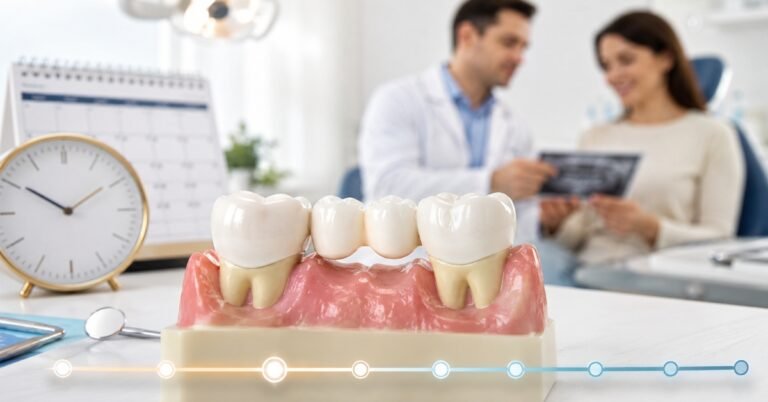
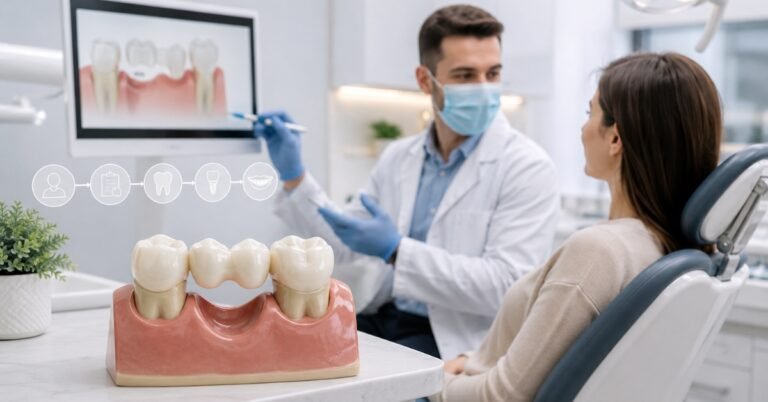
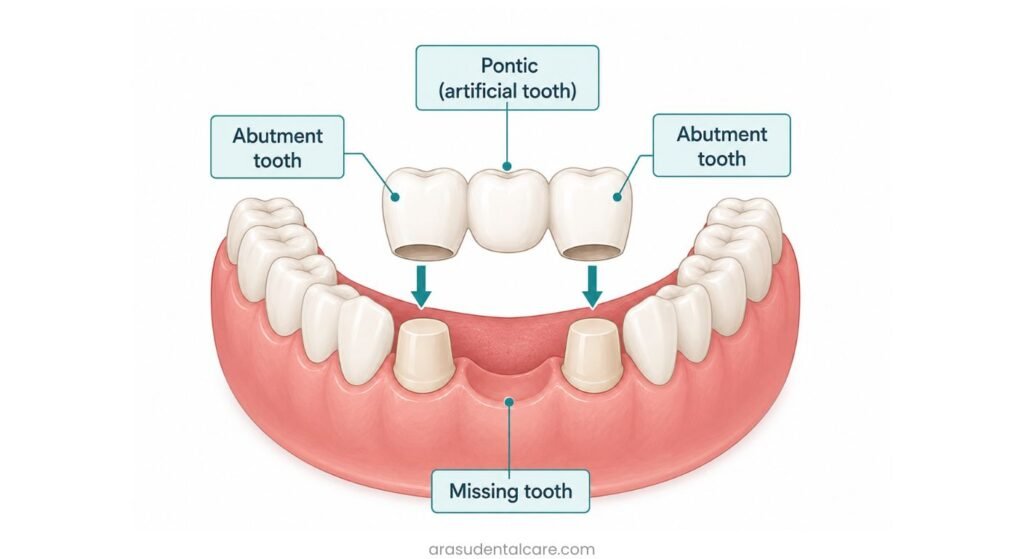
A dental bridge is a fixed restoration that “bridges the gap” left by one or more missing teeth. Unlike removable dentures, a bridge stays in place and functions much like your natural teeth.
Every bridge has two key parts:
- Pontics — the artificial teeth that fill the gap.
- Abutments — the supports that hold the bridge, which may be your natural teeth or dental implants.
According to the American College of Prosthodontists, bridges are a well-established, predictable solution for replacing missing teeth and restoring both function and appearance.
Why Replacing a Missing Tooth Matters
Many patients delay treatment, assuming a single missing tooth isn’t urgent. In our clinical experience, this often leads to bigger problems later.
When a tooth is left unreplaced, the following can happen over time:
- Neighbouring teeth drift into the empty space.
- Your bite becomes uneven, straining your jaw.
- The opposing tooth may over-erupt.
- Cleaning becomes harder, raising the risk of decay and gum disease.
Replacing a missing tooth early helps protect your remaining teeth and supports your long-term oral health.
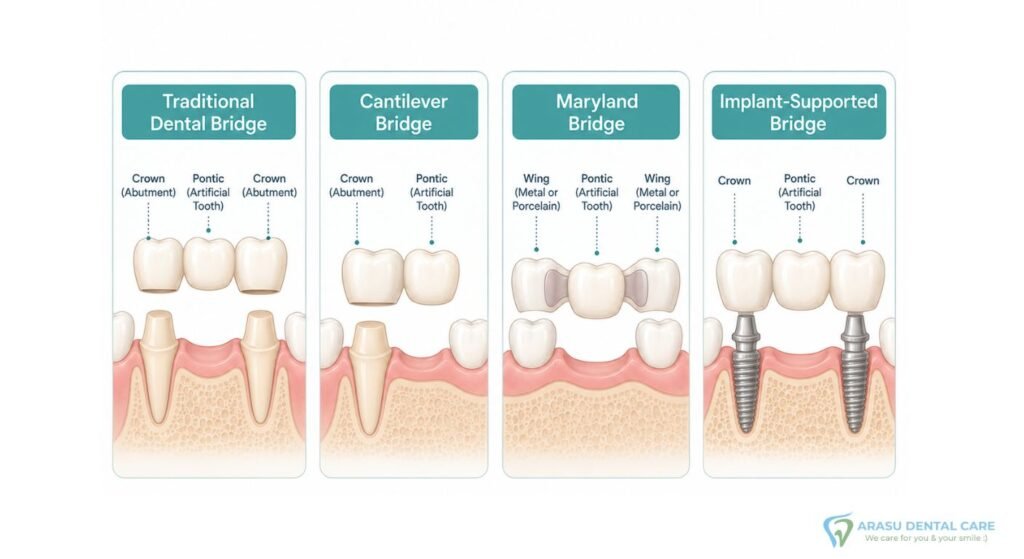
The 4 Main Types of Dental Bridges
There is no single “best” bridge for everyone. The right option depends on your specific situation. Below, we explain each type so you can understand where it fits.
1. Traditional Dental Bridge
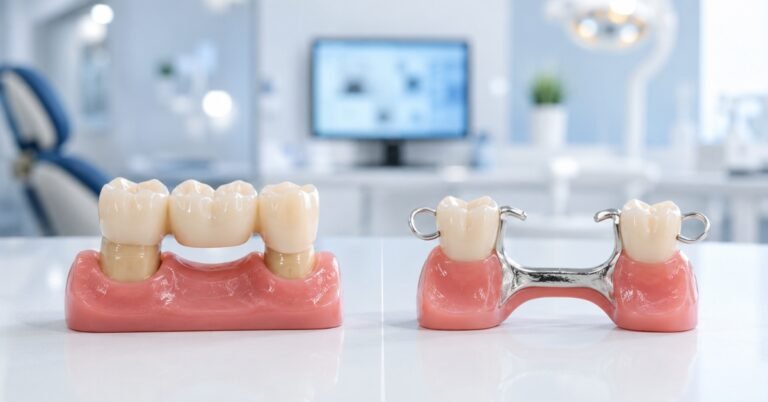
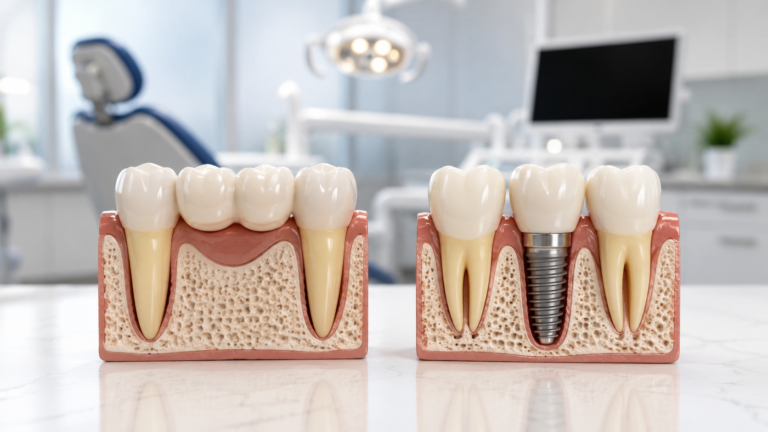
This is the most common type of dental bridge. It uses dental crowns placed on the natural teeth on both sides of the gap, with one or more pontics in between.
How it works: Your dentist reshapes the two adjacent teeth, places crowns over them, and the artificial teeth bridge the space.
Best suited for: Patients with healthy, strong natural teeth on both sides of the gap.
Advantages:
- Strong and durable — suitable even for molars.
- Natural-looking, predictable results.
- A well-proven, time-tested solution.
Things to consider:
- Requires reshaping healthy adjacent teeth — and enamel removal is irreversible.
2. Cantilever Dental Bridge
A cantilever bridge is similar to a traditional bridge, but it’s anchored to a natural tooth on only one side of the gap.
How it works: A crown is placed on a single abutment tooth, and the pontic extends out to fill the space.
Best suited for: Situations where there’s a healthy tooth on only one side of the gap, usually in low-pressure areas.
Advantages:
- Requires preparation of just one tooth.
- Useful when a traditional bridge isn’t anatomically possible.
Things to consider:
- Places more stress on the single supporting tooth.
- Generally not recommended for back teeth, where chewing forces are strongest.
3. Maryland (Resin-Bonded) Bridge
The Maryland bridge is a more conservative option. Instead of crowns, it uses metal or porcelain “wings” bonded to the backs of adjacent teeth.
How it works: The framework is etched and bonded behind your natural teeth, holding the pontic in place without major reshaping.
Best suited for: Replacing front teeth, where biting forces are lighter and aesthetics matter most.
Advantages:
- Minimal alteration of healthy teeth.
- A gentle, tooth-preserving approach.
- Excellent appearance for visible front teeth.
Things to consider:
- Less durable under heavy chewing.
- Can loosen over time and isn’t ideal for molars.
4. Implant-Supported Bridge
This bridge is supported by dental implants placed in the jawbone, rather than relying on natural teeth.
How it works: Implants are surgically placed and allowed to fuse with the jawbone — a process called osseointegration that typically takes three to six months. The bridge is then secured onto the implants.
Best suited for: Patients missing several teeth in a row who have adequate bone support.
Advantages:
- Does not require altering neighbouring teeth.
- Helps preserve jawbone and prevent bone loss.
- Exceptionally stable and long-lasting — often 20+ years with proper care.
Things to consider:
- Requires a minor surgical procedure.
- Longer treatment timeline and a higher initial investment.
The Cleveland Clinic notes that implants often last longer than traditional bridges and help reduce future bone loss — an important factor in long-term planning.
Comparison Table: Types of Dental Bridges at a Glance
|
Type of Bridge |
Support |
Best For |
Key Benefit |
Typical Lifespan |
|
Traditional |
Two natural teeth |
Single/few missing teeth with healthy neighbours |
Strong & reliable |
10–15+ years |
|
Cantilever |
One natural tooth |
Limited support, low-pressure areas |
Conservative tooth use |
10–15 years |
|
Maryland |
Bonded wings |
Front teeth |
Minimal tooth reduction |
5–10 years |
|
Implant-Supported |
Dental implants |
Multiple missing teeth |
Maximum stability, bone preservation |
20+ years |
How to Choose the Right Dental Bridge: A Step-by-Step Approach
Choosing among the types of dental bridges is a clinical decision made together with your dentist. Here’s how we typically guide patients at Arasu Dental Care:
Step 1 — Assess the number of missing teeth.A single gap with healthy neighbours may suit a traditional or Maryland bridge. Multiple missing teeth often point toward an implant-supported solution.
Step 2 — Evaluate the adjacent teeth.If neighbouring teeth are already damaged or restored, crowning them for a traditional bridge makes sense. If they’re perfectly healthy, a Maryland or implant option preserves them.
Step 3 — Consider the location.Front teeth tolerate Maryland bridges well. Back teeth, which absorb heavy chewing forces, usually need traditional or implant-supported bridges.
Step 4 — Review bone and gum health.Implant-supported bridges require sufficient jawbone. Healthy gums support the success of any bridge.
Step 5 — Discuss lifestyle, timeline, and budget.We’ll explain the available options and help you choose the one that best suits your needs — never an unnecessary upsell.
How Long Do Dental Bridges Last?
Lifespan depends on the type of bridge and how well it’s cared for:
- Traditional bridges: 10–15 years, often longer.
- Maryland bridges: 5–10 years; may need rebonding.
- Cantilever bridges: 10–15 years.
- Implant-supported bridges: 20+ years; the implant itself can last a lifetime.
In our experience, the patients whose bridges last longest are those who maintain consistent home care and attend regular check-ups.
Caring for Your Dental Bridge
Looking after a bridge is similar to caring for natural teeth, with a few extra habits:
- Brush twice daily with fluoride toothpaste.
- Clean under the pontic using floss threaders or interdental brushes.
- Avoid extremely hard or sticky foods.
- Don’t chew ice, pens, or fingernails.
- Visit your dentist regularly for cleanings and reviews.
Frequently Asked Questions
1. Which type of dental bridge is the best?There’s no universal “best” bridge. The right one depends on how many teeth are missing, the health of adjacent teeth, bone support, and the location of the gap. A clinical evaluation is the most reliable way to decide.
2. Is getting a dental bridge a comfortable procedure?Yes. The procedure is performed under appropriate local anaesthesia to keep you comfortable throughout. Most patients return to normal activities the same day.
3. How many teeth can a dental bridge replace?Most bridges replace one to three teeth in a row, and sometimes up to four. Longer spans usually require more support, often from dental implants.
4. Are dental bridges better than implants?Both are excellent options. Implants generally last longer and help preserve bone, while bridges may suit those who prefer a non-surgical solution. The best choice depends on your individual needs.
5. Do dental bridges feel like natural teeth?After a short adjustment period, most patients find their bridge feels natural for everyday eating and speaking.
6. How long after losing a tooth should I get a bridge?It’s best to replace a missing tooth promptly to prevent neighbouring teeth from shifting. If an extraction is needed first, your gums may need a few months to heal.
7. Can a dental bridge be replaced if it wears out?Yes. Bridges are long-lasting but not permanent. When one shows signs of wear, your dentist can assess it and recommend a replacement.
8. Is a Maryland bridge strong enough for back teeth?Generally no. Maryland bridges are best for front teeth because they aren’t designed to withstand the heavy chewing forces of molars.
Make a Confident Decision About Your Smile
Replacing a missing tooth doesn’t have to feel overwhelming. With four reliable types of dental bridges available, there is a solution suited to your mouth, your lifestyle, and your long-term oral health.
At Arasu Dental Care, Coimbatore, our multispecialty team — including experienced prosthodontists and implantologists — will examine your condition, explain every option in plain language, and help you choose the treatment that’s genuinely right for you. With transparent pricing and a comfort-first approach, you’ll always feel like you’re in safe hands.
📞 Book your consultation today at our R.S. Puram or Saibaba Colony branch — open all seven days, 10:00 AM to 8:30 PM. Call +91 88380 22157 or WhatsApp +91 96007 56297 to take the first confident step toward a complete, healthy smile.