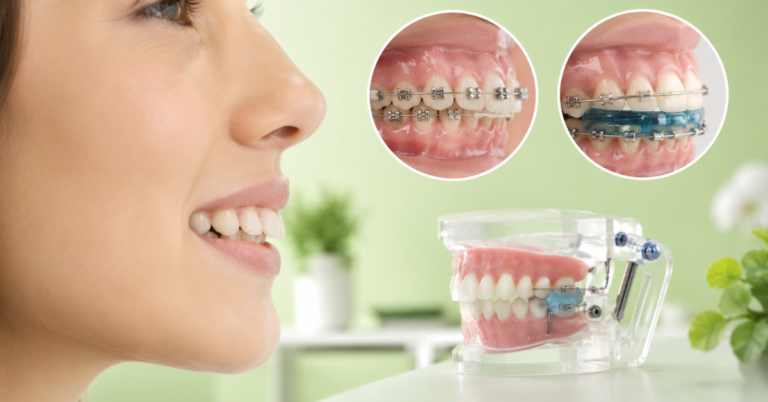
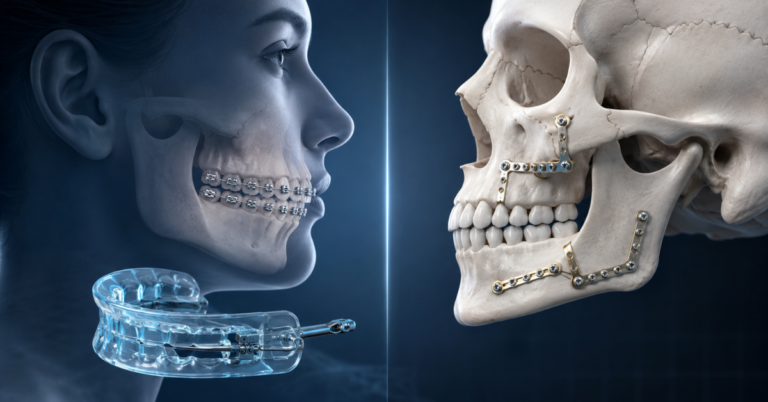
Signs You Need Braces
Have you ever caught your reflection mid-smile and wondered, “Do my teeth look right?” Or noticed your child struggling to bite into an apple? These small moments often hold bigger clues. Recognising the early signs you need braces can protect your oral health long before problems become painful or expensive.
Braces aren’t only about a straighter smile. They correct your bite, ease jaw strain, and make daily brushing and flossing far easier. In this guide, our orthodontic team at Arasu Dental Care walks you through the most common signals — for both children and adults — and helps you understand what to do next.
Why Recognising These Signs Early Matters
Misaligned teeth and bite problems rarely improve on their own. In fact, they often worsen with age as your jaw continues to shift and crowding increases.
Research published in the Journal of Clinical and Diagnostic Research found that malocclusion is highly common in children, and early identification supports better long-term outcomes. The earlier a concern is spotted, the simpler and shorter the treatment usually becomes.
The American Association of Orthodontists recommends a child’s first orthodontic evaluation by age 7. This doesn’t always mean braces straight away — it simply allows a specialist to monitor jaw and tooth development at the right stage.
In our experience treating families across Coimbatore, the patients who consult early often need less complex intervention. That’s the real value of knowing what to look for.
12 Common Signs You May Need Braces
Let’s explore the warning signs orthodontists genuinely look for during an assessment. Some apply to adults, some to growing children, and many to both.
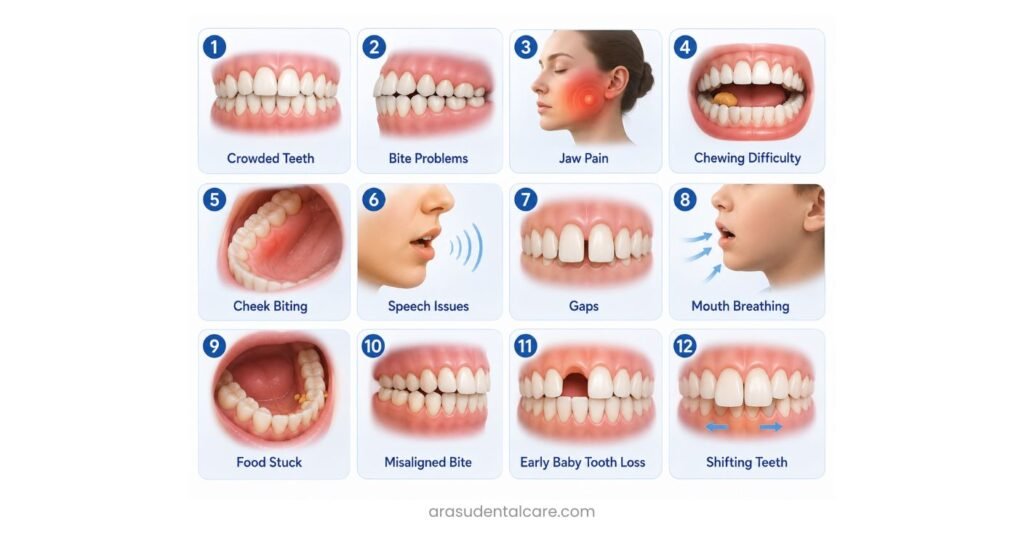
1. Crooked or Crowded Teeth
This is the single most common reason people need braces. When your jaw doesn’t have enough room, teeth twist, overlap, or push out of line.
Beyond appearance, crowded teeth trap food and plaque in hard-to-reach spaces, raising your risk of cavities and gum disease.
A quick self-check: if dental floss is very difficult to slide between certain teeth, crowding may be the cause.
2. Overbite, Underbite, or Crossbite
Your upper and lower teeth are designed to fit together comfortably. When they don’t, you may have a bite issue:
|
Bite Type |
What Happens |
|
Overbite |
Upper front teeth extend too far over the lower teeth |
|
Underbite |
Lower teeth sit in front of the upper teeth |
|
Crossbite |
Some upper teeth sit inside the lower teeth |
|
Open bite |
Front teeth don’t touch when the mouth is closed |
Left uncorrected, these can cause uneven tooth wear, chewing difficulty, and facial asymmetry over time.
3. Jaw Pain or Clicking Sounds
Do you wake with jaw stiffness, hear a click when chewing, or get frequent tension headaches? These can be signs that an unbalanced bite is straining your jaw joint (the TMJ).
This is an area where our founder, Dr. P.S. Sree Cumar, holds specific expertise as a tmj specialist. Correcting alignment can reduce this strain and improve comfort.
4. Difficulty Biting or Chewing
If your top and bottom teeth don’t meet evenly, certain foods become genuinely uncomfortable to chew. Many patients tell us they unconsciously avoid harder foods for years before realising why.
5. Frequent Cheek or Tongue Biting
Regularly biting the inside of your cheek or tongue isn’t just annoying — it often signals that your teeth aren’t coming together correctly. Realigning the bite reduces these accidental injuries.
6. Speech Difficulties or a Lisp
Your teeth and tongue work together to form sounds. When teeth are misaligned, certain sounds may feel awkward to pronounce. Orthodontic treatment can support clearer speech alongside other interventions.
7. Gaps Between Teeth
Spacing can result from missing teeth, naturally smaller teeth, or childhood habits like thumb-sucking. While gaps may seem harmless, they trap food and can allow teeth to drift further apart. Braces or aligners help close them evenly.
8. Mouth Breathing (Especially in Children)
Persistent mouth breathing in a child can influence how the jaw and face develop. It’s associated with a narrow upper jaw, crowding, and even a longer facial shape.
If you notice your child consistently breathing through their mouth, an early orthodontic evaluation is worthwhile.
9. Food Constantly Getting Stuck
Routinely getting food wedged between teeth points to spacing or alignment issues that create pockets for bacteria. Over time, this raises your risk of decay and gum problems.
10. Teeth That Don’t Meet When You Close Your Mouth
When you bite down, your teeth should fit together evenly. If they don’t, the misalignment can cause jaw strain and uneven wear that worsens gradually.
11. Early or Late Loss of Baby Teeth (Children)
If baby teeth fall out too soon or stay too long, adult teeth may erupt out of position. This can be an early indicator that orthodontic guidance is needed to prevent future crowding.
12. Teeth Shifting Over Time (Adults)
Already had braces years ago? Teeth can shift again due to ageing, missing teeth, gum disease, or not wearing a retainer. It’s never too late to address this — adult orthodontics is increasingly common and effective.
How to Check for Signs at Home
While only an orthodontist can give a proper diagnosis, this simple self-check can help you decide whether to book a consultation.
Step 1 — Smile in the mirror. Look for teeth that overlap, twist, or have noticeable gaps.
Step 2 — Bite down naturally. Observe how your upper and lower teeth meet. Do they overlap too much, or not touch at all?
Step 3 — Try flossing. If floss barely fits between teeth, crowding may be present.
Step 4 — Notice how you feel. Pay attention to jaw clicking, chewing discomfort, or frequent cheek biting.
Step 5 — Note any speech changes. Listen for a persistent lisp or difficulty with certain sounds.
If you tick two or more of these, it’s worth having a professional take a closer look.
Signs in Children vs Adults
Some signs matter more depending on age. Here’s a quick comparison to help parents and adults alike.
|
Sign |
More Common In |
Why It Matters |
|
Crowded teeth |
Both |
Hardest to clean; rises with age |
|
Mouth breathing |
Children |
Affects jaw and facial growth |
|
Early/late baby tooth loss |
Children |
Guides adult tooth eruption |
|
Thumb-sucking past age 2–3 |
Children |
Can shift developing teeth |
|
Shifting teeth |
Adults |
Often after old orthodontic work |
|
Jaw pain/TMJ strain |
Both (often adults) |
Linked to bite imbalance |
This is exactly why the recommended first orthodontic check is around age 7 — it lets a specialist catch growth-related concerns early while still keeping treatment simple.
What Happens at an Orthodontic Consultation
Knowing what to expect can ease any nervousness. At Arasu Dental Care, your first visit is unhurried and explanatory.
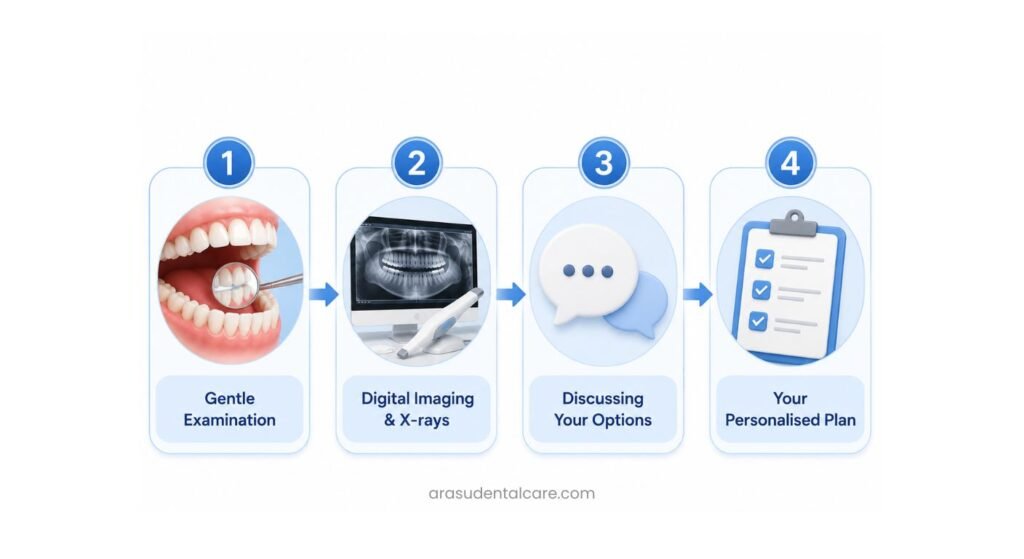
A specialist will gently examine your teeth, bite, and jaw, often supported by digital imaging or X-rays. We’ll talk through what we observe in plain language — no confusing jargon.
If treatment is recommended, we’ll explain all suitable options, the likely timeline, and what’s involved, so you can make a confident, informed choice. There’s no pressure here — only guidance.
Braces, Aligners, or Something Else?
Identifying the signs is step one. The right treatment depends entirely on your individual case. Common options include:
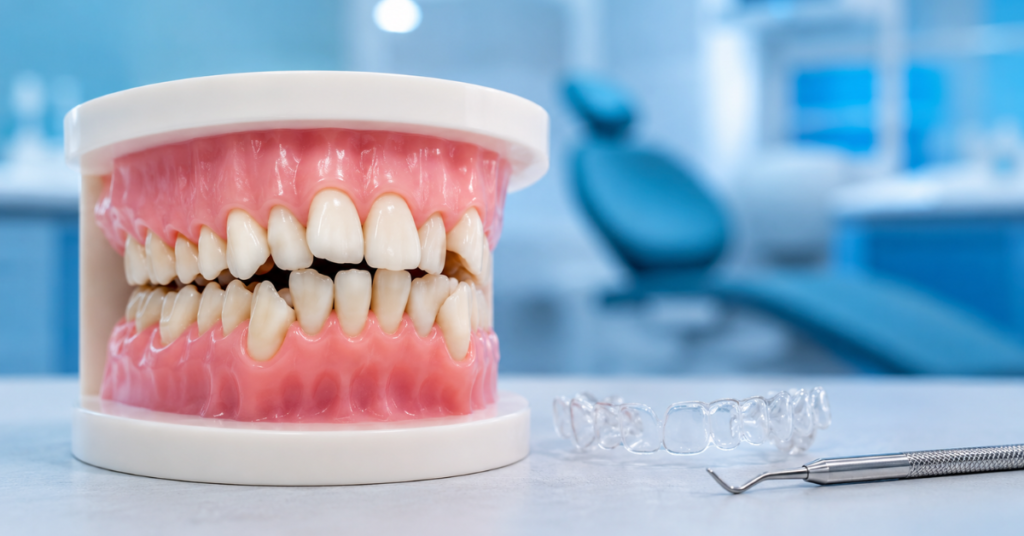
- Traditional metal braces — highly effective for complex alignment and bite issues
- Ceramic braces — tooth-coloured and more discreet
- Clear aligners (Invisalign) — removable and near-invisible, best for mild to moderate cases
There’s no single “best” option for everyone. Your orthodontist will assess your tooth movement needs, lifestyle, and goals before recommending the most predictable approach for you.
Frequently Asked Questions
1. How do I know if I really need braces or just want them cosmetically?There’s a difference between wanting straighter teeth for appearance and needing alignment for oral health. If you have bite problems, difficulty cleaning, jaw pain, or chewing issues, that’s typically a health-based reason. An orthodontist can clarify which applies to you.
2. At what age should my child first see an orthodontist?The American Association of Orthodontists recommends an evaluation by age 7. This allows early monitoring of jaw and tooth development, even if braces aren’t needed yet.
3. Am I too old for braces?Not at all. Orthodontic treatment works at any age as long as your teeth and gums are healthy. Many adults choose braces or aligners to correct long-standing or newly shifted teeth.
4. Is it bad to delay getting braces?Often, yes. Misalignment rarely resolves on its own and can worsen — leading to more crowding, jaw strain, and harder-to-clean teeth. Earlier treatment usually means simpler, shorter care.
5. Can crooked teeth really affect my overall health?Crowded or misaligned teeth are harder to clean, which raises your risk of cavities, gum disease, and bad breath. Bite issues can also strain your jaw joint over time.
6. How long will I need to wear braces?It varies by case, but most patients wear braces for roughly 12–24 months. Your orthodontist will give you a personalised estimate after evaluating your teeth and bite.
7. Do braces hurt?You may feel mild pressure or tenderness after fittings and adjustments, which usually settles within a few days. Modern braces are designed to be far more comfortable than older versions.
8. Can I get braces if I have crowns, fillings, or missing teeth?In many cases, yes. Existing dental work doesn’t automatically rule you out. Your orthodontist will tailor a plan around your specific situation.
The Bottom Line
The signs you need braces range from obvious crooked teeth to subtler clues like jaw