Braces vs Clear Aligners
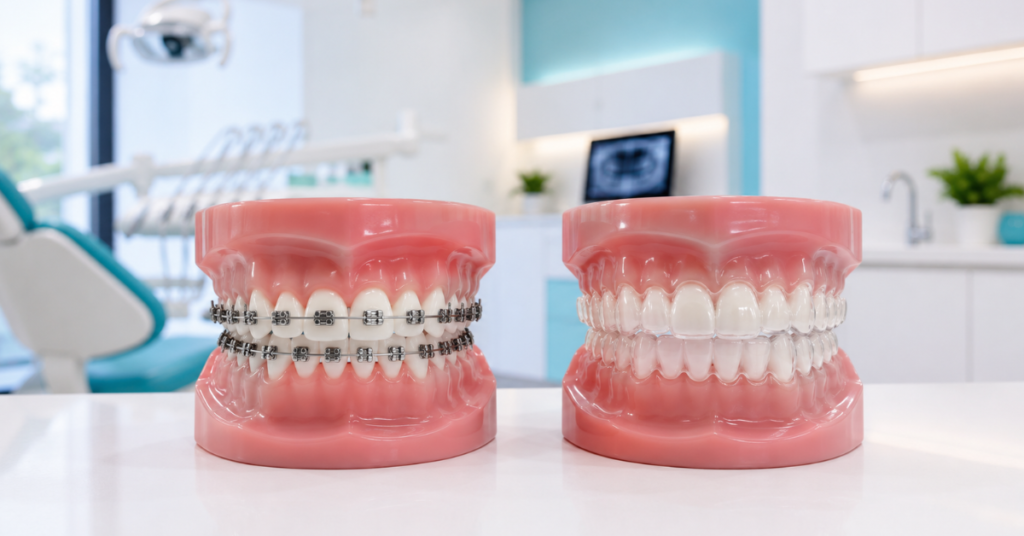
Deciding between braces vs clear aligners is one of the most common questions we hear from patients at Arasu Dental Care. Both straighten your teeth effectively, but they work differently — and the right choice depends on your specific dental needs, lifestyle, and goals.
In our years of orthodontic practice in Coimbatore, we’ve seen that the “best” option isn’t the same for everyone. A teenager with significant crowding may need a different approach than a working professional looking for a discreet solution.
This guide breaks down everything you need to know — honestly and clearly — so you can make a confident, informed decision about your smile.
What Are Traditional Braces?
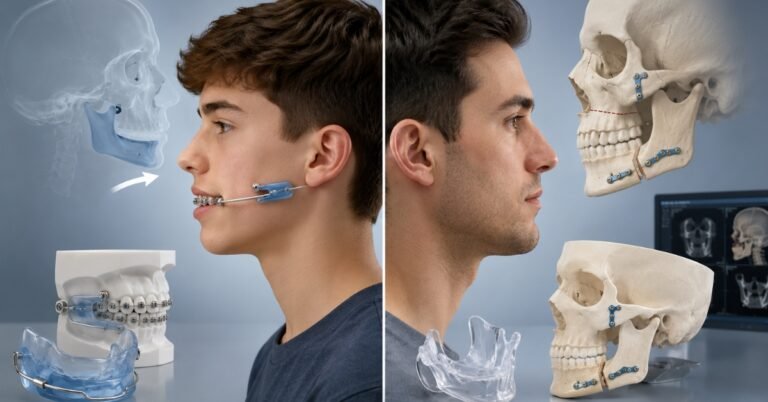
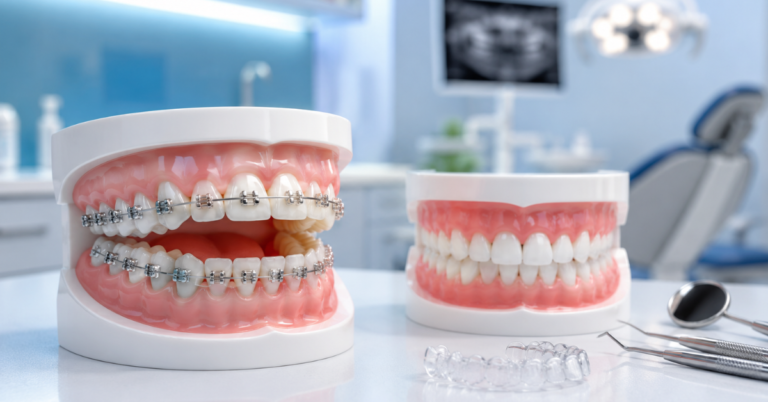
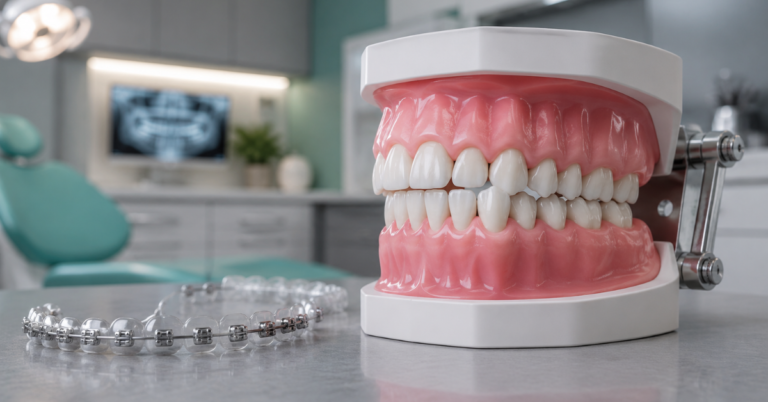
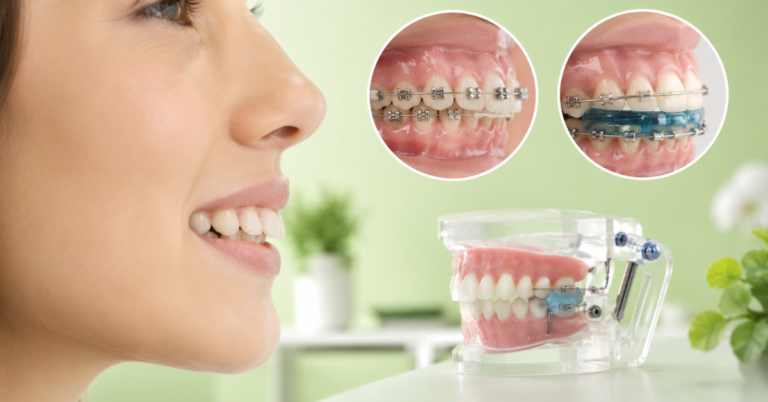
Traditional braces use metal brackets bonded to the front surface of your teeth, connected by archwires and small elastic ties. These components apply steady, controlled pressure that gradually guides teeth into their correct positions.
Modern braces are far smaller and more comfortable than the bulky versions from decades ago. You also have options beyond standard metal:
- Ceramic braces — tooth-coloured brackets that blend in
- Lingual braces — fixed to the inner surface of teeth, hidden from view
Braces remain one of the most reliable and versatile orthodontic treatments available, especially for complex cases.
What Are Clear Aligners?
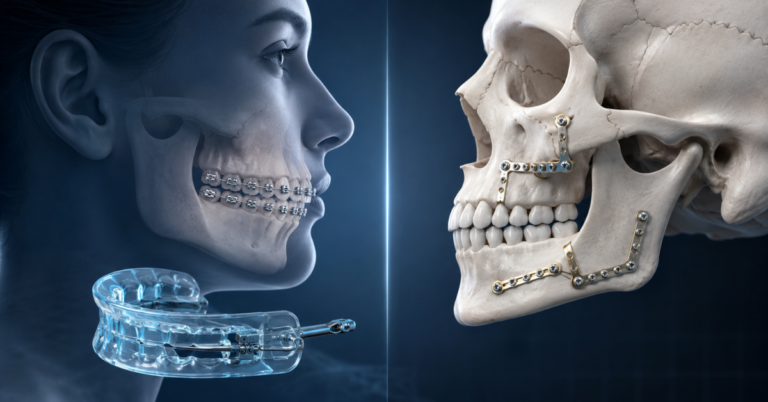
Clear aligners are custom-made, transparent trays manufactured from medical-grade thermoplastic. Each set applies gentle pressure to specific teeth, and you progress to a new set roughly every one to two weeks until treatment is complete.
Brands like Invisalign have made aligners especially popular among adults and teens who want a nearly invisible option. According to the American Association of Orthodontists, clear aligner therapy is now a well-established treatment recognised across the profession.
The key difference: aligners are removable. You take them out to eat, drink, brush, and floss — but they only work if worn 20–22 hours every day.
Braces vs Clear Aligners: Quick Comparison
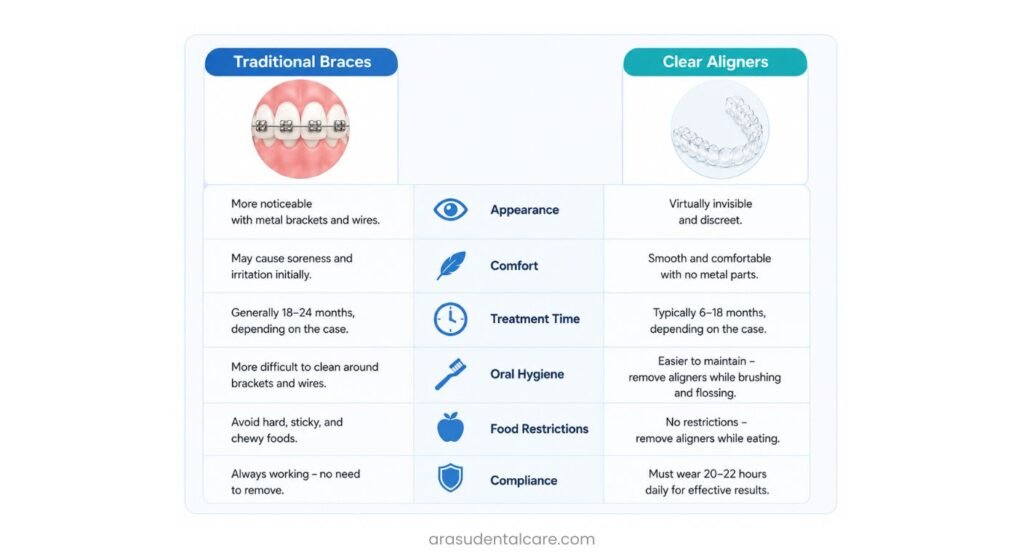
Here’s a side-by-side look at how the two compare across the factors that matter most to patients:
|
Feature |
Traditional Braces |
Clear Aligners |
|
Appearance |
Visible (metal/ceramic) |
Nearly invisible |
|
Removability |
Fixed — cannot remove |
Removable for eating & cleaning |
|
Comfort |
Brackets may irritate cheeks |
Smooth edges, gentle pressure |
|
Best for |
Mild to complex cases |
Mild to moderate cases* |
|
Treatment time |
18–36 months |
12–18 months |
|
Oral hygiene |
Requires extra care |
Easier — brush & floss normally |
|
Food restrictions |
Avoid hard/sticky foods |
No restrictions (removed to eat) |
|
Compliance needed |
Works automatically |
Depends on consistent wear |
|
Clinic visits |
Roughly monthly |
Less frequent |
*With advanced auxiliaries like attachments and elastics, experienced orthodontists can now treat increasingly complex cases with aligners. Your orthodontist will confirm what’s suitable for you.
What the Research Actually Says
It’s worth looking beyond marketing claims at the clinical evidence.
A 2024 comparative study published in the Journal of Pharmacy and Bioallied Sciences followed 100 adult patients — half with clear aligners, half with conventional braces. The findings offer genuinely useful insight:
- Treatment duration: Aligners averaged 14.5 months vs 16.2 months for braces
- Patient satisfaction: Higher in the aligner group (8.5 vs 7.2 out of 10)
- Discomfort levels: Lower with aligners (2.3 vs 5.6 on a 10-point scale)
- Alignment results: Braces showed a slightly higher correction rate (80% vs 75% PAR reduction)
The takeaway is balanced: both treatments work. Aligners tend to offer greater comfort and convenience for suitable cases, while braces deliver marginally stronger correction — particularly valuable for severe misalignment. You can read the full study via the National Library of Medicine.
This reflects what we observe in practice: the difference in outcomes for mild-to-moderate cases is often clinically small, so lifestyle and preference become deciding factors.
Comfort and Daily Life: A Closer Look
Comfort
Both options involve some pressure as teeth move — this is normal and temporary. With braces, brackets and wires can occasionally rub against the inner cheeks. Aligners have smooth edges, though you may feel tightness for a day or two when starting a new set.
Eating
With braces, you’ll need to avoid hard, crunchy, and sticky foods that can damage brackets or wires. With aligners, there are no food restrictions — you simply remove them before eating.
Oral Hygiene
This is one of the clearest advantages of aligners. You remove them to brush and floss exactly as normal. With braces, cleaning around brackets requires more care and the right tools to prevent plaque buildup.
Discipline
Here’s the honest trade-off. Aligners only deliver results if you wear them consistently. If you tend to misplace things or struggle with routine, fixed braces may actually serve you better — they’re always working.
How to Choose the Right Option for You
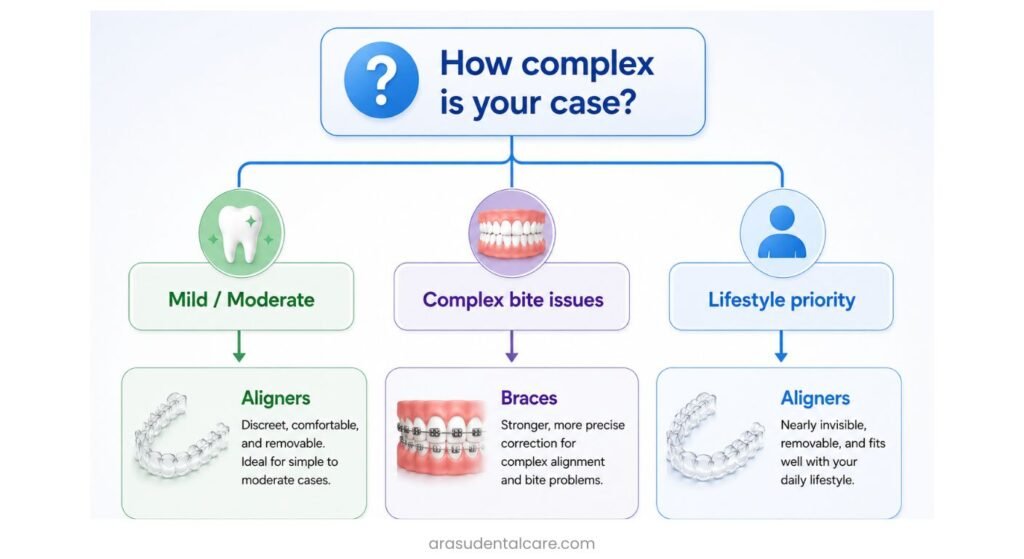
Choosing between braces and clear aligners comes down to a few personal factors. Here’s a simple way to think it through:
Step 1 — Consider the complexity of your case.Severe crowding, significant bite problems, or rotated teeth often respond better to braces. Mild to moderate spacing and alignment issues are well-suited to aligners.
Step 2 — Reflect on your lifestyle.If you speak publicly, attend events, or feel self-conscious about appearance, aligners offer discretion. If you’d rather not manage removable trays daily, braces remove that responsibility.
Step 3 — Assess your discipline.Be honest about whether you’ll wear aligners 20–22 hours a day. Teens and busy adults who may forget might benefit from fixed braces.
Step 4 — Factor in your budget.Both are investments in long-term oral health. Cost varies with case complexity and treatment duration.
Step 5 — Consult an orthodontist.This is the most important step. A specialist can assess your teeth, bite, and gum health, then explain the options that genuinely suit you — never pressure you toward one.
Why an Expert Assessment Matters
It’s tempting to decide based on online comparisons alone, but every smile is different. As the American Dental Association notes, proper alignment isn’t only about appearance — it also reduces your risk of cavities, gum disease, and chewing difficulties.
At Arasu Dental Care, our orthodontic care is led by Dr. P.S. Sree Cumar, an orthodontist and Fellow of the World Federation of Orthodontists (USA), recognised as Dentist of the Year – South Region (Economic Times Healthcare Awards, 2023). Our team uses modern, evidence-based techniques to recommend the option best suited to your needs — whether that’s braces, aligners, or a combination.
We believe in helping you understand all your options so you can make an informed decision with confidence.
Frequently Asked Questions
1. Are clear aligners as effective as braces?For mild to moderate cases, yes — research shows comparable results. For complex bite or alignment issues, braces often provide stronger, more predictable correction. An orthodontic treatment assessment will confirm what’s right for you.
2. Which is faster, braces or clear aligners?Aligners can be faster for suitable cases (often 12–18 months), while braces may take 18–36 months depending on complexity. Treatment time depends heavily on your individual case and, with aligners, on consistent wear.
3. Do braces or aligners hurt more?Both cause mild, temporary pressure as teeth move. Studies suggest aligners are generally associated with lower discomfort, partly because they lack sharp brackets and wires. Any soreness is usually short-lived.
4. Can I switch from aligners to braces midway through treatment?In some cases, yes. If aligners aren’t achieving the planned movement, your orthodontist may recommend braces to finish treatment. This is decided case by case.
5. Are clear aligners in coimbatore suitable for teenagers?They can be — but success depends on discipline. A teen who reliably wears aligners 20–22 hours daily is a good candidate. For those who may forget, fixed braces are often more reliable.
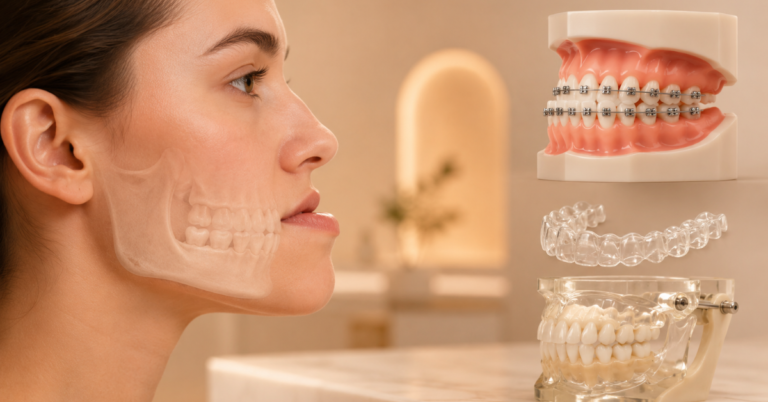
6. Do aligners change your face shape?No. Aligners and braces correct tooth alignment and bite, not bone structure. The visible change is simply a straighter, more confident smile.
7. Will I need a retainer after treatment?Yes — with either option. Teeth can gradually shift back over time, so wearing a retainer as advised protects your results long-term.
8. How do I know which option is right for me?The most reliable way is a consultation with the best orthodontist in coimbatore who can examine your teeth, gums, and bite, then explain your suitable options clearly and transparently.
Ready to Start Your Smile Journey?
Both braces and clear aligners can give you the straight, healthy smile you’re looking for — the right choice simply depends on your unique needs, lifestyle, and goals.
At Arasu Dental Care, a trusted dental clinic coimbatore, our experienced orthodontic team will assess your smile, explain your options honestly, and help you choose the treatment that fits your life — with transparent pricing and a comfort-first approach. We’re open all seven days, from 10:00 AM to 8:30 PM, at both our R.S. Puram and Saibaba Colony branches in Coimbatore.
Book your orthodontic consultation today.📞 R.S. Puram: +91 88380 22157 | Saibaba Colony: +91 74491 88777💬 WhatsApp: +91 96007 56297
Take the first step toward a confident smile — with a team that genuinely cares.