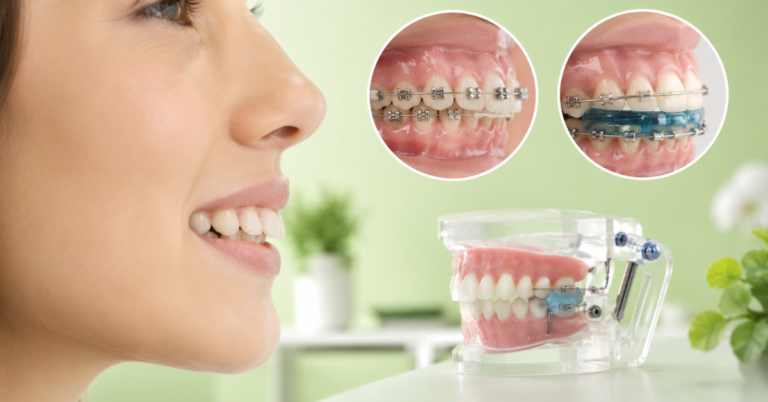
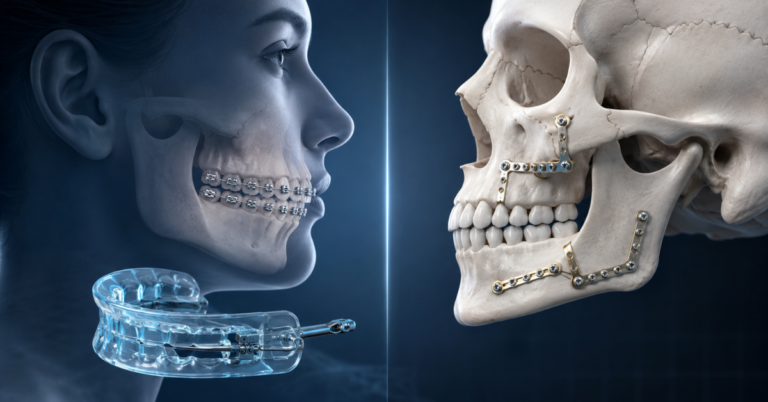
Metal vs Ceramic Braces
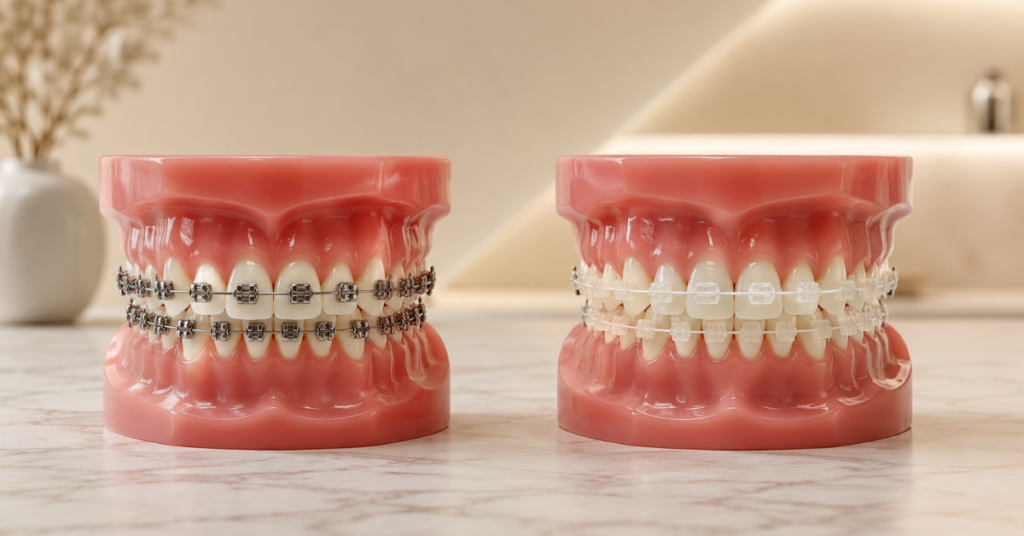
Choosing between metal vs ceramic braces is one of the first big decisions you’ll make when you start your orthodontic journey. Both straighten teeth effectively, but they differ in appearance, cost, comfort, and care. If you’re an adult worried about visible brackets, or a parent deciding for your teenager, this guide will help you understand both options clearly — so you can make a confident, informed choice.
At Arasu Dental Care in Coimbatore, our orthodontic team sees this question almost every day. The honest answer? There’s no single “better” option — only the one that fits your teeth, lifestyle, and goals. Let’s walk through everything you need to know.
What Are Braces and How Do They Work?
Braces are fixed orthodontic appliances that gently guide your teeth into proper alignment over time. Whether metal or ceramic, they share the same core parts:
- Brackets — small attachments bonded to each tooth
- Archwire — a thin wire that runs through the brackets and applies controlled pressure
- Ligatures — tiny bands or clips that hold the wire in place
Over a period of months, the archwire applies steady, gentle force that slowly moves teeth into their correct position. The mechanics are identical for both types — what changes is the material the brackets are made from.
According to the American Association of Orthodontists, the biomechanical principles behind braces have been refined over a century of research, making fixed braces one of the most predictable ways to correct misalignment and bite issues.
What Are Metal Braces?
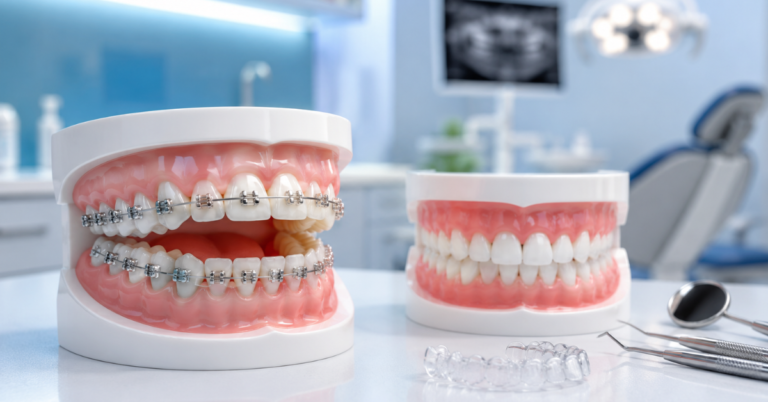
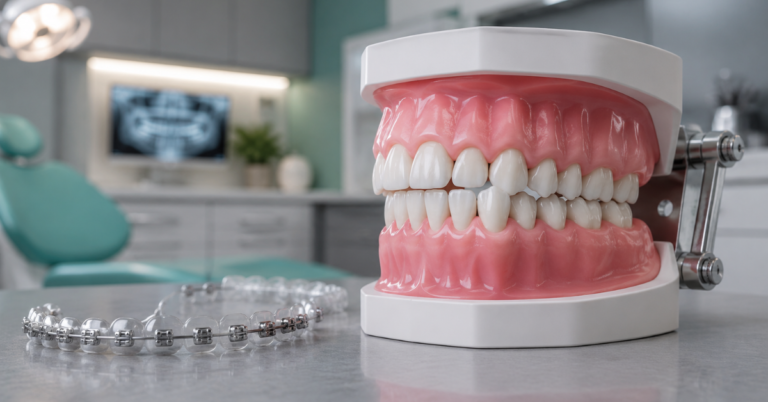
Metal braces are the traditional, time-tested option. They use high-grade stainless steel brackets connected by an archwire. They are strong, reliable, and capable of handling even the most complex orthodontic cases.
A popular feature, especially with children and teens, is the option to choose colourful elastic bands — turning treatment into a bit of fun self-expression.
Pros of Metal Braces
- Highly durable — stainless steel resists breakage, even in complex cases
- Cost-effective — generally the most economical fixed option
- Suitable for all ages — children, teens and adults
- Handles complex movements — ideal for severe crowding, bite problems and large gaps
- Customisable — fun coloured bands for younger patients
- Stain-resistant — the metal does not discolour
Cons of Metal Braces
- More visible — silver brackets stand out against teeth
- Initial discomfort — some pressure or soreness in the first few days
- Cleaning needs care — food can collect around brackets, so good hygiene matters
What Are Ceramic Braces?
Ceramic braces work exactly like metal braces but use clear or tooth-coloured brackets made from a polycrystalline ceramic material. Paired with a lighter archwire, they blend in with your natural teeth — making them much less noticeable.
This discreet appearance makes them a popular choice among older teens, working professionals, and adults who want effective treatment without the “metal mouth” look.
Pros of Ceramic Braces
- Discreet and aesthetic — brackets blend with your tooth colour
- Equally effective — same proven alignment technology as metal
- Confidence-friendly — ideal for image-conscious adults and professionals
- Smoother feel — many patients find the brackets gentler on the lips and cheeks
Cons of Ceramic Braces
- Higher investment — the materials cost more than stainless steel
- More delicate — brackets can chip or crack under heavy pressure
- Staining risk — clear elastic ties may discolour with coffee, tea, or curry without good hygiene
- Possibly slightly longer treatment — extra friction can extend timelines in some cases
Real-world insight: In our Coimbatore practice, we often guide patients who love their morning filter coffee toward extra care routines — or suggest metal braces — because clear ligatures can pick up stains. A small habit change, like rinsing after dark drinks, makes a big difference.
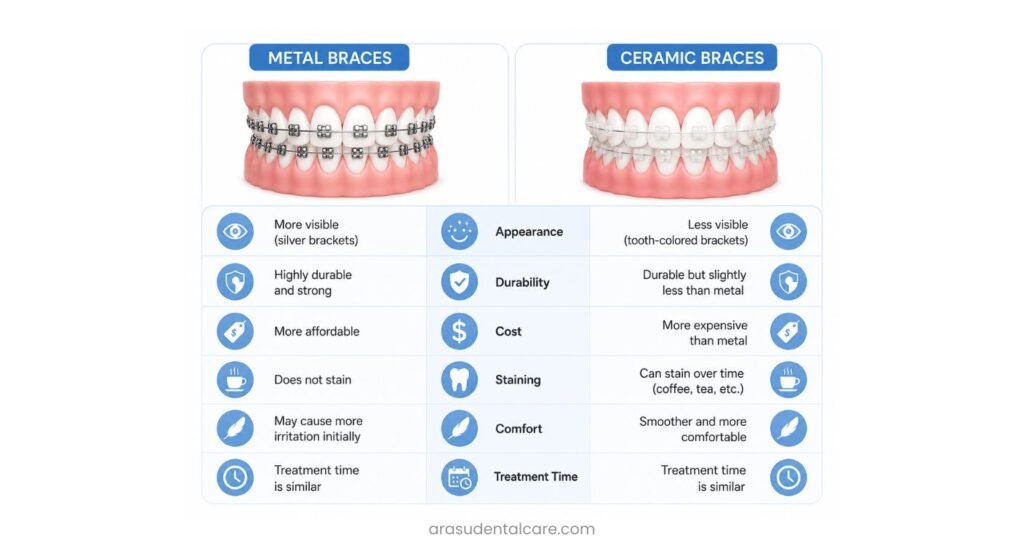
Metal vs Ceramic Braces: Detailed Comparison
Here’s a side-by-side breakdown to help you weigh both options at a glance:
|
Feature |
Metal Braces |
Ceramic Braces |
|
Material |
Stainless steel |
Polycrystalline ceramic |
|
Appearance |
Visible silver brackets |
Tooth-coloured / clear, discreet |
|
Durability |
Very strong, rarely breaks |
More fragile, can chip |
|
Best for |
All cases, including complex |
All cases, especially aesthetics-focused |
|
Staining |
Resists staining |
Ties may stain without good hygiene |
|
Comfort |
Slight initial irritation |
Smoother brackets |
|
Treatment time |
Varies by case |
May take slightly longer in some cases |
|
Cost |
More economical |
Higher investment |
|
Adjustment visits |
Every 4–6 weeks |
Every 4–6 weeks |
A key point worth repeating: both types follow the same biomechanics. Multiple studies, including reviews published by the National Library of Medicine (PubMed), confirm that ceramic and metal brackets achieve comparable alignment outcomes, though ceramic brackets show higher fracture rates and slightly more friction in the system.
How to Choose Between Metal and Ceramic Braces
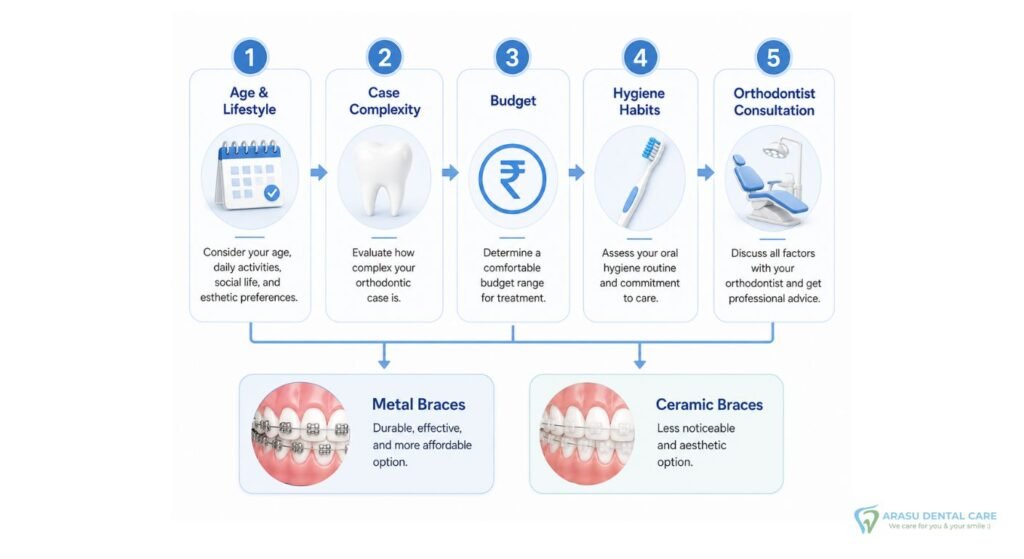
Choosing the right braces comes down to balancing a few personal factors. Here’s a simple step-by-step way to think it through:
Step 1: Consider Your Age and Lifestyle
Teens often happily choose metal braces — many enjoy the coloured bands. Adults and working professionals tend to prefer ceramic for a more discreet look during meetings, presentations, or social settings.
Step 2: Assess the Complexity of Your Case
For severe crowding, large gaps, or significant bite correction, your orthodontist may recommend metal braces for their strength. Both can treat complex cases, but durability matters in heavy-force situations.
Step 3: Think About Your Budget
Metal braces are the more economical choice. Ceramic braces involve a higher investment for the aesthetic benefit. We always discuss costs transparently before treatment begins.
Step 4: Be Honest About Hygiene Habits
Ceramic braces reward diligent brushing and flossing. If you’re committed to good oral care and limiting staining foods, they’re a great fit. If you’d prefer something more forgiving, metal is the practical pick.
Step 5: Consult an Orthodontist
This is the most important step. A trained specialist evaluates your teeth, bite, and goals — then explains the options so you can decide with confidence. There’s no one-size-fits-all answer.
Caring for Your Braces: Practical Tips
Whichever type you choose, good care keeps treatment on track:
- Brush after every meal — especially around brackets and the gumline
- Floss daily using floss threaders or interdental brushes
- Avoid hard and sticky foods — these can break brackets, particularly ceramic ones
- Limit staining foods and drinks — coffee, tea, red wine, and curry (key for ceramic wearers)
- Keep your adjustment appointments — every 4–6 weeks for steady progress
Consistent hygiene prevents plaque buildup, white spots, and gum problems — and helps you finish treatment with a healthy, confident smile.
Frequently Asked Questions (FAQs)
1. Are ceramic braces as effective as metal braces?Yes. Ceramic braces use the same alignment technology and treat most cases just as effectively. They simply require a little more care to avoid staining and breakage.
2. Which braces are more affordable — metal or ceramic?Metal braces are generally the more economical option. Ceramic braces involve a higher investment because of their tooth-coloured, aesthetic material.
3. Do ceramic braces take longer than metal braces?Treatment time is usually similar. However, because ceramic brackets are slightly more delicate and create more friction, complex cases may sometimes finish a little faster with metal braces.
4. Will ceramic braces stain my teeth?The ceramic brackets themselves resist staining, but the clear elastic ties can discolour. Good brushing and limiting dark-coloured foods and drinks keeps them looking clear.
5. Are ceramic braces suitable for children?They’re safe, but metal braces are more commonly recommended for children due to their durability and the fun of coloured bands. Ceramic suits responsible teens and adults who’ll maintain them carefully.
6. Which braces are more comfortable?Ceramic brackets often feel slightly smoother against the lips and cheeks. Both types may cause mild soreness after adjustments, which settles within a few days.
7. Can I switch from one type to the other during treatment?It’s possible but involves additional time and cost, as brackets must be removed and re-applied. It’s best to discuss your preference with your orthodontist from the start.
8. How often will I need to visit the orthodontist?Both metal and ceramic braces typically require check-ups every 4–6 weeks so your orthodontist can adjust the archwire and monitor progress.
The Bottom Line: Making Your Decision
Both metal and ceramic braces are reliable, evidence-based ways to achieve a straighter, healthier smile. Metal braces offer strength, affordability, and proven results — ideal for complex cases and younger patients. Ceramic braces deliver the same alignment power with a discreet, confidence-friendly appearance — perfect for adults and image-conscious teens willing to maintain them well.
The right choice depends on your case, lifestyle, budget, and comfort. And that’s exactly why a professional evaluation matters — so you understand all your options before deciding.
Ready to Find the Right Braces for You?
At Arasu Dental Care, Coimbatore, our experienced orthodontic team — led by founder and orthodontist Dr. P.S. Sree Cumar — will examine your teeth, explain every option clearly, and help you choose the treatment that best suits your needs. No pressure, no hidden surprises — just honest, expert guidance and transparent pricing.
We’re open all seven days, 10:00 AM – 8:30 PM, across our R.S. Puram and Saibaba Colony branches.
📞 Book your consultation today: +91 88380 22157 (R.S. Puram) or +91 74491 88777 (Saibaba Colony)💬 **WhatsAp