Are Invisible Aligners Worth It?

If you’ve been quietly searching whether invisible aligners are worth it, you’re asking exactly the right question. Clear aligners have transformed how people straighten their teeth — discreet, removable, and comfortable — but they are also a meaningful investment. The honest answer isn’t a simple yes or no. It depends on your case, your daily habits, and what matters most to you.
At Arasu Dental Care in Coimbatore, our orthodontic team — led by founder Dr. P.S. Sree Cumar (MDS Orthodontics, Fellow of the World Federation of Orthodontists, USA) — helps patients make this decision every week. This guide explains, transparently, when invisible aligners are genuinely worth it and when traditional braces may serve you better.
What Are Invisible Aligners?
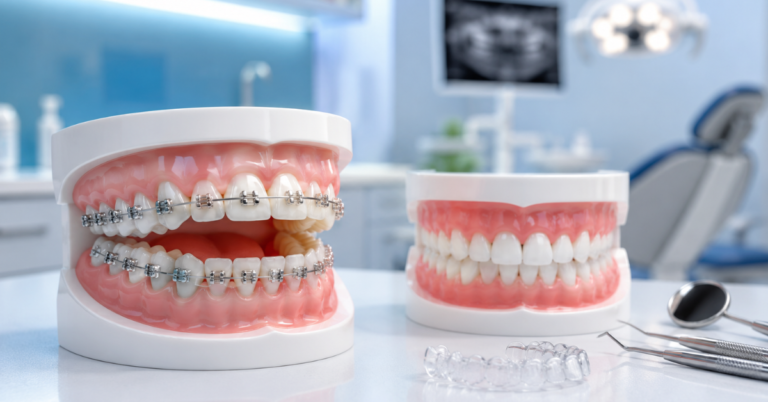
Invisible aligners are a series of clear, custom-made plastic trays that gradually move your teeth into their correct position. Unlike fixed metal braces, they have no brackets or wires — and they’re removable.
Each set is worn for one to two weeks before progressing to the next in the sequence. Treatment is guided by a precise 3D digital plan created from a scan of your mouth, so your orthodontist can map every stage before you begin.
The most recognised brand is Invisalign, introduced by Align Technology in 1998. Today, several clear aligners in coimbatore systems exist, but the underlying principle is the same: controlled, predictable tooth movement using gentle, continuous pressure.
According to the American Association of Orthodontists, clear aligners are designed to make orthodontic treatment “less conspicuous” — a meaningful benefit for adults and professionals who feel self-conscious about visible braces.
How Do Invisible Aligners Work?
Understanding the process helps you decide whether the treatment fits your lifestyle.
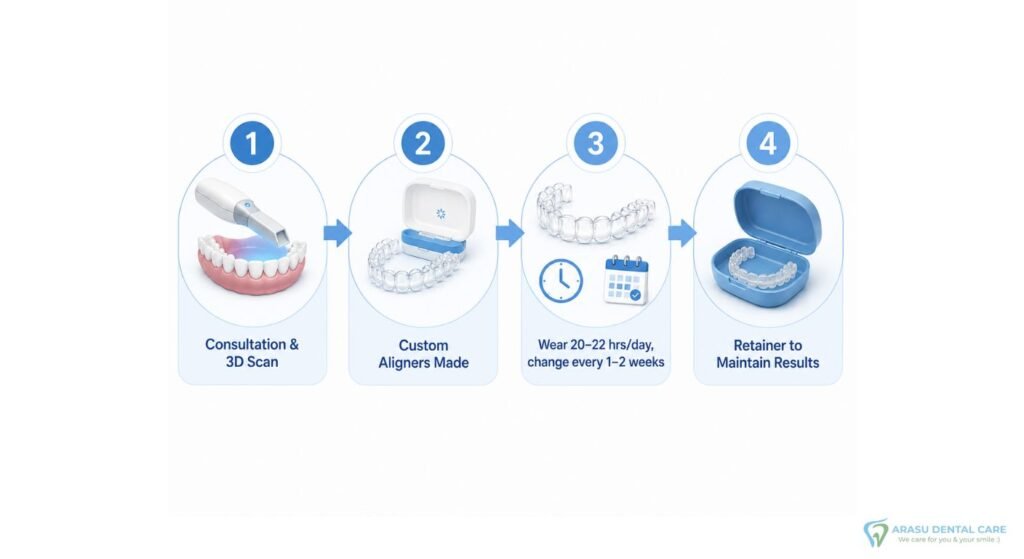
Step 1 — Consultation and 3D scan. Your orthodontist examines your teeth and bite, then creates a digital 3D scan to assess suitability and plan tooth movement.
Step 2 — Custom aligner series. A sequence of trays is manufactured. Each aligner is slightly different, shifting your teeth a fraction of a millimetre at a time.
Step 3 — Wearing and progressing. You wear each set 20–22 hours per day, removing them only to eat, drink (anything other than water), brush and floss.
Step 4 — Retention. Once your teeth are aligned, a retainer maintains the result long-term.
Treatment usually takes 6 to 18 months, depending on complexity — though only your orthodontist can give you an accurate timeline.
So, Are Invisible Aligners Worth It? The Honest Answer
Here is the answer we give in our consultation room: invisible aligners are genuinely worth it for the right patient and the right case. For the wrong case — or for someone who won’t wear them consistently — even flawless aligners won’t outperform traditional braces.
To help you self-assess, here’s a clear breakdown.
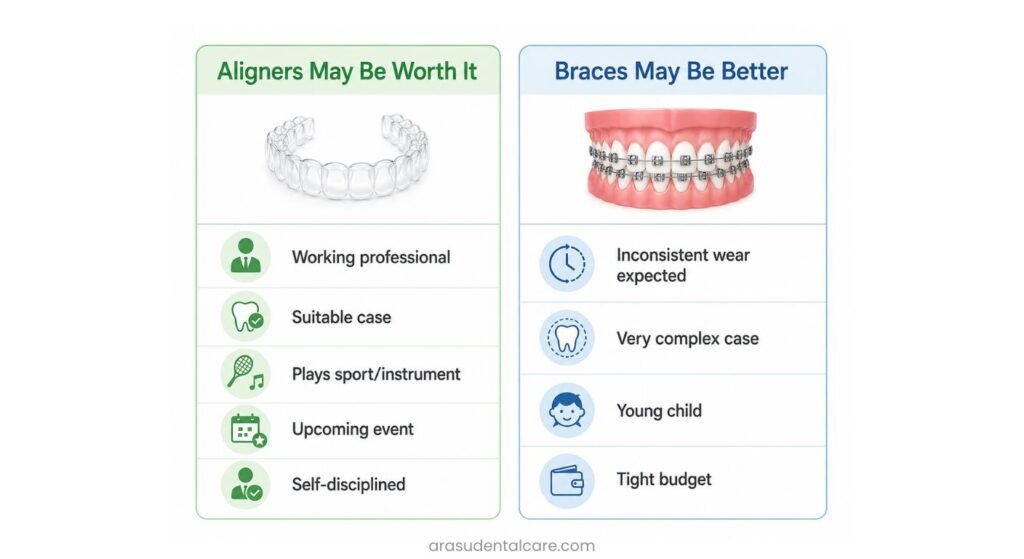
When Invisible Aligners Are Worth It
You’re a working professional or adult. Meetings, presentations and interviews are part of daily life, and visible braces can feel uncomfortable in professional settings. For many adults, discretion alone justifies the choice.
Your case is clinically suitable. Modern aligner systems treat far more than mild crowding — including spacing, certain overbites, underbites and crossbites. For suitable cases, the clinical outcome is comparable to braces.
You play sports or a musical instrument. Removable aligners avoid the cuts and mouthguard issues that fixed braces can cause.
You have an upcoming event. A wedding, graduation or career milestone — the discreet appearance during treatment matters for photos you’ll keep for life.
You’re consistent and self-disciplined. This isn’t a personality judgement; it’s a clinical requirement. Aligners only work if worn 20–22 hours daily.
When Traditional Braces May Be the Better Choice
Consistent wear will be difficult. Braces work 24/7 with no behavioural requirement. If honest self-assessment suggests you’ll struggle to wear aligners enough, braces are more reliable.
The case is highly complex. Severe rotations, significant skeletal bite problems, or complex extraction cases may respond better to fixed appliances.
You’re treating a young child. Compliance is harder to guarantee in younger patients.
Budget is a genuine constraint. There’s no clinical reason to choose aligners if the cost creates financial stress. Metal braces deliver excellent, evidence-based outcomes.
Pros and Cons of Invisible Aligners
A balanced view matters more than marketing. Here’s an honest comparison.
|
Aspect |
Invisible Aligners |
Traditional Braces |
|
Appearance |
Nearly invisible |
Highly visible |
|
Removability |
Yes — for eating & cleaning |
Fixed in place |
|
Comfort |
Smooth, no wires |
Wires/brackets may irritate |
|
Oral hygiene |
Easy — brush & floss normally |
Harder around brackets |
|
Food restrictions |
None (removed to eat) |
Several restrictions |
|
Compliance needed |
High — 20–22 hrs/day |
None — works 24/7 |
|
Best for |
Mild to moderate (and many complex) cases |
All cases, including most complex |
|
Clinic visits |
Fewer |
More frequent adjustments |
The Real Advantages
A 2017 study published in the Australian Dental Journal noted that the removability of aligners can support better periodontal health by reducing bacteria around teeth and gums during treatment — because you can brush and floss normally.
The Honest Limitations
Research, while still growing, suggests aligners may be less effective for highly complex movements. A systematic review in The Angle Orthodontist highlighted that clear aligners control some tooth movements well but are weaker for complex rotations and certain bite corrections. This is exactly why a professional assessment matters.
What Affects Whether Aligners Are Worth It for You?
Several variables determine your outcome — and your value-for-money.
Wear time. This is the single biggest factor. Aligners worn 16–18 hours instead of 20–22 will extend treatment and may produce incomplete results.
Case complexity. Straightforward crowding and spacing respond beautifully. More complex bite issues need careful planning — and sometimes braces.
Your orthodontist’s experience. Aligner outcomes depend heavily on accurate planning and case selection. The skill behind the treatment matters as much as the technology.
Aftercare. Wearing your retainer afterward protects your investment. Skipping it risks relapse.
A Note on Cost and Value
In India, most orthodontic treatment in coimbatore is out-of-pocket, so the “worth it” question is partly financial. Invisible aligners typically cost more than metal braces because of the custom trays and digital planning involved.
But cost is only one part of value. When you weigh comfort, discretion, easier oral hygiene, fewer clinic visits and the confidence of smiling freely during treatment, many patients find the investment worthwhile.
At Arasu Dental Care, we believe in transparent pricing and honest guidance. We’ll explain all your options clearly so you can make an informed decision — never a pressured one. We also offer flexible payment arrangements to make the right treatment more accessible.
(Specific pricing is best confirmed during your consultation, as it depends on your individual case complexity.)
Frequently Asked Questions
1. Are invisible aligners as effective as braces?For mild to moderate cases — and many complex ones with modern systems — aligners can achieve results comparable to braces. Highly complex cases may still respond better to fixed braces. Your orthodontist can confirm suitability for your specific teeth.
2. Do invisible aligners hurt?You may feel mild pressure for the first few days with each new set. This is normal and a sign the aligners are working. Most patients find them more comfortable than braces because there are no wires or brackets.
3. How many hours a day must I wear them?A minimum of 20–22 hours per day. They should only be removed for eating, drinking anything other than water, brushing and flossing. Consistent wear is essential for predictable results.
4. How long does treatment take?Most cases take 6 to 18 months depending on complexity. Simple alignment may finish in under a year, while more involved cases take longer.
5. Can teenagers use invisible aligners?Yes — many teenagers do well with aligners, especially disciplined ones. For younger children, where consistent wear is harder to guarantee, braces are often more appropriate.
6. Will I need a retainer afterward?Yes. A retainer maintains your new alignment and prevents relapse. Skipping it can undo your results, so consider it part of the treatment.
7. How do I clean my aligners?Use a soft toothbrush with lukewarm water — never hot water, which can warp the plastic. Aligner-specific cleaning tablets can be used for a deeper clean.
8. Can invisible aligners fix an overbite or gap?Yes, aligners can address many overbite, underbite, gap and crossbite cases, depending on severity. A clinical assessment will confirm whether your case is suitable.
The Bottom Line
So, are invisible aligners worth it? For the right patient — a disciplined adult or older teen with a clinically suitable case who values discretion and comfort — they are genuinely a worthwhile investment.
For someone who may not wear them consistently, or whose case is highly complex, traditional braces remain an excellent, evidence-based choice. The key isn’t the brand or the marketing — it’s matching the treatment to your specific needs.
The most important step is an honest clinical assessment, not assumptions based on what a friend chose or what you saw on social media.
Ready to Find Out If Aligners Are Right for You?
At Arasu Dental Care, our experienced orthodontic team — led by award-winning best orthodontist in coimbatore Dr. P.S. Sree Cumar — will eva