Clear Aligners vs Braces
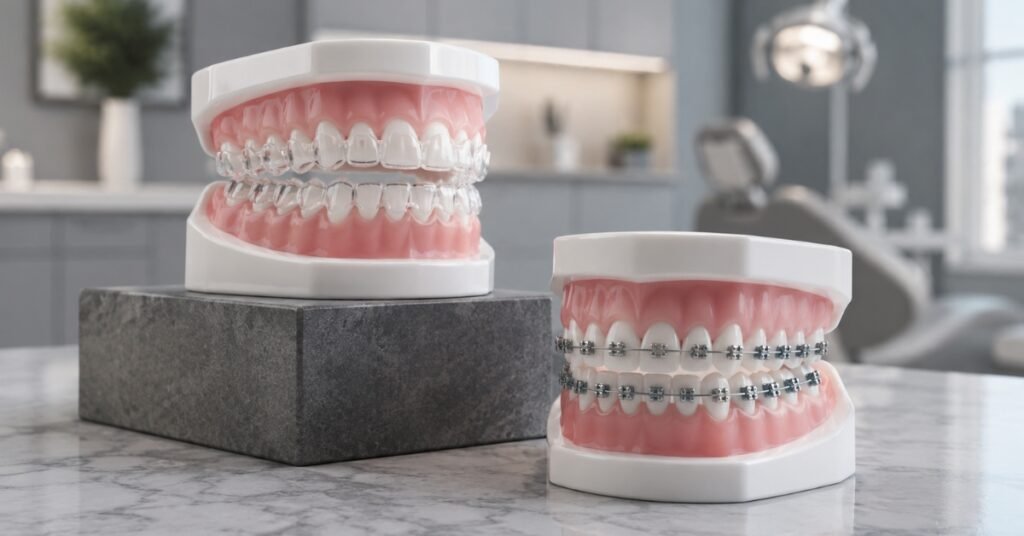
Choosing between clear aligners vs braces is one of the most common questions our orthodontic patients ask at Arasu Dental Care. Both options straighten teeth and correct bite problems effectively — but they work differently and suit different lifestyles, ages, and dental conditions.
If you’ve been comparing options online and feeling unsure, you’re not alone. This guide explains the real differences in plain language, backed by clinical experience and evidence, so you can make an informed decision with confidence — never feeling pressured into a treatment.
As an orthodontist-led clinic founded by Dr. P.S. Sree Cumar (MDS, Fellow of the World Federation of Orthodontists, USA), we treat both braces and aligner cases every day. Here’s what genuinely matters when you choose.
What Are Clear Aligners?
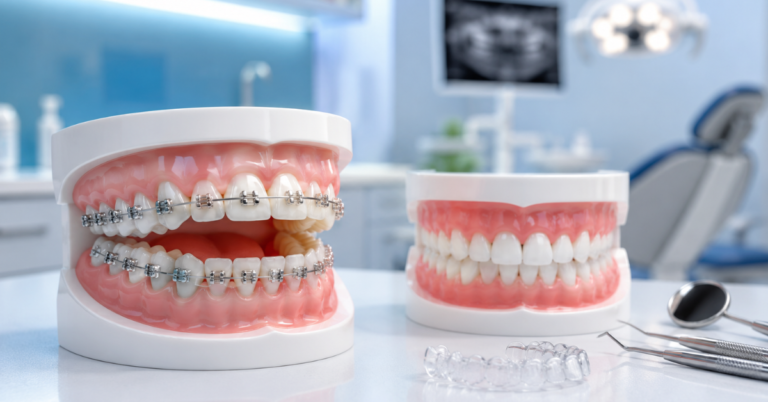
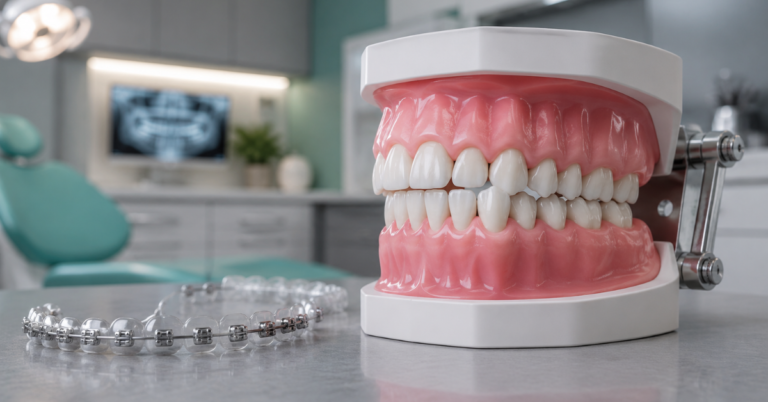
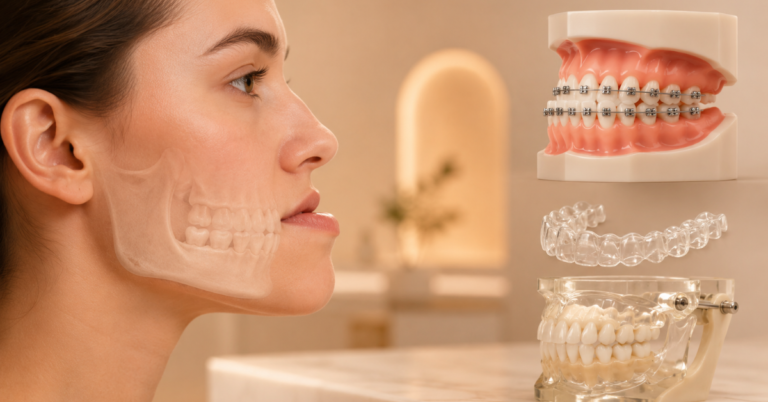
Clear aligners are custom-made, transparent trays that fit snugly over your teeth and gradually move them into the right position. They’re made from smooth, medical-grade thermoplastic and are virtually invisible when worn.
You receive a series of trays, switching to a new set roughly every one to two weeks. Each set applies gentle, controlled pressure to specific teeth.
The key feature: aligners are removable. You take them out to eat, brush, and floss — which is convenient, but it also means success depends on wearing them as prescribed.
What Are Traditional Braces?
Braces use metal (or ceramic) brackets bonded to each tooth, connected by an archwire. Your orthodontist adjusts the wire during regular appointments to steadily guide teeth into alignment.
Braces have been refined over decades and remain the most reliable solution for complex orthodontic problems. Modern brackets are smaller and more comfortable than older designs.
Unlike aligners, braces are fixed — they work 24/7 without relying on you to remember to wear them.
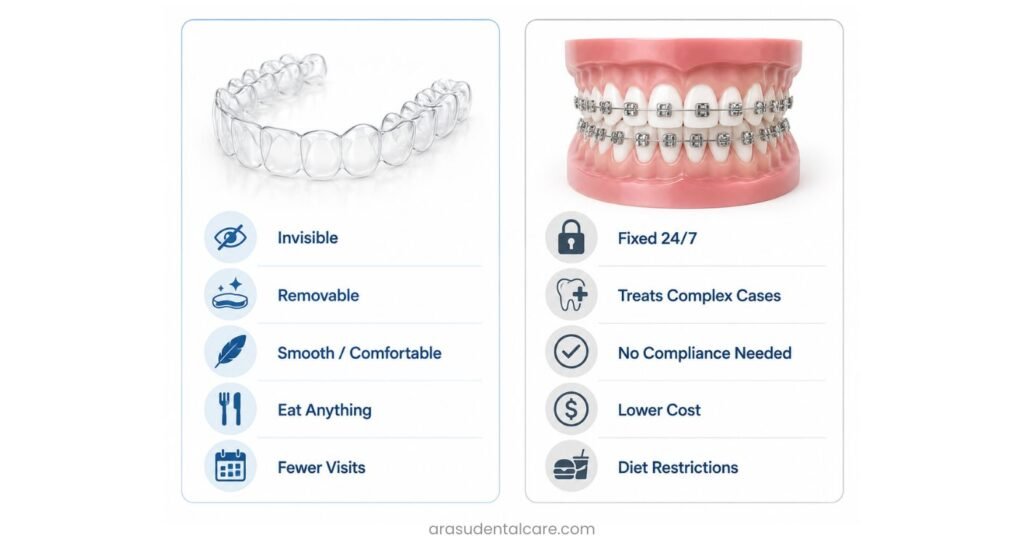
Clear Aligners vs Braces: Side-by-Side Comparison
Here’s a clear breakdown of how the two options compare across the factors patients care about most.
|
Feature |
Clear Aligners |
Traditional Braces |
|
Appearance |
Nearly invisible clear trays |
Visible metal/ceramic brackets |
|
Removability |
Removable (must wear 20–22 hrs/day) |
Fixed until treatment ends |
|
Comfort |
Smooth edges, minimal irritation |
Possible soreness from brackets/wires |
|
Oral Hygiene |
Easy — remove to brush & floss |
Requires special brushing tools |
|
Diet |
No restrictions (remove before eating) |
Avoid hard, sticky, crunchy foods |
|
Best For |
Mild to moderate cases |
Mild to severe & complex cases |
|
Treatment Time |
~6–18 months (compliance-dependent) |
~18–36 months |
|
Clinic Visits |
Fewer, spaced further apart |
Regular adjustment appointments |
|
Discipline Needed |
High — relies on you |
Low — appliance always working |
Key Differences Explained
Appearance: Discretion vs Visibility
Clear aligners are the obvious choice if appearance matters to you. They’re barely noticeable, which is why many adult professionals, brides, grooms, and image-conscious teens prefer them.
Braces are visible, though ceramic (tooth-coloured) brackets offer a less noticeable option. Interestingly, many patients tell us people stop noticing braces within a few weeks.
Comfort and Day-to-Day Experience
Aligners are made of smooth plastic with no sharp edges, so irritation to the cheeks and lips is uncommon. You may feel mild pressure for a day or two after switching to a new tray — this is normal and means the trays are working.
Braces can occasionally rub against soft tissue, especially in the early days. This usually settles as your mouth adjusts, and orthodontic wax helps in the meantime. We always perform adjustments comfortably and check in on any irritation.
Oral Hygiene and Maintenance
This is a genuine advantage for aligners. Since you remove them, brushing and flossing stay completely normal.
With braces, food can get trapped around brackets, so meticulous cleaning with interdental brushes and floss threaders is essential to protect against decay. The American Dental Association emphasises that good oral hygiene during orthodontic treatment is critical for long-term results — regardless of which method you choose.
Effectiveness for Different Cases
This is where clinical judgement matters most. Braces remain the gold standard for complex cases — severe crowding, significant rotations, large gaps, or major bite corrections like deep overbites and crossbites.
Clear aligners have advanced significantly. With attachments, elastics, and 3D digital planning, experienced orthodontists now treat a wider range of cases than ever before. A literature review in the Turkish Journal of Orthodontics confirms aligners are effective for crowding, spacing, open bite, crossbite, and deep bite — but case selection and the clinician’s expertise remain decisive factors.
Our clinical insight: The appliance is far less important than the skill of the person planning your treatment. A well-planned braces case will always outperform a poorly planned aligner case, and vice versa. This is why an accurate diagnosis comes first — always.
Treatment Duration
Aligners can finish faster for suitable cases, often within 6–18 months. Braces typically run 18–36 months for more involved corrections.
However — and this is important — aligner timelines only hold if you wear them 20–22 hours daily. Inconsistent wear extends treatment and may require additional trays.
Patient Compliance
Braces require no discipline beyond hygiene because they’re fixed. Aligners depend entirely on your commitment.
This is why we often recommend braces for younger children or anyone who may struggle to wear removable trays consistently. The right choice respects your real daily life — not just the ideal scenario.
Clear Aligners vs Braces: Cost Considerations
Cost is naturally a major factor. In line with our commitment to transparent pricing, here’s honest context.
Traditional metal braces are generally the most affordable orthodontic option. Ceramic braces cost slightly more for their discreet appearance. Clear aligners in coimbatore typically sit at the higher end, reflecting the customisation, 3D planning technology, and materials involved.
|
Treatment Type |
Relative Cost |
Notes |
|
Metal Braces |
Most affordable |
Effective for all case types |
|
Ceramic Braces |
Mid-range |
Less visible, slightly more fragile |
|
Clear Aligners |
Higher |
Varies by brand & case complexity |
Exact pricing depends on your individual case complexity and treatment length. We provide a clear, itemised estimate after your consultation — with no hidden surprises.
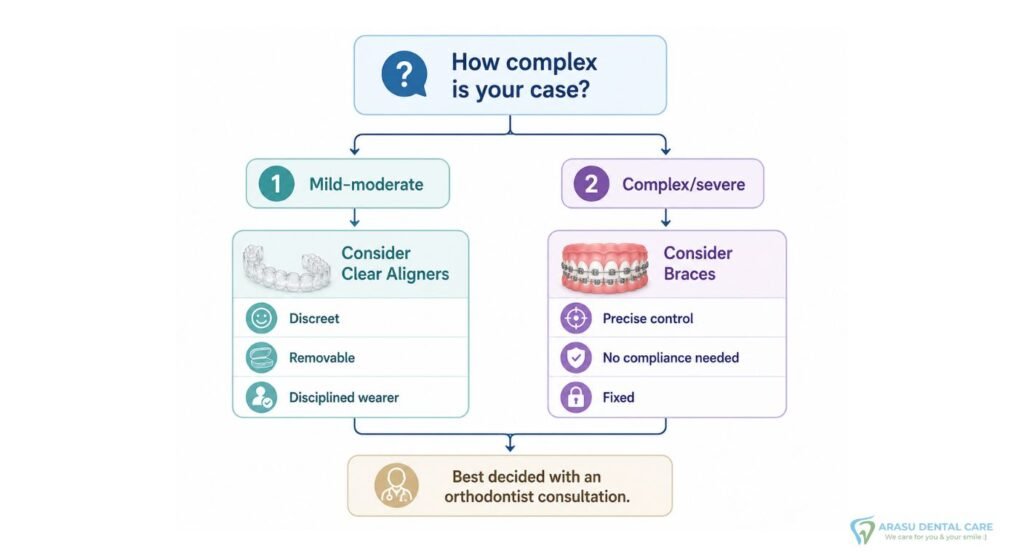
How to Decide: A Simple Step-by-Step Guide
Choosing the right option doesn’t have to be overwhelming. Here’s how we guide patients through it.
Step 1 — Get an accurate diagnosis. A professional exam with X-rays and a 3D scan reveals exactly what your teeth and bite need.
Step 2 — Consider your case complexity. Mild to moderate issues open up both options; complex cases often point toward braces.
Step 3 — Reflect on your lifestyle. Do you give presentations? Travel often? Can you commit to 22 hours of daily wear?
Step 4 — Factor in age and discipline. Younger or less consistent patients often do better with fixed braces.
Step 5 — Discuss cost and timeline openly. A transparent treatment plan helps you choose with confidence.
Step 6 — Decide together with your orthodontist. The final plan should fit your goals — not a one-size-fits-all approach.
Frequently Asked Questions
1. Are clear aligners as effective as braces?For mild to moderate cases, yes. For complex tooth movements and severe bite corrections, braces generally offer more precise control. Your orthodontist will advise based on your specific case.
2. Which is more comfortable, aligners or braces?Aligners are typically more comfortable due to their smooth design. Braces may cause mild initial irritation that settles as you adjust. Both involve gentle pressure that means the teeth are moving.
3. Do clear aligners work faster than braces?Sometimes. Aligner cases for suitable patients can finish faster, but only with consistent 20–22 hour daily wear. Complex cases often move more efficiently with braces.
4. Can teenagers use clear aligners?Yes — if their case is suitable and they’re disciplined enough to wear trays consistently. For younger children or those prone to losing things, braces are often more practical.
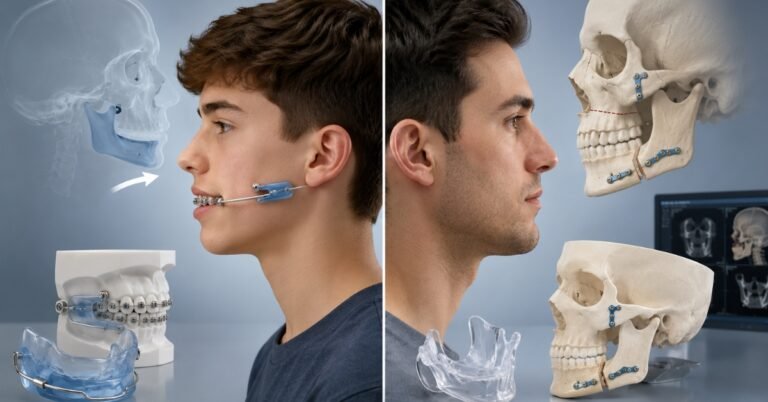
5. Will treatment change my face shape?No. Orthodontic treatment aligns your teeth and corrects your bite. The visible change you’ll notice is simply a straighter, more confident smile.
6. Do I need to wear a retainer after treatment?Yes — with both braces and aligners. Retainers hold your teeth in their new position and protect your long-term result. This step is essential, not optional.
7. Can I switch from braces to aligners (or vice versa) mid-treatment?In some cases, yes. This is a clinical decision based on how your treatment is progressing and should be discussed with your orthodontist.
8. Are clear aligners suitable for everyone?Not always. They work best for mild to moderate crowding and spacing, and require high compliance. A consultation determines whether you’re a suitable candidate.
The Bottom Line
Neither clear aligners nor braces is universally “better.” Clear aligners offer discretion and convenience for suitable, disciplined patients. Braces deliver precise control for complex cases without relying on compliance.
What matters most is an accurate diagnosis and a treatment plan tailored to you — your teeth, your lifestyle, and your goals. That’s a decision best made alongside an experienced orthodontist who will explain every option honestly.
Ready to Choose with Confidence?
At Arasu Dental Care, Coimbatore, our orthodontist-led team — guided by award-winning founder Dr. P.S. Sree Cumar — will assess your smile and clearly explain whether clear aligners or braces best suit your needs. No pressure. No hidden costs. Just honest,