Can Clear Aligners Correct Overbite?
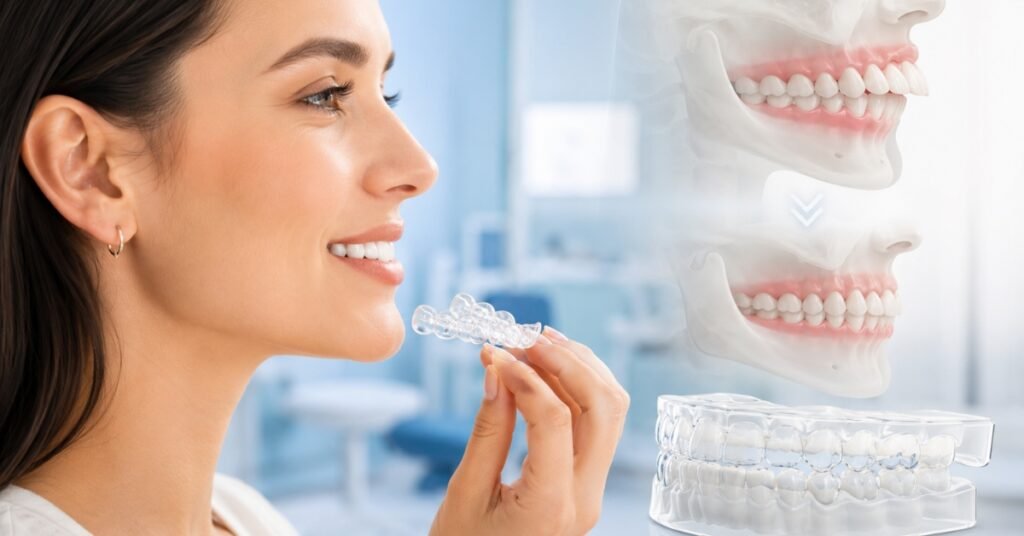
Wondering whether clear aligners for overbite can give you a straighter, healthier smile without metal brackets? In most mild to moderate cases, the answer is a confident yes. Clear aligners have become one of the most requested orthodontic options for adults and teens who want a discreet way to correct their bite.
But here’s the honest truth most websites skip over: not every overbite is the same, and clear aligners are not a universal fix. The right answer depends on what’s actually causing your overbite — your teeth, your jaw, or both.
At Arasu Dental Care, our founder Dr. P.S. Sree Cumar is an orthodontist and Fellow of the World Federation of Orthodontists (USA). In this guide, we’ll explain exactly when clear aligners work for overbites, when they don’t, and how to know which path is right for you.
What Is an Overbite? (And Why It’s Not Always a Problem)
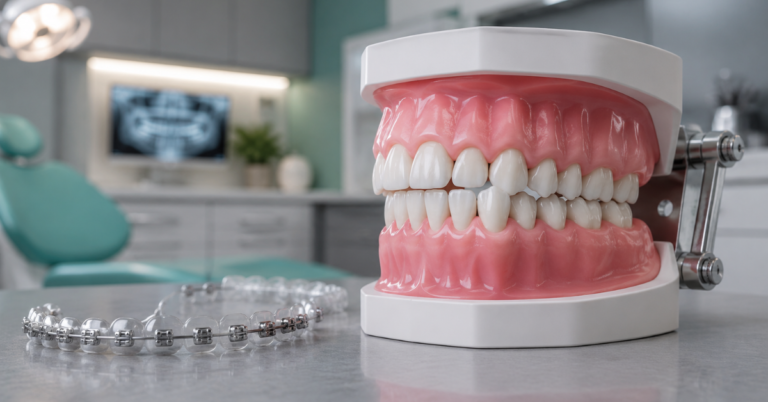
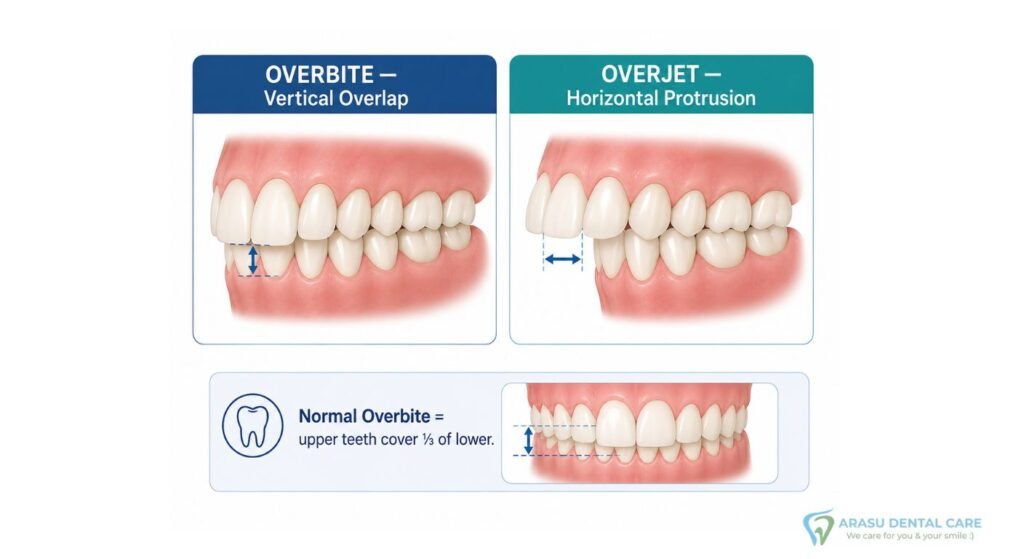
An overbite is when your upper front teeth overlap your lower front teeth when your mouth is closed. Here’s something many people don’t realise: a small overbite is completely normal and healthy.
A normal overbite means your upper incisors cover roughly one-third of your lower incisors. Problems only arise when this overlap becomes excessive — often called a deep bite.
It’s also worth clearing up a common mix-up:
- Overbite = the vertical overlap (top teeth cover lower teeth too much)
- Overjet = the horizontal protrusion (top teeth stick out forward, sometimes called “buck teeth”)
Many people have a combination of both, which is exactly why a proper in-person orthodontic assessment matters more than any online article.
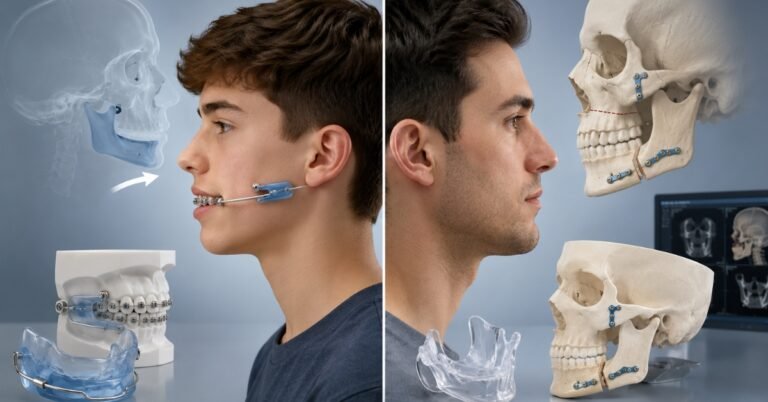
Dental vs. Skeletal Overbite — The Crucial Difference
This single distinction determines whether clear aligners will work for you:
|
Type |
What Causes It |
Aligner Suitability |
|
Dental overbite |
Tooth position and tipping only |
Often well-suited to clear aligners |
|
Skeletal overbite |
Underlying jaw size or position |
May need braces, growth appliances, or surgery |
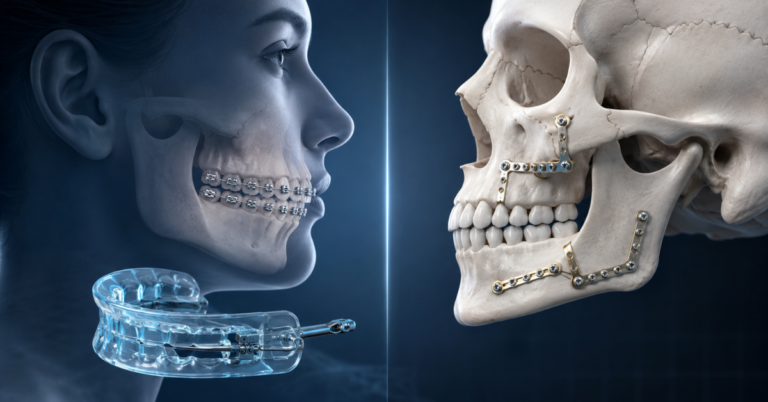
A dental overbite responds well to tooth movement. A skeletal overbite involves the jaw itself, which is far more complex to correct — and this is where many “online aligner” promises fall short.
Signs You May Have an Overbite Worth Treating
You can have an overbite without realising it. Here are the symptoms our orthodontic team commonly assesses:
Physical signs:
- Upper teeth cover more than one-third of the lower teeth
- Noticeable wear on the lower front teeth
- A change in facial profile or chin appearance
- Lower teeth occasionally touching the roof of the mouth in severe cases
Functional signs:
- Difficulty biting or chewing comfortably
- Jaw discomfort, clicking, or fatigue
- Speech difficulties such as a slight lisp
- Frequent headaches or jaw tension
A real-world example: We frequently see adults in their late twenties and thirties who never had braces as teens. They come in because their lower front teeth are wearing down unevenly — a quiet, long-term consequence of an untreated deep bite. By the time they notice, the damage is cosmetic and functional.
If any of these sound familiar, it’s worth a professional evaluation rather than self-diagnosis.
Can Clear Aligners Correct an Overbite? What the Evidence Shows
Yes — clear aligners can effectively correct mild to moderate dental overbites, and this is well supported by orthodontic research.
A frequently cited 2017 study published in the American Journal of Orthodontics and Dentofacial Orthopedics found that clear aligners can be an effective method for managing overbite within a mild to moderate range. You can review the broader evidence base through the American Association of Orthodontists.
Newer research adds important nuance. A 2025 systematic review in Clinical Oral Investigations confirmed clear aligners can achieve meaningful bite opening, but noted that the achieved result doesn’t always perfectly match the planned digital outcome. This is precisely why specialist-led planning and refinements matter so much.
The honest takeaway: Clear aligners work for overbites — but predictable results come from correct case selection, expert planning, and consistent wear, not from the aligners alone.
How Do Clear Aligners Fix an Overbite?
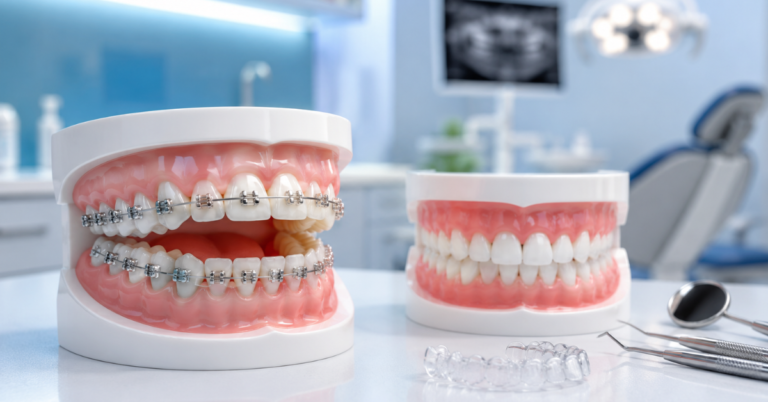
Clear aligners are custom-made, removable trays worn for 20–22 hours a day. Each tray applies gentle, controlled pressure to gradually move teeth, and you switch to a new set roughly every one to two weeks.
For overbite correction specifically, modern aligner treatment uses several techniques:
- Tooth movement — gradually repositioning the upper and/or lower teeth to reduce excessive overlap
- Attachments — small tooth-coloured bumps bonded to teeth that give the aligners better grip and control
- Bite ramps — features that prevent the back teeth from over-closing, helping “open” a deep bite
- Elastics — small rubber bands used to guide the bite into a better relationship when needed
These additions allow aligners to do far more than simple straightening — they’re what make genuine bite correction possible.
When Clear Aligners Are a Great Choice
Clear aligners are often an excellent option when your overbite is:
- Primarily dental (related to tooth position)
- Mild to moderate in severity
- Combined with mild crowding
- A relapse after previous braces treatment
- Best treated discreetly for lifestyle or professional reasons
For working adults, parents, and anyone who speaks publicly, the near-invisible, removable nature of aligners is a genuine advantage.
When Braces or Other Treatment May Be Better
We believe in transparency, so here’s when clear aligners alone may not be enough:
- Severe skeletal overbites caused by significant jaw discrepancies
- Cases requiring highly precise vertical control in complex bites
- Patients who may struggle with the discipline of 20–22 hours of daily wear
- Growing children and teens where growth modification appliances can be used strategically
In these situations, fixed braces, growth appliances, or — for severe adult skeletal cases — coordinated surgical input may deliver more predictable outcomes. After evaluating your condition, we’ll explain all available options and help you choose what genuinely suits your needs.
How Long Does Clear Aligner Treatment for Overbite Take?
Treatment time depends on the complexity of your case and how consistently you wear your aligners. Here’s a realistic guide:
|
Case Complexity |
Approximate Timeline |
|
Mild overbite |
6 – 12 months |
|
Moderate overbite |
12 – 18 months |
|
Complex / deeper bite |
18 – 24 months or more |
Bite correction generally takes longer than simple alignment because both tooth position and the bite relationship must be addressed. After treatment, a retainer is essential to hold your teeth in their new position and prevent relapse.
How Overbite Treatment Works at Arasu Dental Care
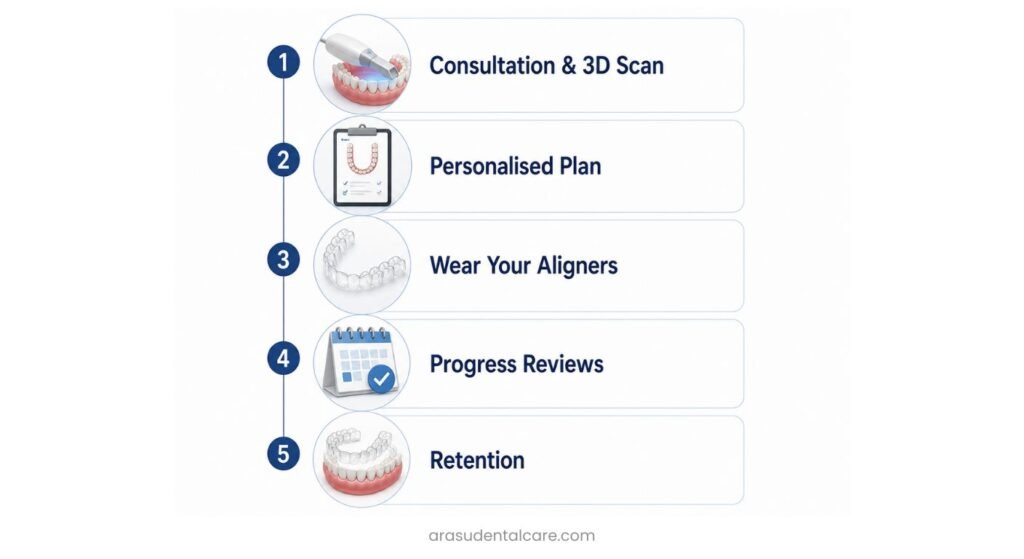
Here’s the step-by-step journey you can expect with our orthodontic team:
Step 1: Comprehensive Consultation & 3D Scan
We assess your bite using digital scans and X-rays to understand whether your overbite is dental, skeletal, or a combination.
Step 2: Personalised Treatment Plan
Using digital planning, we map out each stage of tooth movement and explain your realistic timeline, options, and outcomes.
Step 3: Begin Wearing Your Aligners
You receive your custom aligners and clear guidance on wear time, hygiene, and what to expect day to day.
Step 4: Progress Reviews
Regular check-ups ensure your treatment stays on track, with any refinements made as needed.
Step 5: Retention
Once aligned, we provide retainers to protect your results and support long-term oral health.
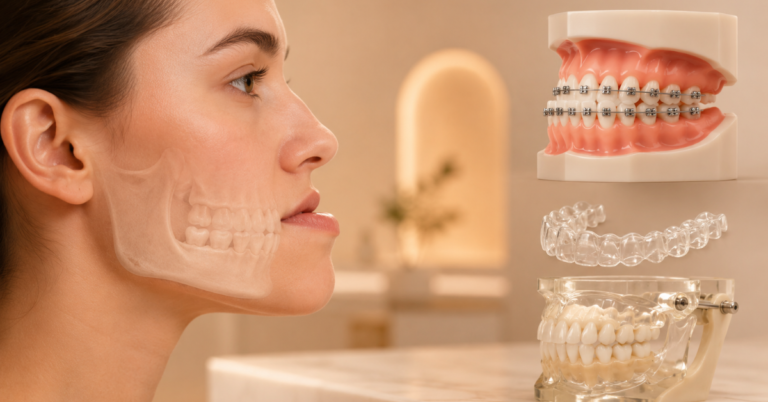
Clear Aligners vs. Braces for Overbite: A Quick Comparison
|
Feature |
Clear Aligners |
Traditional Braces |
|
Appearance |
Nearly invisible |
Visible brackets and wires |
|
Comfort |
Smooth plastic |
Wires may cause irritation |
|
Removable |
Yes |
No |
|
Oral hygiene |
Easy (remove to brush) |
More effort required |
|
Best for |
Mild–moderate dental overbites |
Severe or complex skeletal cases |
|
Compliance needed |
High (20–22 hrs/day) |
Built-in (cannot remove) |
Both can be effective. The right choice depends on your specific bite, your lifestyle, and your commitment to wearing aligners consistently. For deeper background on bite issues, the Cleveland Clinic offers reliable patient-friendly resources.
Frequently Asked Questions
1. Can clear aligners fix a severe overbite?Mild to moderate dental overbites respond well to clear aligners. Severe skeletal overbites involving the jaw may need braces, growth appliances, or, in some adult cases, surgery. A proper assessment is the only way to know for certain.
2. Is overbite correction possible without surgery?In most mild to moderate cases, yes. Surgery is generally reserved for significant skeletal discrepancies in adults. Many patients achieve excellent results with aligners or braces alone.
3. Will clear aligners for overbite be uncomfortable?You may feel gentle pressure for a day or two when switching to a new tray. This is a normal sign your teeth are moving and usually settles quickly. Most patients find aligners comfortable to wear.
4. Do I need elastics or attachments with clear aligners?Sometimes. Attachments and elastics are commonly used to improve control and help correct the bite relationship more predictably. Your orthodontist will advise based on your case.
5. How long will I need to wear a retainer afterwards?Retainers are essential to maintain your results. Your orthodontist will recommend a personalised retention plan, often