Losing a tooth can affect more than just your smile. It can change how you eat, speak, and even how you feel about yourself. Dental Implants offer a modern and reliable way to replace missing teeth with results that look and feel natural.
At Arasu Dental Care, we often meet patients who are unsure about what dental implants really are. This guide will help you understand the procedure, benefits, and what to expect — in simple and clear language.
What Are Dental Implants?
A dental implant is a small, screw-shaped post made of titanium or ceramic. It is placed into the jawbone to act as a replacement root for a missing tooth.
Once the implant heals and bonds with the bone, a crown, bridge, or denture is attached on top. The result feels and works almost like a natural tooth.
Unlike removable dentures, dental implants stay fixed in the mouth. They are designed to be a long-term solution for tooth loss.
Parts of a Dental Implant
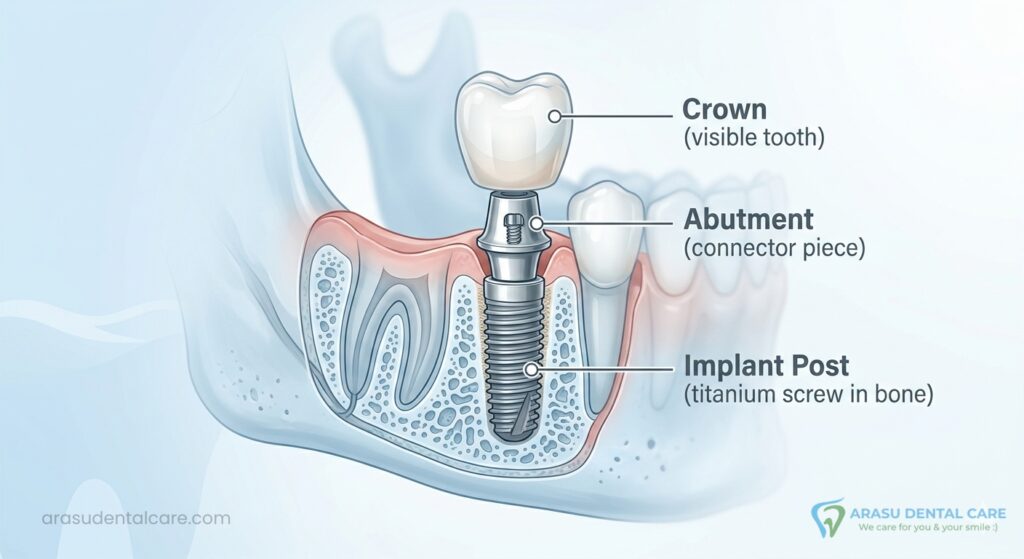
A dental implant has three main parts that work together to restore your tooth.
1. The Implant Post: This is the titanium screw placed into the jawbone. It acts like the root of the tooth.
2. The Abutment: A small connector that joins the implant post to the artificial tooth above the gum line.
3. The Crown: The visible part of the implant, shaped and coloured to match your natural teeth.
Why Are Dental Implants Recommended?
Dental implants are often suggested when a tooth is lost due to decay, injury, gum disease, or natural ageing. They help in many ways beyond appearance. A missing tooth can slowly cause the jawbone in that area to shrink. Implants help stimulate the bone and keep it strong, much like a natural tooth root would.
They also prevent nearby teeth from shifting out of place, which can affect your bite and chewing comfort over time.
Signs You May Need a Dental Implant
You may benefit from a dental implant if you experience any of the following:
- One or more missing teeth
- Difficulty chewing certain foods
- A loose or uncomfortable denture
- A broken tooth that cannot be saved
- Bone loss in the jaw from a long-missing tooth
- Gaps that affect your smile or confidence
A proper dental examination can help identify whether implants are suitable for your case.
Common Causes of Tooth Loss
Understanding why teeth are lost helps explain why implants are needed. Some common reasons include:
Tooth Decay: Untreated cavities can damage the tooth beyond repair.
Gum Disease: Advanced gum infection can weaken the support around teeth.
Injury or Accident: A fall or sports injury may knock out a tooth.
Failed Root Canal: In rare cases, a previously treated tooth may need to be removed.
Natural Wear and Ageing: Teeth may weaken or fracture over time.
According to the World Health Organization, nearly 7% of adults aged 20 years and older have lost all their natural teeth, showing how common tooth loss truly is.
Types of Dental Implants
Not every patient needs the same type of implant. Your dentist may recommend one based on your bone health, number of missing teeth, and overall condition.
1. Endosteal Implants
These are the most common type. They are placed directly into the jawbone and look like small screws. They suit most patients with healthy jawbone.
2. Subperiosteal Implants
These are placed under the gum but above the jawbone. They are used when a patient does not have enough bone height and prefers to avoid bone grafting.
3. Zygomatic Implants
A less common type, placed in the cheekbone instead of the upper jaw. They are used in cases of severe bone loss in the upper jaw.
4. All-on-4 Implants
This technique uses four implants to support a full set of teeth. It is often chosen by patients who have lost most or all of their teeth.
5. Mini Dental Implants
Smaller in diameter than regular implants. They are often used to support lower dentures or in areas with limited bone.
Not all dental implants are the same. Explore the different types of dental implants, their benefits, and which option may be best for restoring your smile. Read our blog to learn more.
The Dental Implant Procedure: Step by Step
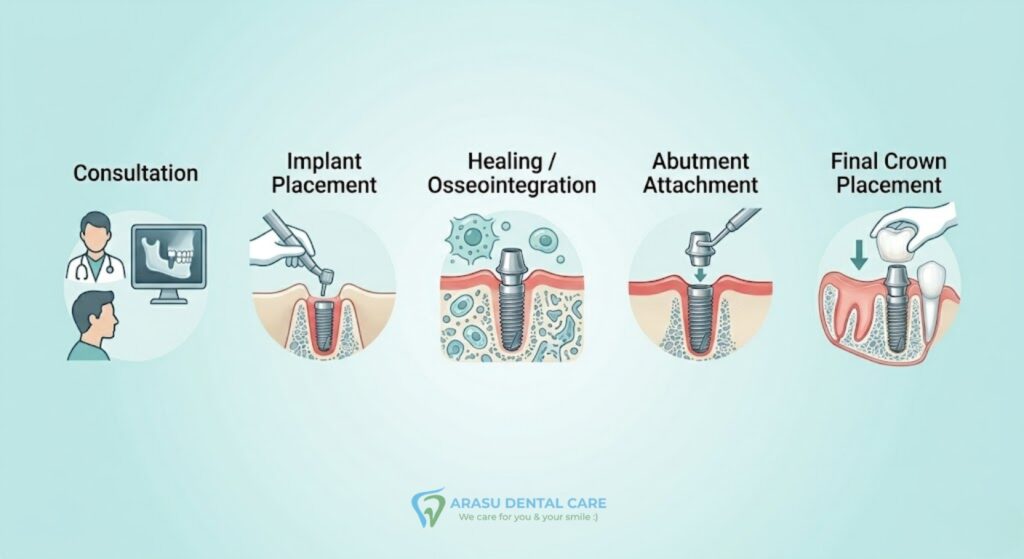
The dental implant process is done in stages. Each stage allows proper healing and ensures long-term success.
| Stage | What Happens | Approximate Time |
| Consultation | Examination, X-rays, and 3D scans | 1 visit |
| Implant Placement | Titanium post placed in jawbone | 1–2 hours |
| Healing (Osseointegration) | Bone fuses with the implant | 3–6 months |
| Abutment Placement | Connector attached to implant | Short visit |
| Crown Fitting | Final tooth placed on implant | 1–2 visits |
How the Surgery Works
The procedure is done under local anaesthesia, so you remain comfortable throughout. Your dentist makes a small opening in the gum to place the titanium post into the bone.
After placement, the gum is closed and given time to heal. During this period, the bone naturally grows around the implant, locking it firmly in place. This process is called osseointegration.
Once healing is complete, the abutment is attached, followed by the final crown.
Benefits of Dental Implants
Dental implants offer advantages that few other treatments can match.
Natural Look and Feel: The crown is designed to match your other teeth in shape and colour.
Long-Lasting Solution : With proper care, implants can last many years, often a lifetime.
Better Chewing and Speaking: Implants stay fixed, so you can eat and speak with confidence.
Preserves Jawbone Health: They stimulate the bone and help prevent bone loss.
Protects Other Teeth: Unlike bridges, implants do not require shaping nearby healthy teeth.
Improved Confidence: A complete smile often brings back self-esteem and comfort in social situations.
Research published by the National Institutes of Health shows that dental implants have a success rate of above 97% when properly maintained.
Dental Implants vs Other Tooth Replacement Options
Many patients ask how implants compare to dentures or bridges. Here is a simple comparison:
| Feature | Dental Implants | Dentures | Bridges |
| Stability | Fixed in jawbone | Removable | Fixed |
| Bone Preservation | Yes | No | No |
| Lifespan | 15+ years | 5–7 years | 7–10 years |
| Affects Other Teeth | No | No | Yes |
| Comfort | Feels natural | May shift | Comfortable |
| Care | Like natural teeth | Daily removal | Special cleaning |
The right treatment depends on your dental condition, bone health, and personal preference.
Who Can Get Dental Implants?
Most healthy adults are good candidates for dental implants. A few factors that help determine eligibility include:
- Healthy gums
- Enough jawbone to support the implant
- Good general health
- Commitment to oral hygiene
- Non-smoker or willingness to quit
People with conditions like uncontrolled diabetes, active gum disease, or those undergoing certain cancer treatments may need additional evaluation. Your dentist will guide you based on your individual case.
Recovery and Aftercare
Healing from implant surgery is usually smooth when proper care is followed. Mild swelling or soreness is normal during the first few days.
Helpful Recovery Tips
- Eat soft foods for the first week
- Avoid hot or spicy foods initially
- Brush gently around the implant area
- Rinse with warm salt water as advised
- Avoid smoking, as it slows healing
- Attend all follow-up appointments
Full healing of the bone around the implant takes a few months. During this time, your dentist will monitor progress to ensure proper integration.
How to Care for Dental Implants
Caring for implants is similar to caring for natural teeth. Good oral hygiene helps them last for many years.
- Brush twice daily with a soft-bristle toothbrush
- Floss carefully around the implant
- Use a non-abrasive toothpaste
- Visit your dentist every 6 months for check-ups
- Avoid biting on very hard foods like ice or hard candy
With proper care, implants stay healthy and functional for decades.
Possible Risks and Complications
Like any procedure, dental implants carry minor risks. These are uncommon when treatment is done by experienced professionals.
Possible issues may include:
- Mild infection at the implant site
- Slow healing in some cases
- Gum recession around the implant
- Implant loosening (rare)
- Sinus issues for upper jaw implants
Most complications can be prevented with good hygiene and regular dental visits. The American Dental Association confirms that implants remain one of the safest and most predictable dental treatments today.
When to See a Dentist
You should consult a dentist if you notice any of the following after getting an implant:
- Persistent pain or swelling
- Bleeding gums around the implant
- A loose feeling in the implant
- Difficulty chewing
- Bad breath that does not go away
Early attention can prevent small issues from becoming bigger problems.
Conclusion
Dental implants are one of the most reliable and natural-feeling ways to replace missing teeth. They restore your smile, support oral health, and improve everyday comfort.
Every patient is unique, and the right treatment depends on your dental condition and overall health. A proper consultation can help you understand what suits you best.
Frequently Asked Questions
1. Are dental implants painful?
The procedure is done under local anaesthesia, so you should not feel pain during surgery. Mild soreness after the procedure is normal and easily managed.
2. How long do dental implants last?
With good care, dental implants can last 15 years or longer. Many patients enjoy them for a lifetime.
3. Can anyone get dental implants?
Most healthy adults are suitable. A dental examination helps determine if your bone and gums can support an implant.
4. Is the healing process long?
Initial healing takes 1–2 weeks. Complete bone integration may take 3–6 months depending on your body’s healing ability.
5. Are dental implants safe?
Yes. Implants are made of body-friendly materials like titanium and have a very high success rate when placed by trained professionals.
6. Will the implant look like a real tooth?
Yes. The crown is custom-made to match the shape, size, and colour of your natural teeth.
7. How do I clean my dental implant?
Brush and floss as you would natural teeth. Regular dental cleanings are also important.
8. What is the cost of dental implants?
The cost depends on the type of implant, materials used, and individual case. Your dentist can provide a clear estimate after evaluation.