Zirconia Crowns vs Ceramic Crowns
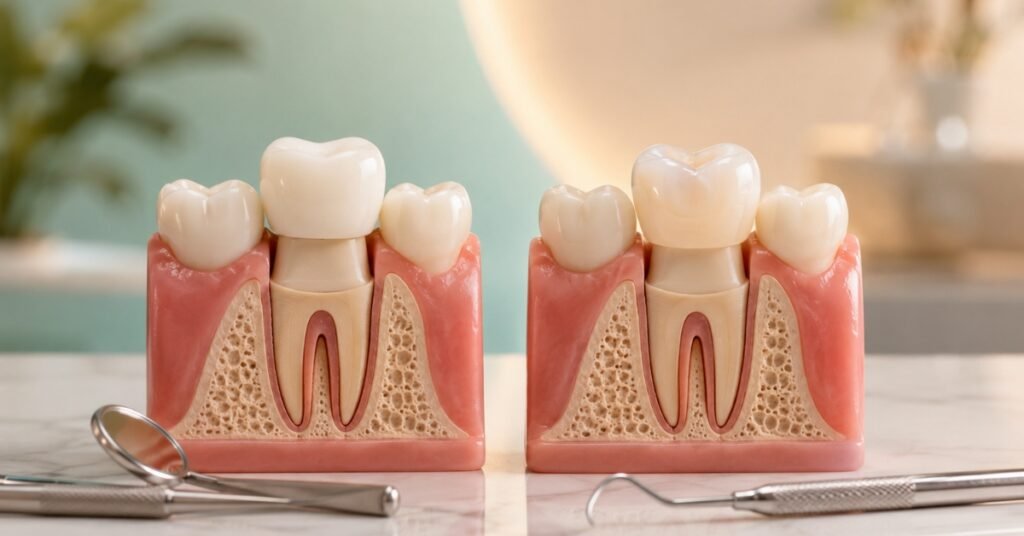
Choosing between zirconia vs ceramic crowns is one of the most common decisions our patients face when they need to restore a damaged or weakened tooth. Both are excellent, metal-free, tooth-coloured options — but they are not the same. One is built for outstanding strength; the other for outstanding beauty.
At Arasu Dental Care, we believe you make the best decision when you understand why a material is recommended — not simply which one. This guide explains the real differences between these two crown types, where each performs best, and how to choose the option that genuinely suits your tooth, your bite, and your smile goals.
By the end, you’ll know exactly what questions to ask at your consultation — and feel confident about your next step.
What Is a Dental Crown?
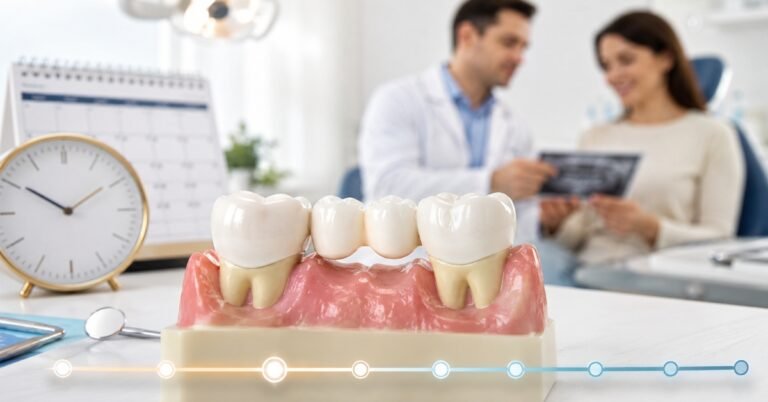
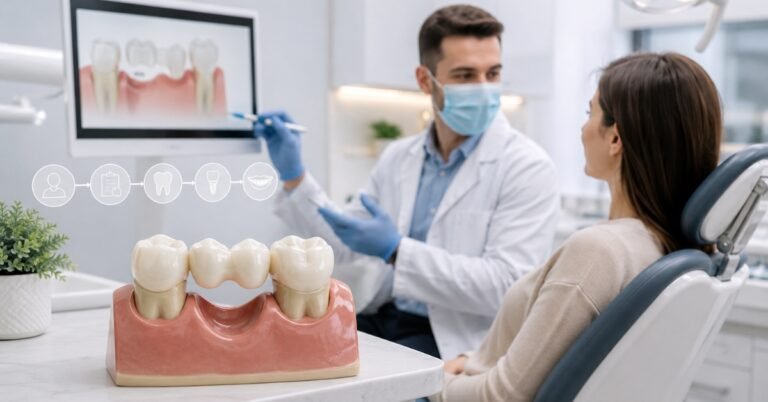
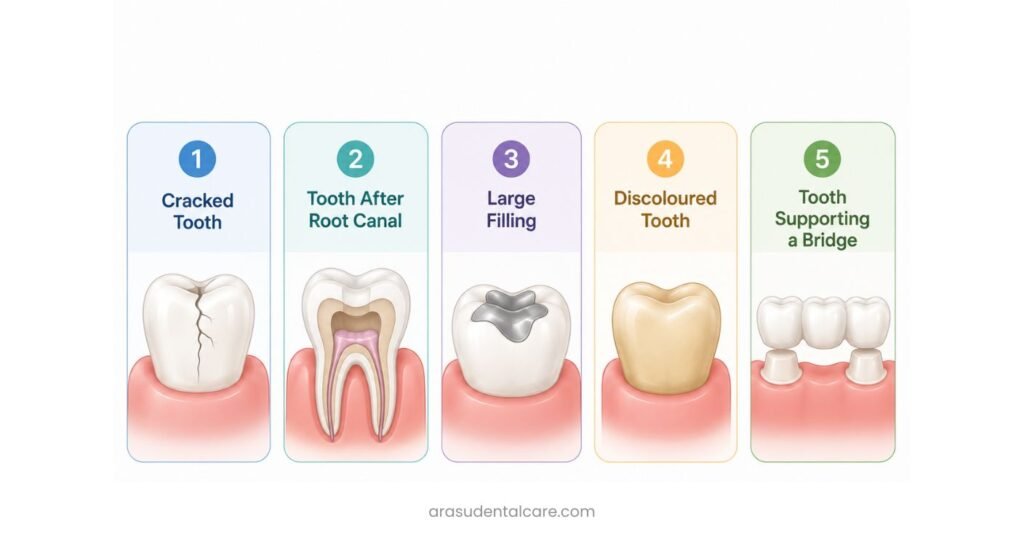
A dental crown is a custom-made cap that fully covers a tooth to restore its shape, strength, function, and appearance. Think of it as a protective helmet for a tooth that can no longer stand on its own.
Your dentist may recommend a crown to:
- Protect a tooth after a root canal
- Restore a tooth that is cracked, broken, or heavily worn
- Cover a large filling where little natural tooth remains
- Improve the look of a discoloured or misshapen tooth
- Support a dental bridge
Crowns can be made from several materials, but the two most popular tooth-coloured choices today are ceramic and zirconia.
What Are Ceramic Crowns?
Ceramic crowns — often called all-ceramic or porcelain crowns, with IPS e.max (lithium disilicate) being the most advanced type — are made entirely from dental ceramic. They are completely metal-free and prized for one standout quality: they look remarkably like natural teeth.
Advantages of Ceramic Crowns
Outstanding natural appearance — Ceramic transmits light in a way very similar to real enamel, giving a lifelike translucency that is hard to match. This makes them an excellent choice for front teeth.
Metal-free and biocompatible — A safe, comfortable option for patients with metal sensitivities, with a gentle response from surrounding gum tissue.
Excellent shade matching — Ceramic blends seamlessly with the colour of your neighbouring teeth.
Stain resistant — Glazed ceramic resists discolouration from coffee, tea, and everyday foods.
Limitations of Ceramic Crowns
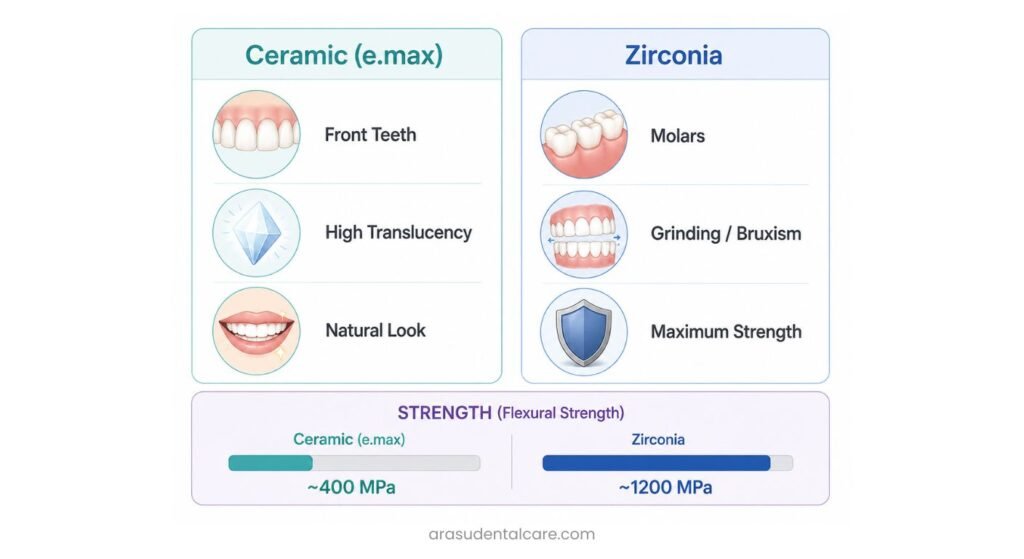
Lower strength under heavy load — Modern e.max has a flexural strength of around 400 MPa. Strong for front teeth, but not ideal for molars that endure heavy chewing.
May need slightly more tooth preparation — To achieve ideal aesthetic thickness, a little more natural tooth may be reduced.
Not the first choice for grinders — In high-pressure zones, ceramic carries a higher risk of chipping over time.
What Are Zirconia Crowns?
Zirconia crowns are made from zirconium dioxide, a remarkably tough, white ceramic material. While technically a ceramic, zirconia is engineered specifically for strength and durability — which is why dentistry treats it as a category of its own.
Advantages of Zirconia Crowns
Exceptional strength — Monolithic (solid) zirconia reaches a flexural strength of 1,000–1,200 MPa, with high-translucency gradient zirconia at 800–1,000 MPa. This makes it highly resistant to fracture.
Ideal for back teeth and grinders — Its toughness suits molars, premolars, and patients who clench or grind (bruxism).
Conservative tooth preparation — Zirconia can often be placed with less removal of natural tooth structure.
Excellent biocompatibility — Hypoallergenic, inert, and well tolerated by gum tissue.
Long-lasting — With proper care, zirconia crowns commonly reach 15+ years.
Limitations of Zirconia Crowns
Slightly less translucent — Although modern multi-layer zirconia has improved dramatically, traditional zirconia can look a little more opaque than e.max in the front smile zone.
May wear opposing teeth — Because of its hardness, zirconia can, over time, wear down the natural teeth it bites against. Careful polishing and bite adjustment help minimise this.
Higher cost — Advanced material and CAD/CAM milling typically make zirconia more expensive than ceramic.
Zirconia vs Ceramic Crowns: Quick Comparison
|
Feature |
Ceramic (e.max) Crowns |
Zirconia Crowns |
|
Aesthetics |
Excellent — best for front teeth |
Good to excellent (modern gradient types) |
|
Strength (Flexural) |
~400 MPa |
1,000–1,200 MPa |
|
Best Use |
Front teeth, low-pressure zones |
Back teeth, high-pressure zones |
|
Durability |
Good; may chip under heavy load |
Very high; fracture-resistant |
|
Tooth Preparation |
Slightly more removal |
More conservative |
|
Biocompatibility |
Excellent |
Excellent |
|
Wear on Opposing Teeth |
Low |
Slightly higher |
|
Cost |
Lower to moderate |
Higher |
The Science of Strength: Why MPa Matters
The strength of a crown is measured in megapascals (MPa) — the pressure a material can take before fracturing. This number matters most for back teeth, where molar bite forces can reach 600–800 Newtons during chewing.
Zirconia’s 1,000–1,200 MPa comfortably exceeds these everyday forces, including the extra load from clenching or grinding. E.max ceramic, at around 400 MPa, is far stronger than older feldspathic porcelain (~100 MPa) — which is why it performs reliably on front teeth but remains less suited to heavy molar zones.
This is backed by clinical research. A review published in The Open Dentistry Journal confirms that zirconia can withstand physiological posterior chewing forces and shows mechanical strength up to three times higher than other all-ceramic systems.
Practical takeaway: If you grind your teeth, have a history of cracked restorations, or need a crown on a molar, zirconia is usually the clinically safer choice. A ceramic crown in a high-pressure zone is not just a cosmetic risk — it’s a restoration risk.
Which Crown Is Best for Front Teeth?
Front teeth are highly visible, so appearance often matters as much as strength.
Ceramic (e.max) is frequently preferred for front teeth because of its natural translucency, smooth lifelike surface, and superior shade matching — exactly what the smile zone demands.
Modern layered zirconia is also a strong contender, especially when the front tooth has significant damage, a heavy bite, or a grinding habit that calls for extra durability.
In short: for pure aesthetics, ceramic often leads; when strength and looks must both be high, layered zirconia is an excellent compromise.
Which Crown Is Best for Back Teeth?
Molars and premolars do the heavy lifting of chewing, so strength is the priority. Here, monolithic zirconia is usually the recommended choice because of its outstanding fracture resistance.
Even though gum-line aesthetics matter less on back teeth, modern gradient zirconia still delivers a natural look — so you rarely have to compromise appearance for strength.
A Simple 3-Step Way to Choose
Use this framework to understand which direction your dentist may lean — then confirm it with a professional evaluation.
Step 1 — Identify the tooth location
- Visible front teeth → ceramic or high-translucency zirconia
- Back teeth under heavy load → zirconia
Step 2 — Assess your functional risk
- Do you clench or grind? → zirconia
- History of cracked crowns? → zirconia
- Strong, healthy bite with no grinding? → ceramic is viable for front teeth
Step 3 — Align with your aesthetic goal
- Smile-zone tooth where colour blending is critical → ceramic or layered zirconia
- Any tooth where durability matters most → monolithic zirconia
If you fall neatly into one category, the choice is clear. If you’re in between — say, a visible premolar with a moderate bite — that’s exactly when a hands-on assessment with bite analysis and shade mapping makes the difference.
Cost & Long-Term Value
Cost is naturally one of the first things patients ask about. In general, ceramic crowns cost less upfront, while zirconia commands a premium due to its advanced material and milling process.
But it helps to think about value over time, not just the initial price. Zirconia crowns have published survival rates of 90–95% at 10 years, with many lasting well beyond. A ceramic crown that chips in a high-stress zone and needs replacement may ultimately cost more than a zirconia crown that lasts much longer.
In keeping with our commitment to transparent pricing, our team at Arasu Dental Care will always explain the available options and give you a clear, honest cost breakdown — so there are no surprises, and you choose the treatment that best suits your needs and budget.
(Crown prices vary by tooth, material type, and case complexity. Please refer to our website or consultation for current pricing.)
How to Make Your Zirconia or Ceramic Crown Last Longer
No crown is “fit and forget.” A few simple habits protect your investment:
- Brush twice daily with fluoride toothpaste, paying attention to the crown margin.
- Floss daily around the crown edge where decay can start beneath the cap.
- Wear a night guard if you grind your teeth — this protects both the crown and opposing teeth.
- Avoid using teeth as tools — no chewing ice, opening packets, or biting hard objects.
- Visit your dentist regularly for cleaning, polishing, and early checks of crown fit.
For more on caring for restorations and overall oral health, the American Dental Association (MouthHealthy) offers trusted, patient-friendly guidance.
Frequently Asked Questions
1. What is the main difference between zirconia and ceramic crowns?
Ceramic (e.max) crowns