Metal Crowns vs Tooth-Coloured Crowns
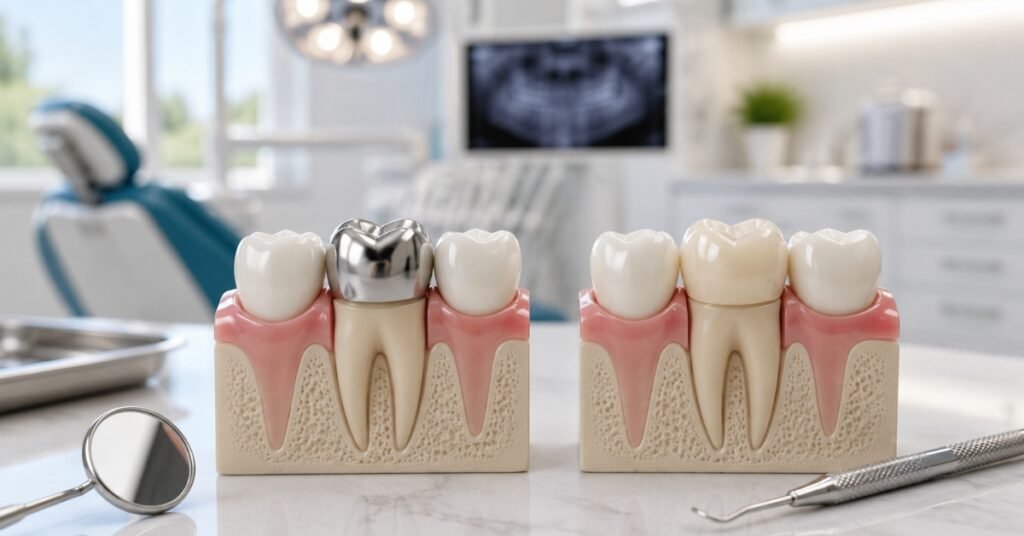
Choosing between metal vs tooth coloured crowns is one of the most common decisions our patients face after a root canal, a cracked tooth, or a large filling. Both options restore strength and function — but they look, feel, and perform quite differently depending on which tooth needs treatment.
If your dentist has recommended a crown and you are weighing your choices, this guide will help. We explain what each crown type is, how they compare in strength and appearance, what they cost, and most importantly — which one suits your specific tooth. No pressure, just clear and honest information so you can make a confident decision.
What Is a Dental Crown and Why Might You Need One?
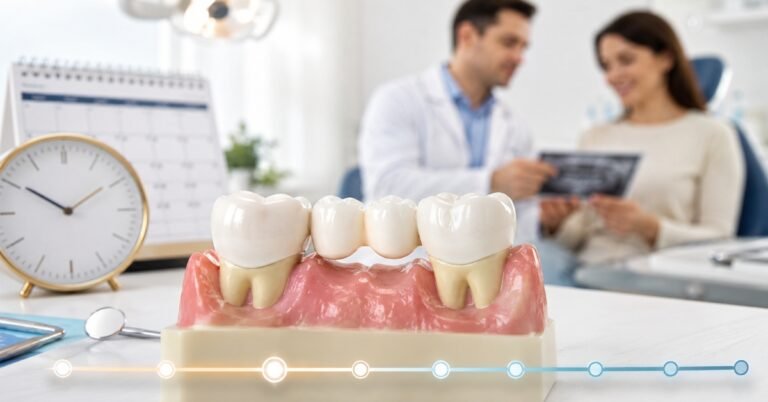
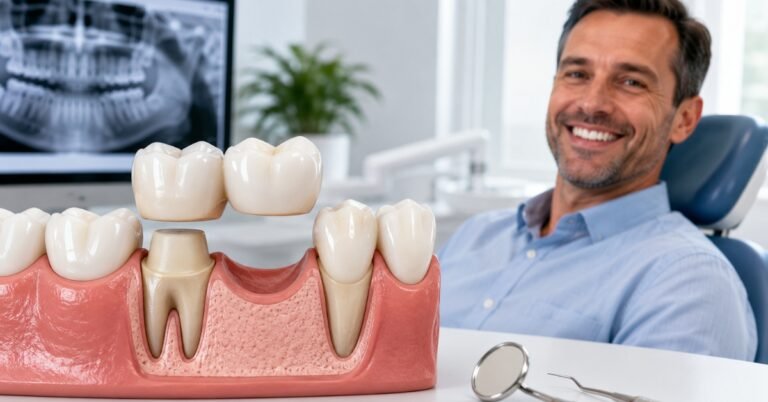
A dental crown is a custom-made “cap” that fits over a prepared tooth. It restores the tooth’s shape, size, strength, and appearance, covering the entire visible portion above the gum line.
A crown may be recommended in several situations:
- To protect a tooth weakened by decay or a crack
- To restore a tooth after root canal treatment
- To rebuild a worn-down or fractured tooth
- To support a tooth with a large filling and little natural structure left
- To anchor a dental bridge or cover a dental implant
- To improve the shape or colour of a misshapen tooth
Once a crown is needed, the next question is almost always about material — and that is where the metal versus tooth coloured debate begins.
Metal vs Tooth Coloured Crowns: The Key Difference at a Glance
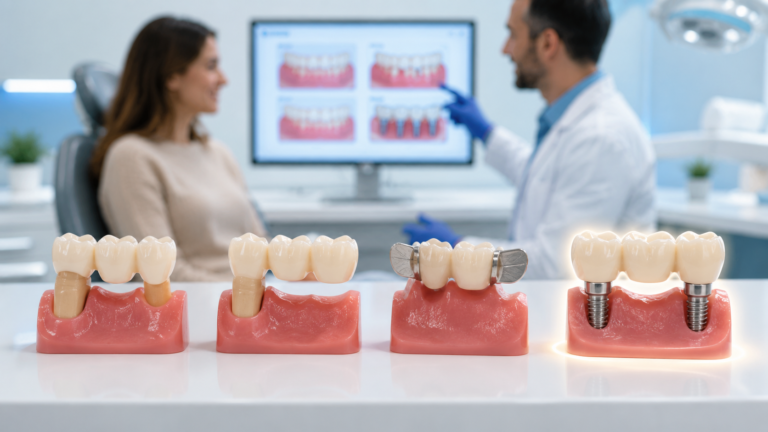
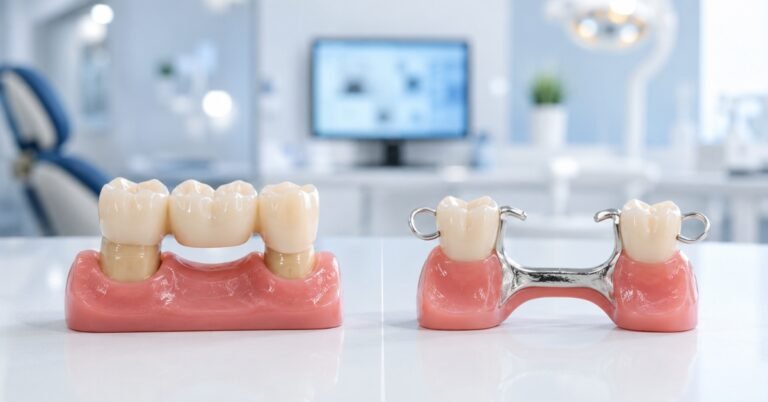
The simplest way to understand the choice is this: metal crowns prioritise strength and longevity, while tooth coloured crowns prioritise a natural appearance.
Most modern decisions come down to where the tooth sits in your mouth and how much force it has to handle every day.
|
Feature |
Metal Crowns |
Tooth Coloured Crowns |
|
Appearance |
Silver or gold, clearly visible |
Natural, blends with surrounding teeth |
|
Strength |
Very high |
High (especially zirconia) |
|
Tooth reduction |
Minimal |
Moderate |
|
Lifespan |
15–30+ years |
10–20 years |
|
Best for |
Back molars |
Front teeth & visible areas |
|
Allergy risk |
Possible with base metals |
Very low (biocompatible) |
|
Temperature sensitivity |
Higher (conducts heat/cold) |
Low |
Understanding Metal Crowns
A metal crown is made entirely from metal or a metal alloy. It is one of the oldest and most trusted restorations in dentistry, valued mainly for its strength.
Because of their metallic shade, these crowns are usually placed on back teeth where they are not visible during a normal smile. Metal crowns are made from various alloys, each with its own properties:
- Gold alloy crowns — gentle on opposing teeth, excellent fit, very long-lasting
- Base metal alloy crowns — strong and budget-friendly (nickel, chromium, cobalt-chromium)
- Cobalt-chromium crowns — strong, allergy-friendly, well tolerated
- Titanium crowns — lightweight, highly biocompatible, ideal for sensitive patients
According to the American Dental Association, crowns can last many years when cared for properly — and full-metal options consistently show some of the highest long-term survival rates.
Strengths of Metal Crowns
- Exceptional durability — rarely chip or crack
- Require minimal tooth reduction, preserving natural structure
- Gentle on the teeth they bite against (especially gold)
- Excellent for patients who grind or clench their teeth
Where Metal Crowns Fall Short
The most obvious drawback is appearance — the metallic colour does not match natural teeth. Metal also conducts heat and cold, so you may notice temporary sensitivity after placement. Patients with a nickel sensitivity may need a hypoallergenic alternative.
Understanding Tooth Coloured Crowns
Tooth coloured crowns are designed to look like natural teeth. They are made from ceramic, porcelain, zirconia, or a porcelain-fused-to-metal (PFM) combination.
All-Ceramic / All-Porcelain Crowns
These offer the most lifelike, translucent appearance — ideal for front teeth. They are completely metal-free, making them a good choice for patients with metal allergies. The trade-off is that traditional porcelain can be more prone to chipping under heavy bite force.
Zirconia Crowns
Zirconia has transformed tooth coloured dentistry over the past decade. It is harder than natural enamel and far stronger than traditional porcelain, which makes it viable even on back teeth. Zirconia delivers a strong blend of beauty and durability — and has become the default tooth coloured option for many patients.
Porcelain-Fused-to-Metal (PFM) Crowns
PFM crowns combine a metal core (for strength) with a porcelain outer layer (for appearance). They were the standard for years, but a dark line can appear at the gum margin as gums recede over time. Many clinics now lean toward zirconia where PFM would once have been recommended.
Strengths of Tooth Coloured Crowns
- Natural, seamless appearance that blends with your smile
- Biocompatible — very low risk of allergic reaction
- Excellent choice for front teeth and visible areas
- Modern zirconia handles strong chewing forces well
Where Tooth Coloured Crowns Fall Short
Very hard materials like zirconia can wear opposing teeth if the bite is not carefully adjusted. Tooth coloured crowns may also require slightly more tooth reduction than metal options, and high-quality versions cost more.
Front Teeth vs Back Teeth: Why Location Matters Most
In our clinical experience, the single biggest factor in choosing a crown is which tooth needs it.
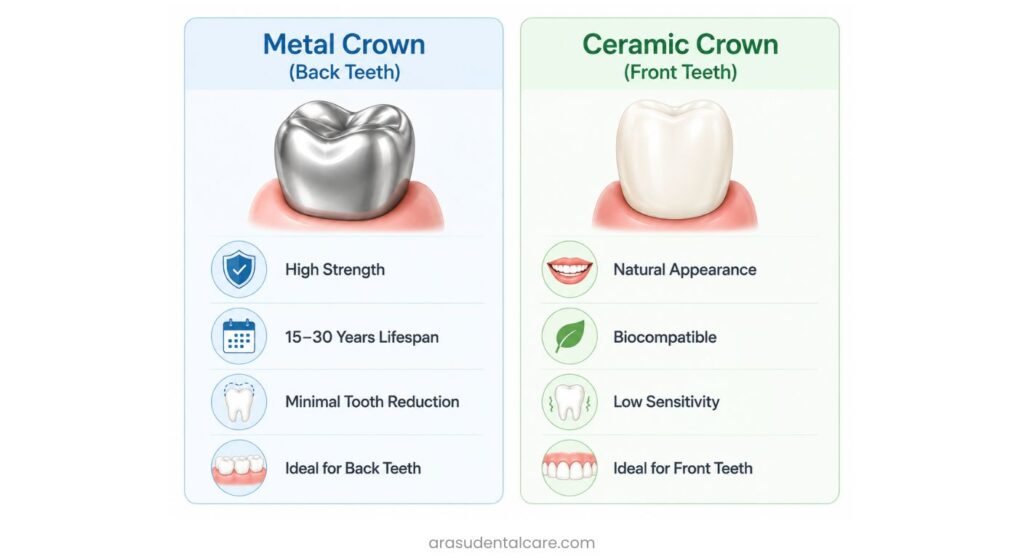
Front teeth are highly visible but handle lower biting force. Here, appearance is the priority — high-translucency all-ceramic or layered zirconia crowns give the most natural result.
Back molars are mostly hidden but take heavy chewing loads. Here, strength and durability matter most — making metal or zirconia the stronger candidates.
We once had a patient request an all-porcelain crown for a lower back molar because she had read it “looked the most natural.” We explained that this tooth is almost never visible during normal conversation, so the aesthetic benefit was minimal — while the strength advantage of zirconia was significant. She appreciated the honesty and chose zirconia. Years later, it is still performing well.
This is exactly why we believe the right question is never “Which crown is best?” but rather “Which crown is best for this tooth?”
Cost of Metal vs Tooth Coloured Crowns
Cost is understandably a major consideration. As a general guide based on the Indian market:
- Metal crowns are typically the most affordable option, especially base metal alloys
- PFM crowns sit in the mid-range
- Zirconia and all-ceramic crowns are usually the higher-investment choice due to advanced materials and lab work
At Arasu Dental Care, we believe in transparent pricing. Crown costs vary by material, the complexity of your case, and the lab work involved — so we explain all available options and their costs clearly before you decide. There are no hidden surprises.
How a Crown Is Placed: What to Expect
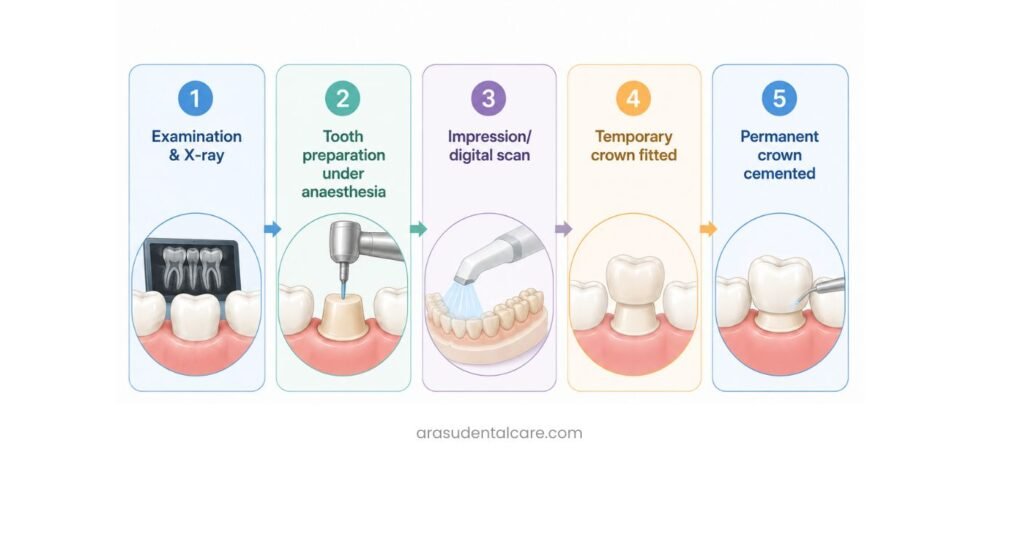
The crown procedure is usually completed over two comfortable appointments (some clinics offer same-day ceramic crowns).
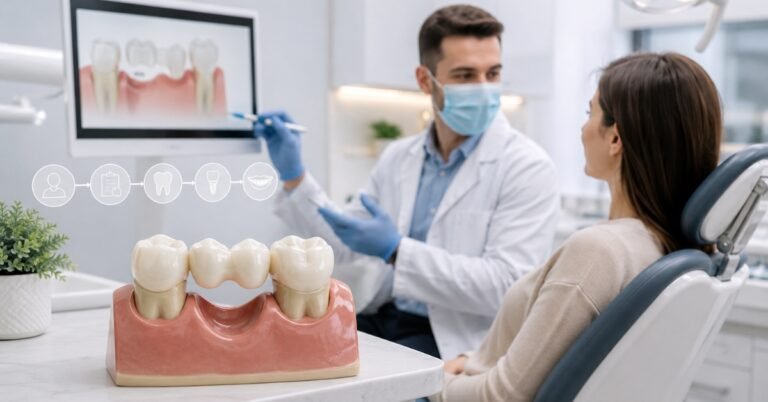
Step 1 — Examination: Your dentist examines the tooth and takes an X-ray to confirm a crown is the right choice.
Step 2 — Tooth preparation: A small layer of the tooth is gently shaped under appropriate local anaesthesia to make room for the crown.
Step 3 — Impression or digital scan: A precise impression is taken and sent to the dental lab where your custom crown is made.
Step 4 — Temporary crown: A temporary crown protects the tooth while the permanent one is prepared. You can eat and speak normally.
Step 5 — Final fitting: Your permanent crown is checked for fit, colour, and bite, then cemented securely in place.
The Cleveland Clinic notes that most patients return to normal activities right after the appointment, with only mild sensitivity for a few days.
How to Care for Your Crown (Metal or Tooth Coloured)
A well-cared-for crown can last for many years. Good habits protect both the crown and the natural tooth beneath it:
- Brush twice daily with a soft-bristled brush and fluoride toothpaste, paying attention to the gum line
- Floss gently around the crown to remove plaque a brush cannot reach
- Avoid biting hard objects like ice, hard candy, or pen caps
- Attend regular check-ups so any small issues are spotted early
Frequently Asked Questions
1. Which lasts longer — metal or tooth coloured crowns?Both can last well over a decade with good care. Metal crowns have the longest track record (15–30+ years), while zirconia offers excellent strength and a natural look (often 15–20 years).
2. Are tooth coloured crowns strong enough for back teeth?Yes. Modern zirconia is harder than enamel and stronger than traditional porcelain, making it suitable even for molars that handle heavy chewing.
3. I grind my teeth at night — which crown is better?Metal crowns and zirconia both resist grinding forces well. Your dentist can recommend the best option after assessing your bite.
4. Will a metal crown be visible when I smile?Metal crowns are usually placed on back molars, which are rarely seen during a normal smile. If you smile widely or have a visible tooth, a tooth coloured crown may suit you better.
5. Are metal crowns safe? Can they cause allergies?Metal crowns are generally very safe. A small number of patients are sensitive to nickel or base metals — in which case titanium, gold, or a metal-free option is recommended.
6. Why are tooth coloured crowns more expensive than metal crowns?The materials (zirconia and high-quality ceramics), advanced lab work, and the aesthetic precision involved make tooth coloured crowns a higher investment than basic metal options.
7. Can I whiten a crown later?No. Crowns cannot be whitened once made. If you are considering teeth whitening, complete it first so your crown can be colour-matched to your brighter shade.
8. How do I know if my crown needs replacing?Watch for persistent pain or sensitivity, a loose or ill-fitting feel, visible damage, a bad taste near the crown, or decay detected during a check-up.
The Bottom Line: Make the Choice That Suits Your Smile
There is no single “best” crown — only the right crown for your specific tooth, bite, and budget. Metal crowns remain unbeaten for strength on hardworking back molars. Tooth coloured crowns, especially zirconia, deliver a beautiful, natural result that is now strong enough for almost any tooth.
The most reliable next step is a proper clinical assessment, where a dentist can evaluate your tooth and explain your options honestly.
At Arasu Dental Care in Coimbatore, our experienced dentists coimbatore take the time to understand your needs and walk you through every option — whether that is a metal crown, zirconia, or something in between. We are open all seven days, and our goal is always to help you make a confident, informed decision.
Ready to find the right crown for your smile? Book your consultation with Arasu Dental Care today — or call us at +91 88380 22157. We’re here to help you choose what truly suits your tooth, your bite, and your budget.