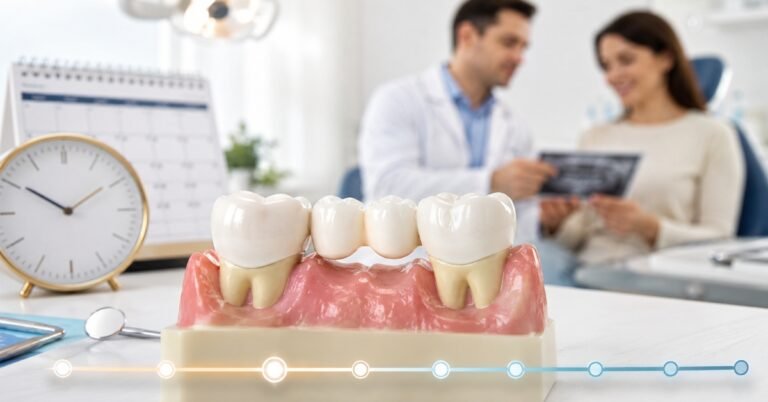
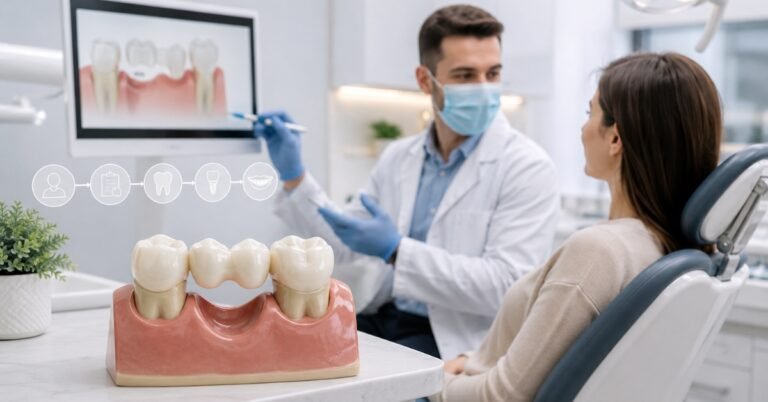
Factors Affecting Dental Implant Cost
If you’ve recently lost a tooth or struggled with an ill-fitting bridge, you’ve probably started researching dental implants — and quickly run into a confusing range of prices. Understanding the factors affecting dental implant cost is the first step toward making a confident, informed decision rather than being surprised at the billing counter.
At Arasu Dental Care, we believe in complete pricing transparency. The truth is, no two implant treatments cost exactly the same, because no two mouths are the same. The good news? Once you understand why costs vary, you can plan realistically and choose the option that genuinely suits your needs and budget.
In this guide, our implantology team breaks down every factor that influences your final cost — clearly, honestly, and without any sales pressure.
What Is a Dental Implant? (And Why Cost Varies)
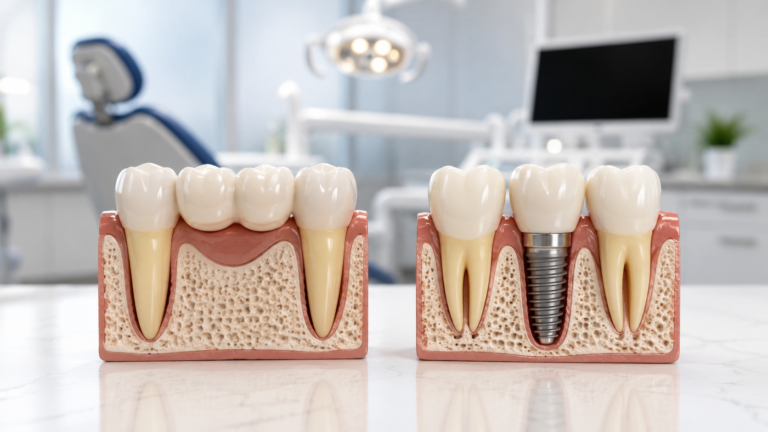
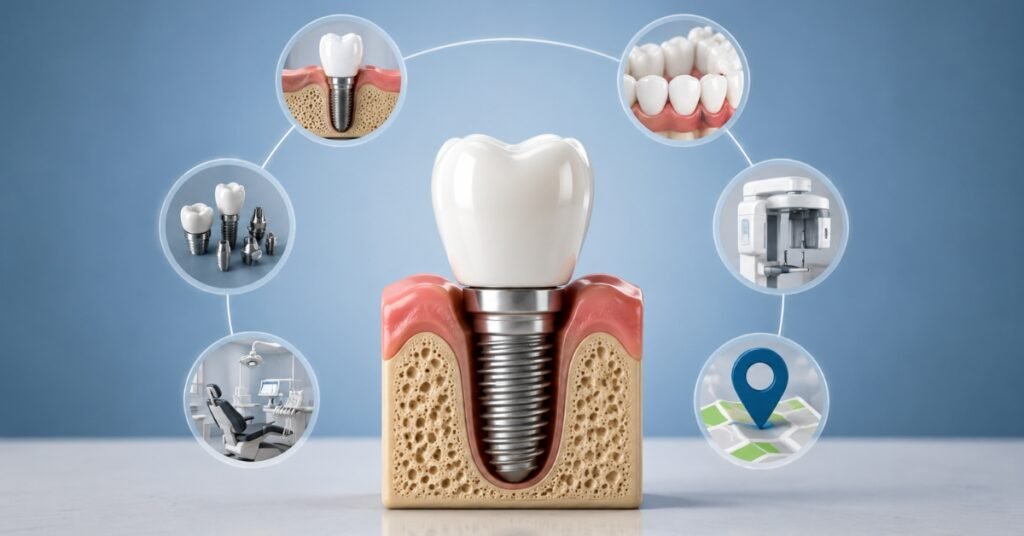
A dental implant is a long-term replacement for a missing tooth, designed to function and feel like a natural one. It has three main parts:
- The Implant Post (Fixture): A small titanium or zirconia screw placed into the jawbone, acting as an artificial tooth root.
- The Abutment: A connector that links the post to the visible tooth.
- The Crown: The custom-made artificial tooth placed on top, matched to your natural teeth.
Because each component — plus the surgery and any preparation your jaw needs — varies from patient to patient, the total cost is genuinely personalized. Let’s explore exactly what drives those differences.
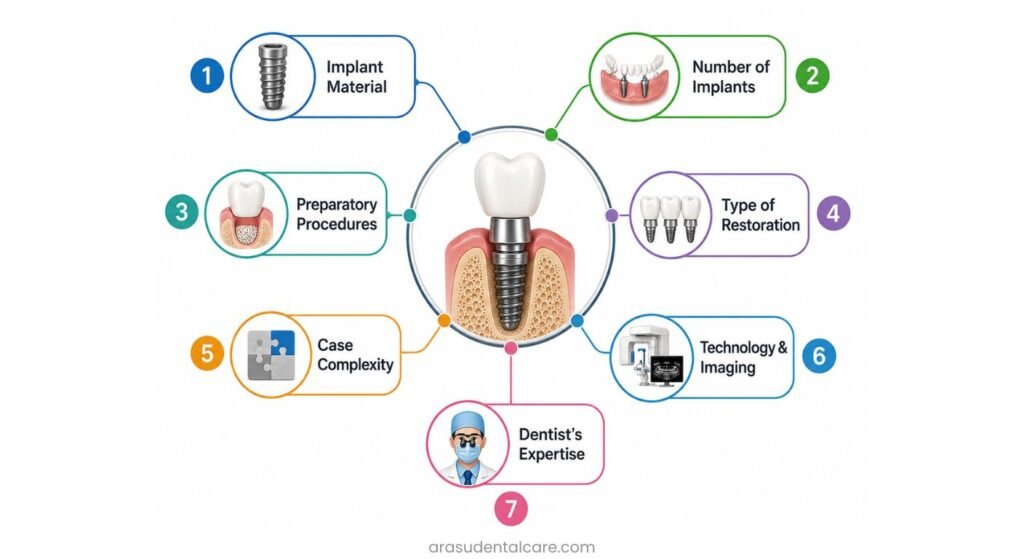
The Key Factors Affecting Dental Implant Cost
1. Quality and Type of Implant Material
The material used for your implant is one of the biggest cost drivers.
- Titanium implants are the global standard — strong, biocompatible, and well-researched, with decades of proven outcomes. According to the National Institutes of Health, implants enjoy success rates of over 95% across long-term studies.
- Zirconia (ceramic) implants are metal-free and offer a highly natural, tooth-like appearance — ideal for patients with metal sensitivities. They typically cost more due to material and manufacturing expenses.
The brand and grade of the implant system also matters. Established international systems, backed by long-term research, often cost more than economy options — but they bring greater predictability and easier servicing in the future.
A note on choosing: We never push patients toward the most expensive option. We explain the available systems and help you choose based on your clinical needs, not price alone.
2. Number of Implants Required
This is straightforward — the more teeth you’re replacing, the more your treatment will cost.
|
Scenario |
Implants Typically Needed |
Relative Cost |
|
Single missing tooth |
1 implant + crown |
Lowest |
|
Several missing teeth |
2–4 implants + bridge |
Moderate |
|
Full-arch (All-on-4) |
4 implants per arch |
Higher |
|
Full-mouth rehabilitation |
6–8 implants per arch |
Highest |
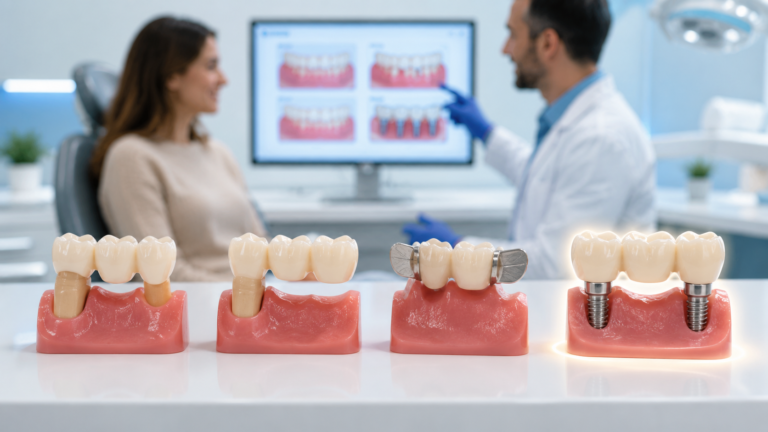
Interestingly, replacing several missing teeth doesn’t always mean one implant per tooth. Solutions like an implant-supported bridge or All-on-4 can restore a full arch using fewer implants — often a more cost-effective and comfortable choice for the right candidate.
3. The Need for Preparatory Procedures
This is where many patients are caught off guard. If your jaw isn’t quite ready for an implant, additional procedures may be needed first — each adding to the timeline and cost.
Common preparatory treatments include:
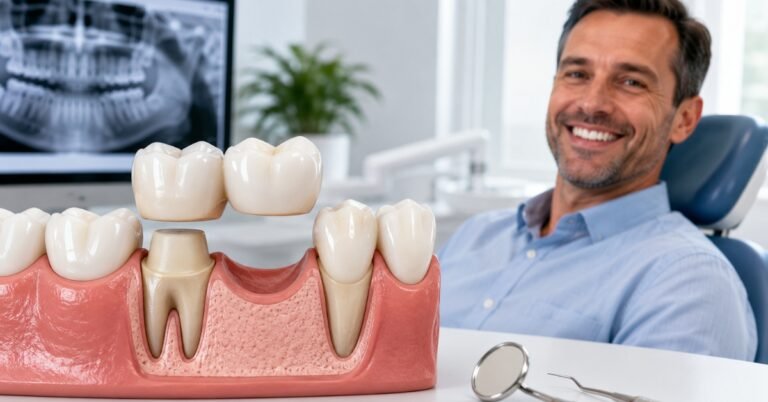
- Bone Grafting: If you’ve had a missing tooth for a long time, the jawbone may have shrunk. Grafting rebuilds enough bone to securely anchor the implant.
- Sinus Lift (Sinus Augmentation): For upper back teeth, the sinus may sit too close to the jaw. A sinus lift creates the space needed for safe placement.
- Tooth Extraction: A damaged tooth at the implant site may need removing first.
- Gum (Periodontal) Treatment: Implants cannot be placed in actively inflamed gums. Treating gum disease first protects your long-term success.
Research published in the journal Healthcare confirms that factors like bone quality, primary stability, and prior surgical site condition significantly influence implant outcomes — which is exactly why these preparatory steps, when needed, are an investment in lasting results, not an upsell.
4. Type of Restoration (The Crown on Top)
The visible tooth — the crown, bridge, or denture — also affects your cost.
|
Restoration Type |
Best For |
Cost Influence |
|
Single Crown (Ceramic/Zirconia) |
One tooth |
Standard |
|
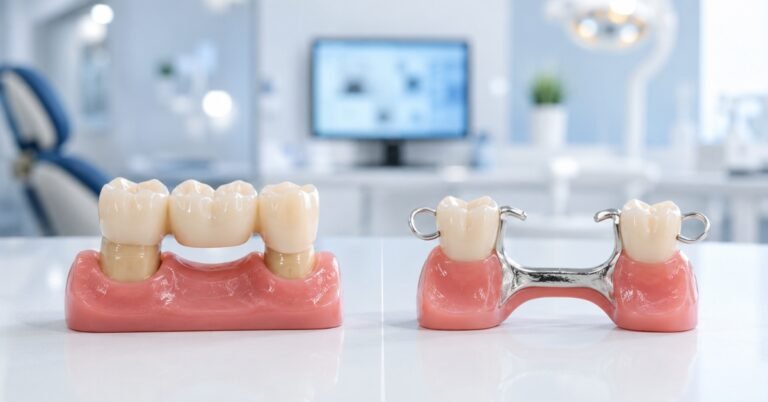
Fixed Bridge |
A few adjacent teeth |
Moderate |
|
Implant-Supported Denture (Overdenture) |
Full arch, removable |
Varies |
|
Full-Arch Fixed Prosthesis |
Full-mouth, fixed |
Highest |
Higher-quality crown materials like zirconia offer better aesthetics and durability, which can mean a slightly higher upfront cost but excellent long-term value.
5. Complexity of Your Individual Case
Every mouth tells a different story. Your overall oral and general health directly shapes both your treatment plan and its cost.
Factors that can add complexity include:
- Bone density and quality
- The health of surrounding teeth and gums
- The position of the missing tooth (back molars face heavier chewing forces)
- Medical conditions such as diabetes or a smoking history, which can affect healing
A thorough, honest evaluation upfront ensures your treatment plan is realistic — and that you understand any added costs before treatment begins, never after.
6. Technology and Diagnostic Imaging
Modern implant dentistry relies on advanced dental treatment coimbatore tools that improve precision and safety.
- 3D Cone Beam CT (CBCT) scans map your bone, nerves, and sinuses in detail, allowing precise planning.
- Guided implant surgery uses these scans to place implants in the optimal position.
- Digital impressions replace messy putty moulds with comfortable, accurate scanning.
While these technologies may add to the cost, they significantly reduce the risk of complications — often saving money and discomfort in the long run.
7. Experience and Expertise of the Implant Team
The skill of the dentist placing your implant matters enormously. An experienced implantologist can handle complex cases, anticipate challenges, and deliver predictable outcomes.
At Arasu Dental Care, your implant treatment is handled by credentialed specialists — including implantologists with fellowships from internationally recognised institutions and over a decade of clinical experience across single-tooth to full-mouth rehabilitations. Choosing an experienced dentists coimbatore team may cost slightly more upfront, but it reduces the risk of failure and costly corrections later.
How to Estimate Your Dental Implant Cost: A Step-by-Step Guide
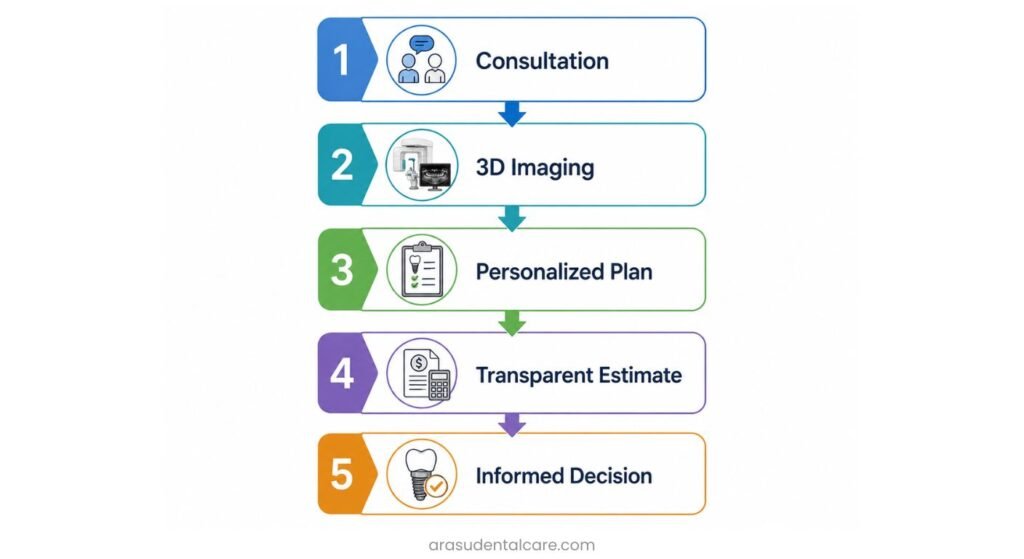
Want to understand your likely cost before committing? Here’s the process we follow with every patient.
Step 1 — Book a ConsultationA specialist examines your mouth, discusses your concerns, and reviews your medical history.
Step 2 — Diagnostic ImagingA 3D CBCT scan reveals your bone quantity, quality, and any hidden factors that affect planning.
Step 3 — Personalized Treatment PlanYou receive a clear breakdown — number of implants, materials, any preparatory procedures, and the restoration type.
Step 4 — Transparent Cost EstimateWe walk you through every line item, answer your questions, and explain payment and EMI options.
Step 5 — Informed DecisionYou choose the option that suits your needs and budget — with zero pressure and no hidden surprises.
Are Dental Implants Worth the Cost?
It’s a fair question. While implants may cost more upfront than a bridge or denture, they offer real long-term value:
- Longevity: With good care, implants can last 15+ years — often a lifetime.
- Bone preservation: Implants stimulate the jawbone, helping prevent the bone loss that follows tooth loss.
- No damage to neighbouring teeth: Unlike bridges, implants don’t require grinding down healthy adjacent teeth.
- Comfort and function: They feel and work like natural teeth, with no slipping or adhesives.
When you spread the cost over years of reliable function, implants frequently work out to be a sound investment in your long-term oral health.
Frequently Asked Questions (FAQs)
1. What is the single biggest factor affecting dental implant cost?There isn’t one single factor — but the number of implants needed and any preparatory procedures (like bone grafting) usually have the largest impact on your total cost.
2. Why do I need a bone graft, and does it really add to the cost?A bone graft rebuilds jawbone that has shrunk after tooth loss, giving the implant a secure foundation. Yes, it adds cost and time, but it significantly improves your chances of long-term success when your dentist recommends it.
3. Are cheaper dental implants coimbatore a bad idea?Not necessarily — but extremely low prices may reflect lower-grade materials or limited planning. We focus on comfortable, effective, predictable outcomes rather than the cheapest possible option, and we always explain what you’re paying for.
4. Does dental insurance cover implants?Coverage varies. Some plans contribute toward the crown or preliminary procedures even if they don’t cover the full implant. We’re happy to help you understand your benefits.
5. Can I pay for my dental implants in instalments?Yes. Arasu Dental Care accepts cash, UPI, cards, and offers EMI options to make treatment more manageable. We’ll discuss the best approach for your situation.
6. How long does the whole implant process take?A standard implant typically takes 3–6 months from placement to final crown, allowing time for the implant to fuse with the bone (osseointegration). Cases needing grafting may take longer.
7. Do implants in back teeth cost more than front teeth?They can. Back molars face heavier chewing forces and may sit near sinuses or nerves, sometimes requiring more robust planning or procedures like a sinus lift.
8. Will I be comfortable during the procedure?Yes. Implant placement is performed under appropriate anaesthesia for your comfort, and we offer sedation options for anxious patients.
Make a Confident, Informed Decision