How Long Does Dental Implant Treatment Take?

If you’re considering replacing a missing tooth, one of the first questions on your mind is likely about dental implant treatment time. The honest answer is that it varies — most people complete the full journey in 4 to 9 months, though some cases finish sooner and others take a little longer.
At Arasu Dental Care, we believe you deserve a clear, realistic picture before you begin. So in this guide, we’ll walk you through every stage of the process, explain what influences the timeline, and help you understand what to expect — without any pressure or rushed promises.
Let’s help you make a confident, informed decision about your smile.
Why Dental Implants Take Time (And Why That’s a Good Thing)
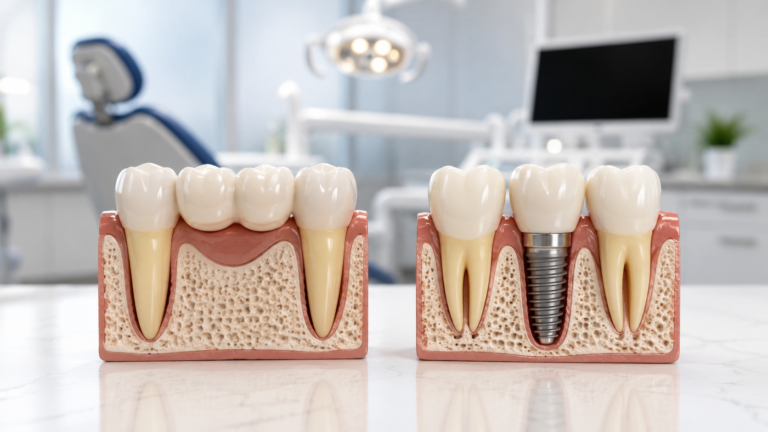
A dental implant isn’t just an artificial tooth. It’s a titanium post that replaces your missing tooth root, surgically placed into your jawbone.
The reason the process takes several months comes down to one important biological step: osseointegration. This is when your jawbone naturally fuses with the implant, creating a foundation as stable as a natural tooth root.
According to the American Academy of Periodontology, this fusion is what gives implants their remarkable longevity — many last a lifetime with proper care.
In short, the wait isn’t wasted time. It’s your body building a lasting result.
Dental Implant Treatment Time: The Complete Timeline at a Glance
Here’s a quick overview of the typical stages and how long each one takes.
|
Stage |
What Happens |
Approximate Time |
|
Consultation & Planning |
Exam, X-rays, 3D imaging, treatment plan |
1 visit |
|
Extraction (if needed) |
Removing a damaged tooth |
1 visit + 2 weeks–3 months healing |
|
Bone Grafting (if needed) |
Rebuilding jawbone |
3–6 months healing |
|
Implant Placement |
Titanium post surgically inserted |
1–2 hours |
|
Osseointegration (Healing) |
Bone fuses with the implant |
3–6 months |
|
Abutment Placement |
Connector post attached |
1 visit + 2–3 weeks healing |
|
Final Restoration |
Crown, bridge, or denture fitted |
1–2 visits |
Step-by-Step: What to Expect at Each Stage
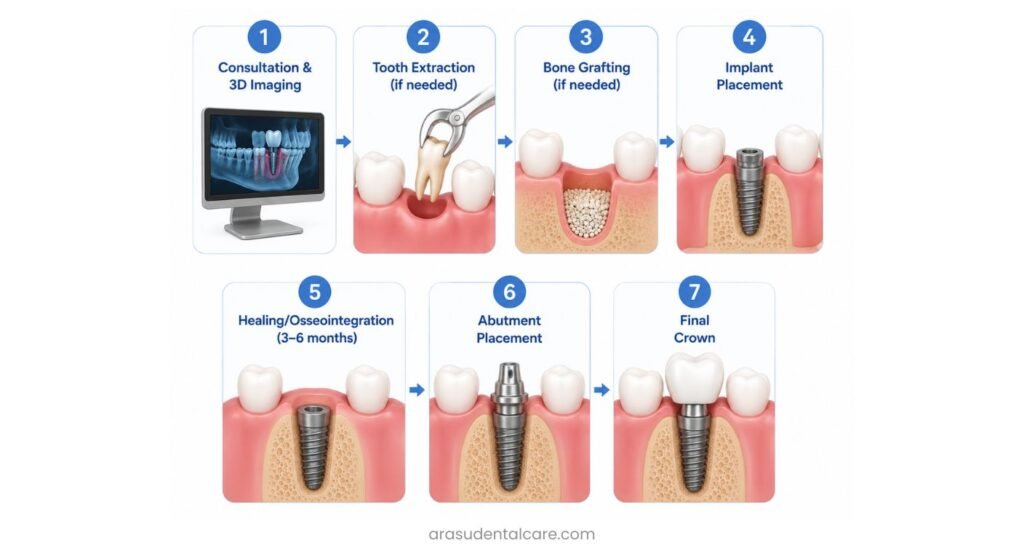
Step 1: Consultation and Treatment Planning (1 Visit)
Your journey begins with a thorough evaluation. During this appointment, your dentist will examine your gums, check your bite, and take digital X-rays — and often a 3D CBCT scan — to assess your jawbone density.
This step matters more than people realise. It helps your dentist plan the exact position of your implant and confirm whether you’re a suitable candidate.
You’ll also discuss your goals, medical history, and any concerns. At Arasu Dental Care, we use this time to explain all your options clearly, so you leave knowing exactly what your next step should be.
Step 2: Tooth Extraction (If Required)
If the tooth being replaced is still present and damaged, it may need to be removed first. The extraction itself is performed comfortably under appropriate anaesthesia.
In some cases, the socket needs 2 weeks to 3 months to heal before placing an implant — especially if there was an infection. In other situations, an implant can be placed immediately after extraction.
Step 3: Bone Grafting (If Required)
When a tooth has been missing for a long time, the jawbone in that area can shrink — a natural process called resorption. If there isn’t enough healthy bone to anchor the implant, a bone graft rebuilds the foundation.
Minor grafting can sometimes be done during implant surgery. Larger grafts, however, need 3 to 6 months to heal fully before the implant is placed.
The U.S. Food and Drug Administration notes that adequate bone support is essential for long-term implant success — which is why this step, though it adds time, is genuinely worth it.
Step 4: Implant Placement (1–2 Hours)
This is the surgical stage many patients feel nervous about — but it’s more straightforward than it sounds.
Under local anaesthesia (with sedation available for anxious patients), your dentist places the titanium post into your jawbone. A single implant typically takes 30 minutes to an hour; multiple implants take longer.
You may feel gentle pressure, but the procedure is performed comfortably. Afterwards, mild swelling or soreness for a few days is normal and easily managed with over-the-counter pain relievers.
Step 5: Healing and Osseointegration (3–6 Months)
This is the longest stage — and the most important one.
During these months, your jawbone gradually fuses around the implant. Lower-jaw implants often heal faster (denser bone), while upper-jaw implants may take a little longer due to softer bone.
Your dentist will monitor your progress with regular check-ups. To keep your smile intact, a temporary tooth can often be fitted during this period, especially for front teeth.
Step 6: Abutment Placement (2–3 Weeks Healing)
Once your implant has fused securely, a small connector piece called an abutment is attached to the post.
Sometimes this is placed during the initial surgery, avoiding a second minor procedure. If done separately, your gum tissue needs about 2 to 3 weeks to heal around it.
Step 7: Final Restoration (1–2 Visits)
Finally, the part you’ve been waiting for. Impressions of your mouth are taken to create a custom crown, bridge, or denture that matches your natural teeth in shape, size, and colour.
Your restoration is fitted, your bite is checked, and any adjustments are made. When done well, no one will be able to tell the difference between your implant and a natural tooth.
What Factors Affect Dental Implant Treatment Time?
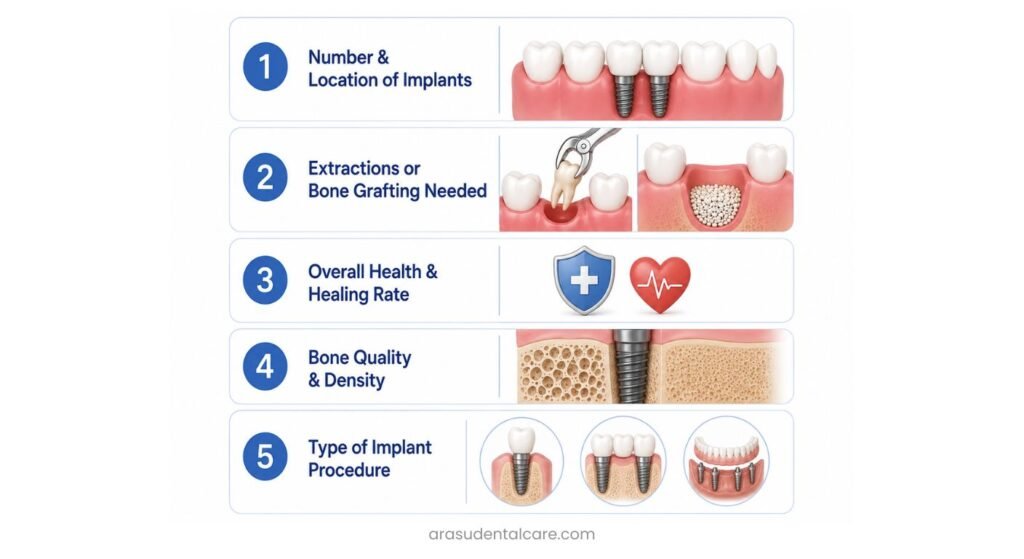
Every patient’s timeline is unique. Here are the main factors that influence how long your treatment takes.
1. Number and location of implantsA single implant heals faster than a full-arch restoration. Location matters too — lower-jaw implants generally integrate quicker.
2. Whether you need extractions or bone graftingPreparatory procedures add healing time. A patient who needs a graft may wait several extra months.
3. Your overall health and healing rateConditions like diabetes, smoking, or certain medications can slow healing. Healthy, non-smoking patients often heal faster.
4. Bone quality and quantityStronger, denser bone supports faster, more predictable integration.
5. The type of implant procedureSame-day or immediate-load options can shorten the timeline for suitable candidates.
What About Same-Day Implants?
You may have seen advertisements for “same day dental implants” or “teeth in a day.” These are real options — but they aren’t right for everyone.
In suitable cases, the implant and a temporary tooth are placed in a single appointment. This works best when there’s sufficient bone and good implant stability.
Full-arch solutions like All-on-Four are designed specifically for same-day, fixed teeth — a strong option for patients replacing an entire arch.
However, same-day treatment requires careful planning. The right approach for you can only be confirmed after a proper assessment, where your dentist explains the available options and helps you choose what suits your needs best.
Are Dental Implants Worth the Wait?
In a word — yes.
Dental implants are the closest thing to natural teeth available today. They preserve your jawbone, restore full chewing function, and don’t require shaving down neighbouring teeth the way bridges do.
With good oral hygiene and regular dental visits, implants can last for decades — and often a lifetime. As the saying goes among our specialists: implant treatment isn’t a race — let your body heal at its natural pace, and enjoy the results for years to come.
Frequently Asked Questions
1. How long does the entire dental implant process take?Most patients complete treatment in 4 to 9 months. Simple cases without grafting may finish faster, while complex cases with bone grafting can take longer.
2. Is the dental implant procedure painful?No. The procedure is performed comfortably under appropriate anaesthesia. Mild swelling or soreness afterwards is normal and easily managed with over-the-counter pain relievers.
3. How long does the actual implant surgery take?Placing a single implant usually takes 30 minutes to an hour. Multiple implants naturally take longer.
4. Why does healing take so long?The implant needs time to fuse with your jawbone (osseointegration) — typically 3 to 6 months. This fusion is what makes implants so stable and long-lasting.
5. Will I have a gap in my smile during treatment?Not necessarily. For visible teeth, your dentist can fit a temporary tooth, bridge, or denture while the implant heals.
6. Does bone grafting always add several months?Minor grafting can sometimes be done during implant surgery. Larger grafts may require 3 to 6 months of healing before the implant is placed.
7. Can I speed up my dental implant treatment time?In suitable cases, same-day or immediate-load implants reduce overall time. Whether this is right for you depends on your bone health and is decided during planning.
8. How long do dental implants last once completed?The implant post can last a lifetime with proper care. The crown or restoration may need replacing after 10–20 years, depending on wear and maintenance.
Ready to Begin Your Implant Journey?
Understanding the timeline is the first step toward a confident decision. The next is a personalised assessment that tells you exactly what your treatment will involve.
At Arasu Dental Care, our experienced implantologists combine advanced technology with a comfort-first, transparent approach. We’ll explain your options clearly, give you a realistic timeline, and guide you every step of the way.
Book your consultation today — visit us at our R.S. Puram or Saibaba Colony branches in Coimbatore, open all seven days from 10:00 AM to 8:30 PM. Call +91 88380 22157 or WhatsApp +91 96007 56297 to take the first step toward a smile that lasts.
We Care for You and Your Smile.