Who Is a Good Candidate for Dental Implants?
Losing a tooth can change how you eat, speak, and smile — and finding the right replacement matters. If you’ve been researching tooth replacement, you’ve likely asked one important question: am I a good dental implant candidate?
The honest answer is that most adults with missing teeth are potential candidates for dental implants — but a few key factors decide whether you’re ready today or need a little preparation first. At Arasu Dental Care, our implantologists evaluate each person individually before recommending treatment, because a successful implant depends on far more than simply having a gap to fill.
In this guide, we’ll walk you through exactly what makes someone suitable for dental implants, the conditions our specialists assess, and how modern dentistry has made implants possible for many people who were once told “no.”
What Are Dental Implants? A Quick Overview
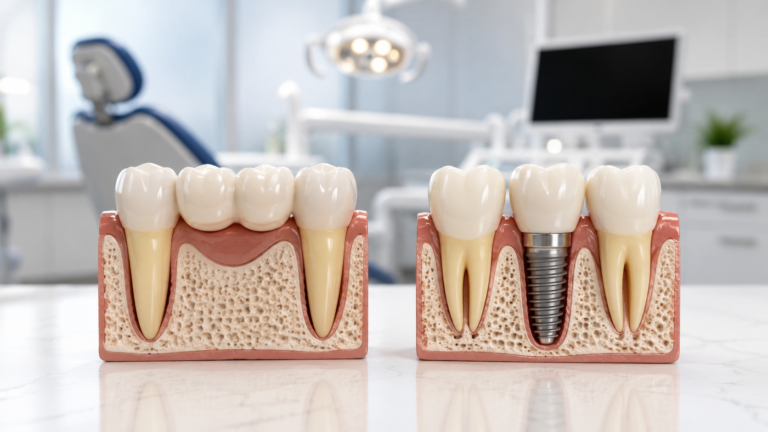
A dental implant is a small titanium (or zirconia) post placed into the jawbone to replace the root of a missing tooth. Over a few months, the bone naturally fuses around it — a process called osseointegration — creating a stable foundation.
Once healed, the implant supports a crown, bridge, or denture that looks and functions much like a natural tooth.
According to the U.S. Food and Drug Administration (FDA), implants help restore chewing ability, preserve jawbone health, and keep neighbouring teeth stable. That combination of function and long-term oral health is why so many patients choose them over removable options.
Key benefits at a glance:
- Natural look and feel
- Strong, reliable chewing function
- Preservation of jawbone structure
- No alteration of healthy neighbouring teeth
- Long lifespan with proper care
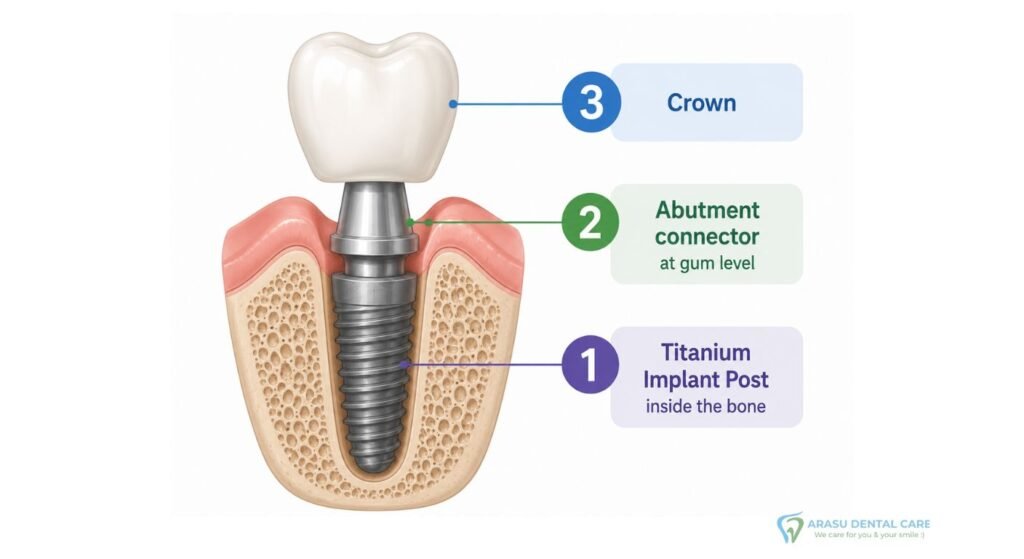
Infographic Prompt 1:Create a clean, modern medical infographic titled “Anatomy of a Dental Implant.” Show a cross-section of a jawbone with three labelled parts stacked vertically: (1) Titanium Implant Post inside the bone, (2) Abutment connector at gum level, (3) Crown above the gum. Use soft teal and white tones, simple line icons, and short descriptive labels. Style should feel trustworthy and patient-friendly, suitable for a dental clinic website.
The 6 Characteristics of a Good Dental Implant Candidate
Our implant specialists look at several connected factors during your evaluation. Here’s what each one means for you.
1. Healthy Gums
Healthy gum tissue is the foundation that protects and supports your implant. Active gum (periodontal) disease can weaken the bone underneath and increase the risk of implant failure.
If you have signs of gum inflammation — bleeding, swelling, or recession — these are usually treated first. The good news? Once your gum health is restored, you can often move forward confidently.
2. Adequate Jawbone Density
This is one of the most important factors. The implant needs enough healthy bone to anchor into and fuse with securely.
When a tooth is lost, the surrounding bone gradually shrinks because it no longer receives stimulation from the root. The American Academy of Periodontology notes that bone loss can begin soon after extraction, which is why earlier evaluation often gives you more options.
If bone is lacking, treatments like bone grafting, sinus lifts, or ridge augmentation can rebuild the foundation — and our team also offers Basal Implantology, a technique designed specifically for patients with compromised or low-density bone.
3. Good Overall Health
Because implant placement is a surgical procedure performed under appropriate anaesthesia, your general health influences how well you heal.
Conditions like diabetes don’t automatically disqualify you — they simply need to be well-controlled. Our dentists review your medical history, current medications, and any conditions that may affect healing before recommending treatment.
4. Commitment to Oral Hygiene
Implants can’t get cavities, but the gum and bone around them can still become infected without proper care. A strong candidate is someone willing to brush, floss, and attend regular check-ups.
This long-term commitment is what protects your investment and keeps your implant healthy for years.
5. Non-Smoker (or Willing to Reduce)
Smoking restricts blood flow to the gums, which can slow healing and lower implant success rates. Smokers aren’t excluded from treatment, but reducing or pausing tobacco use — especially during the healing phase — significantly improves outcomes.
6. A Fully Developed Jawbone
Implants are typically recommended once jaw growth is complete, usually in late adolescence or early adulthood. For younger patients, our team may suggest a suitable temporary solution until the jaw has finished developing.
Quick Eligibility Checklist
Use this simple reference to understand where you might stand. A professional evaluation is still essential — this is a guide, not a diagnosis.
|
Factor |
Ideal for Implants |
May Need Preparation First |
|
Gum Health |
Healthy, no active infection |
Gum disease present (treatable) |
|
Jawbone Density |
Sufficient and stable |
Bone loss (grafting/basal options available) |
|
General Health |
Good, conditions controlled |
Uncontrolled diabetes or healing issues |
|
Smoking |
Non-smoker |
Heavy smoker (reduction advised) |
|
Oral Hygiene |
Consistent home care |
Needs improvement before surgery |
|
Jaw Development |
Fully grown (adult) |
Still growing (younger patients) |
What If You’re Not an Immediate Candidate?
Being told you’re “not ready yet” rarely means implants are off the table for good. In fact, many patients who initially seemed unsuitable go on to receive successful implants after some preparation.
Common preparatory steps include:
- Bone grafting — rebuilds lost jawbone to create a stable base
- Periodontal therapy — clears active gum infection before placement
- Basal or All-on-Four implants — designed for compromised-bone or full-arch cases
- Medical stabilisation — managing conditions like diabetes before surgery
Our multispecialty team handles these steps under one roof, so you don’t need to coordinate between separate clinics. We’ll explain every available option and help you choose the path that best suits your needs — never with pressure, always with clarity.
Does Age Affect Dental Implant Candidacy?
This is one of the most common concerns we hear, and the answer is reassuring: age alone rarely disqualifies anyone.
What matters far more than the number on your birth certificate is your bone health, gum condition, and overall medical stability. Many patients in their 60s, 70s, and beyond receive implants successfully and benefit enormously from restored chewing ability and a confident smile.
For older patients, implants and implant-supported dentures often improve quality of life dramatically — replacing loose dentures with a secure, comfortable solution.
How the Dental Implant Evaluation Works
Understanding what to expect can ease any uncertainty. Here’s our step-by-step assessment process.
Step 1: Consultation & Medical Review
We discuss your concerns, goals, medical history, and any medications you’re taking.
Step 2: Comprehensive Oral Examination
We check the health of your gums, remaining teeth, and bite alignment.
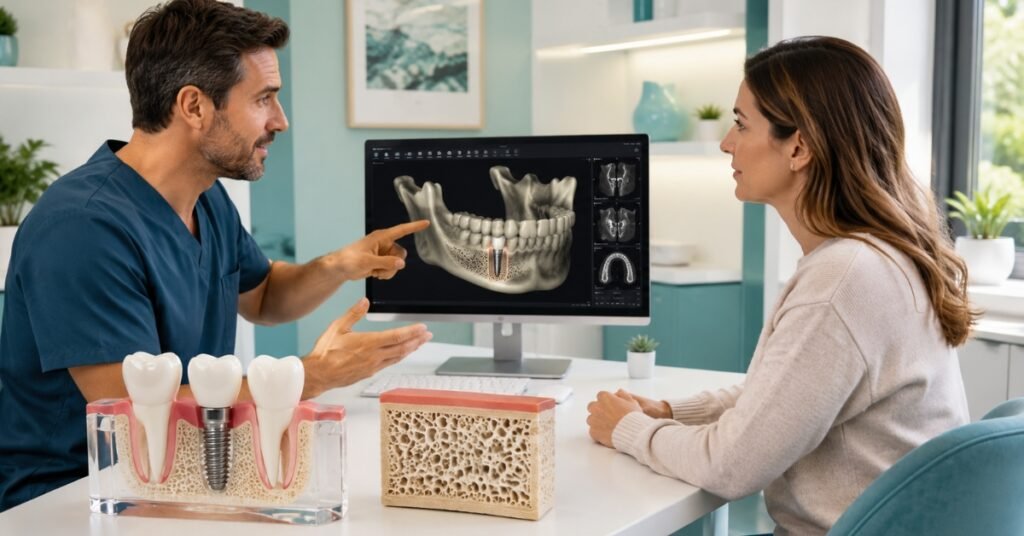
Step 3: 3D Imaging & Scans
Advanced imaging gives a precise view of your jawbone density and the best implant positions.
Step 4: Personalised Treatment Plan
Based on the findings, we explain your options, timelines, and transparent costs — so there are no surprises.
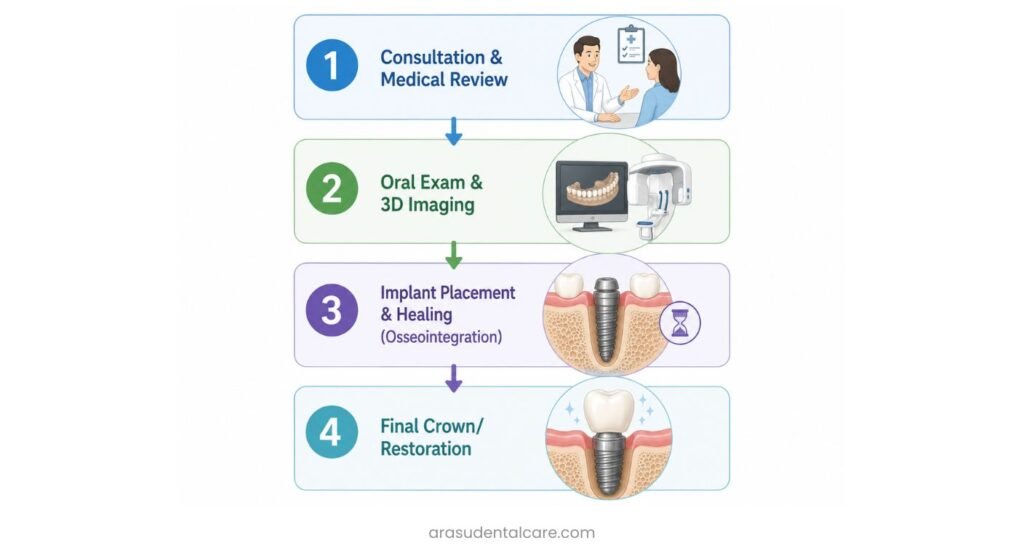
Dental Implants vs. Other Tooth Replacement Options
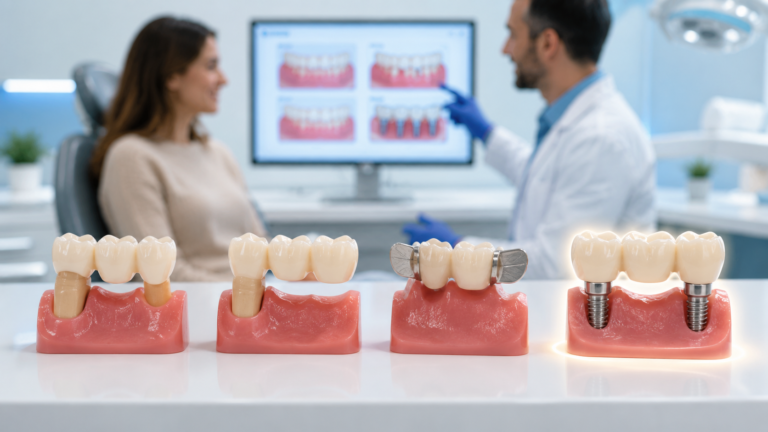
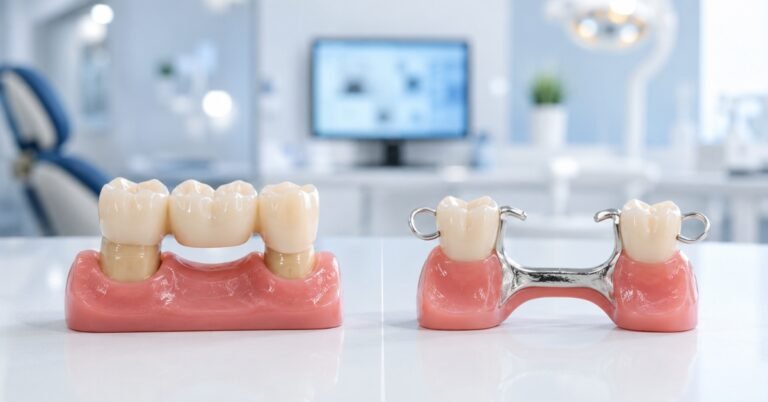
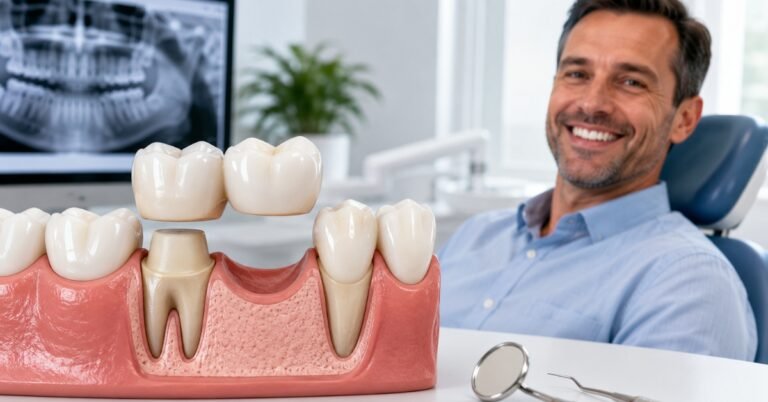
Implants aren’t the only choice — and the right option depends on your individual situation. Here’s how they compare.
|
Option |
Stability |
Bone Preservation |
Affects Nearby Teeth |
Longevity |
|
Dental Implants |
Fixed & secure |
Yes |
No |
Decades / lifetime |
|
Dental Bridges |
Fixed |
No |
Yes (shaves adjacent teeth) |
~10–15 years |
|
Removable Dentures |
Can shift |
No |
No |
~5–7 years |
|
Implant-Supported Dentures |
Very stable |
Yes |
No |
Long-lasting |
Implants stand out because they preserve bone and don’t rely on neighbouring teeth for support — but our team will help you weigh comfort, budget, and long-term oral health before deciding.
A Real-World Example
We frequently meet patients who arrive convinced they “can’t” have implants — often because they were told elsewhere they had insufficient bone. In many of these cases, a detailed 3D scan reveals that techniques like sinus lifts, grafting, or basal implants can rebuild a strong enough foundation.
The lesson is simple: a single “no” from a general assessment isn’t always the final word. A thorough, specialist-led evaluation frequently uncovers options that weren’t obvious at first glance.
Frequently Asked Questions
How do I know if I’m a dental implant candidate?
A dentist evaluates your gum health, jawbone density, and overall health, usually with an oral exam and 3D imaging. This assessment is the only reliable way to confirm your eligibility.
Can I get dental implants if I have bone loss?
Yes, in many cases. Procedures like bone grafting, sinus lifts, or basal implants can rebuild or work around lost bone, making implants possible for patients who were previously told they couldn’t have them.
Does gum disease prevent dental implants?
Active gum disease must be treated before placement. Once your gum health is restored through periodontal therapy, you can often proceed with implant treatment safely.
Is there an age limit for dental implants?
There’s no upper age limit. Eligibility depends on bone health, gum condition, and overall medical stability rather than age. Many older adults are excellent candidates.
Can people with diabetes get dental implants?
Yes, provided the diabetes is well-controlled. Uncontrolled diabetes can slow healing, so your dentist will review your condition before recommending treatment.
Are dental implants comfortable to get?
The procedure is performed under appropriate anaesthesia to keep you comfortable. Mild swelling or soreness afterward is normal and usually managed with simple pain relief.
How long do dental implants last?
With consistent oral hygiene and regular dental visits, implants can last for decades and often a lifetime. The crown or restoration on top may need replacing over time.
Do smokers qualify for dental implants?
Smokers can still receive implants, but smoking lowers success rates by affecting healing. Reducing or pausing tobacco use during the healing period greatly improves outcomes.
Conclusion: Your Next Step Toward a Confident Smile
Determining whether you’re a dental implant in coimbatore candidate comes down to a few clear factors — healthy gums, adequate jawbone, good overall health, and a commitment to long-term care. And even if you don’t meet every criterion today, modern techniques like bone grafting and basal implants mean a