Are Dental Implants Worth It?

If you’re living with one or more missing teeth, you’ve probably wondered: are dental implants worth it? It’s a fair question — the upfront cost feels significant, the process takes time, and you deserve to know whether the investment truly pays off. At Arasu Dental Care, we believe you should never feel sold to. Instead, our goal is to help you understand all your options clearly, so you can decide what’s genuinely right for your oral health and your life.
This guide walks you through the honest benefits, the real considerations, the costs, and the long-term value of dental implants — without exaggeration or pressure.
What Are Dental Implants, Exactly?
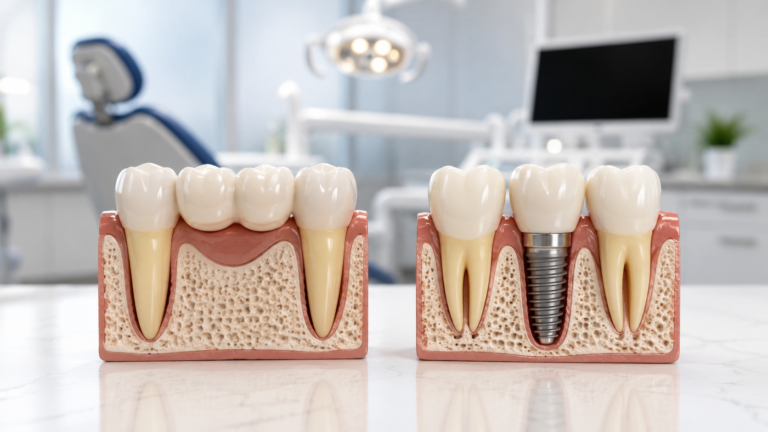
A dental implant in coimbatore is a small, biocompatible titanium post that replaces the root of a missing tooth. It’s surgically placed into your jawbone, where it gradually fuses with the bone through a natural process called osseointegration.
Once healed, this implant becomes a stable foundation for an artificial tooth — usually a crown, bridge, or denture.
A complete dental implant has three parts:
|
Component |
What It Does |
|
Titanium post |
Acts as the artificial tooth root, anchored in the jawbone |
|
Abutment |
A small connector that links the post to the new tooth |
|
Restoration |
The visible crown, bridge, or denture that replaces your tooth |
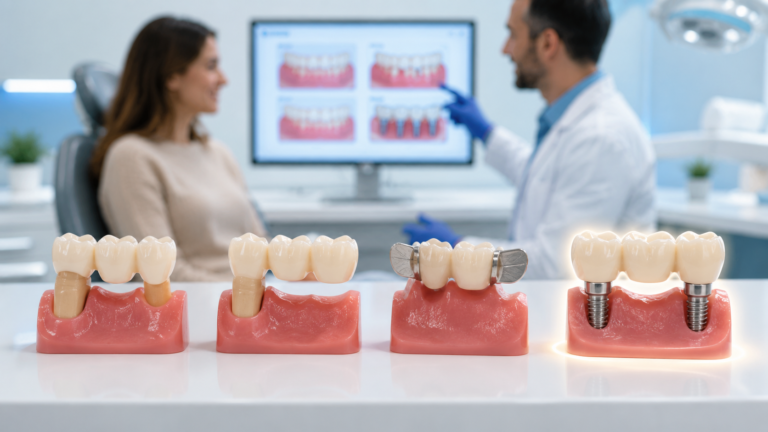
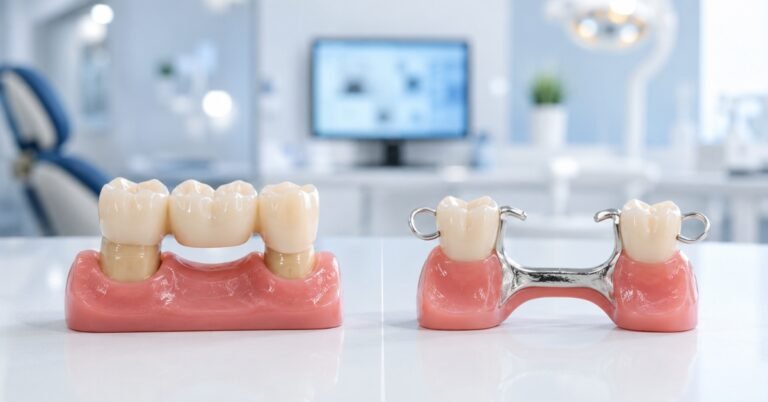
Unlike dentures that rest on your gums or bridges that rely on neighbouring teeth, implants stand independently — replacing both the root and the visible tooth. According to the American Academy of Periodontology, this root-replacement design is what makes implants so stable and long-lasting.
Are Dental Implants Worth It? The Honest Answer
For most people with good oral and general health, yes — dental implants are usually worth the investment. But the honest answer depends on your individual situation, not a one-size-fits-all promise.
Here’s what makes them worthwhile for so many patients:
- They look and function like natural teeth
- They help preserve jawbone and facial structure
- They can last for decades with proper care
- They don’t damage your healthy neighbouring teeth
That said, implants aren’t right for everyone — and a good dentist will tell you that honestly. We’ll explore who’s a strong candidate later in this guide.
Key Benefits of Dental Implants
Let’s look at why implants are often considered the gold standard for tooth replacement — and where their real value lies.
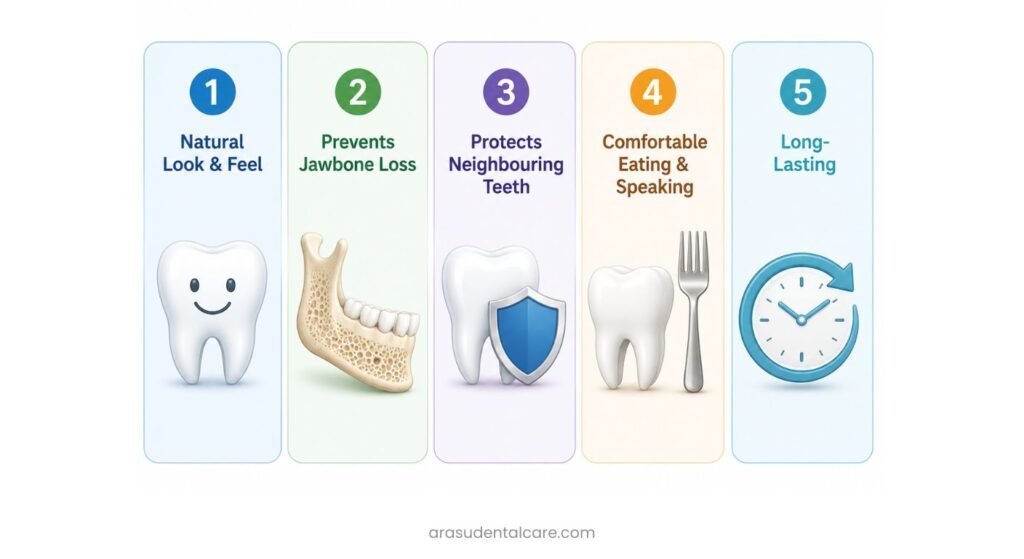
1. They Look and Feel Like Natural Teeth
A well-placed implant is virtually indistinguishable from your real teeth. Because it’s anchored into the jaw, it feels secure and stable.
You can speak, laugh, and smile without worrying about slipping or clicking.
2. They Help Prevent Jawbone Loss
This is one of the most overlooked benefits. When a tooth root is missing, the jawbone in that area begins to shrink over time — a process that can change your bite and even alter your facial appearance.
Because an implant mimics a natural tooth root, it stimulates the bone and helps maintain its strength and shape.
3. They Protect Your Other Teeth
A traditional bridge often requires shaving down healthy neighbouring teeth for support. An implant doesn’t touch them.
It’s a one-tooth solution to a one-tooth problem — preserving your remaining natural structure.
4. You Can Eat and Speak Comfortably
Once healed, implants restore full chewing power. Crunchy, chewy, hot, or cold — you can enjoy your favourite foods without restriction.
This often leads to better nutrition and a noticeably improved quality of life.
5. They’re Built to Last
With good oral hygiene and regular dental visits, the implant post can last a lifetime. The crown on top may need replacing after 10–15 years, but the foundation typically remains strong.
The Honest Considerations: What to Weigh Before Deciding
We believe in full transparency, so here are the genuine factors to consider before choosing implants.
1. The Upfront Cost Is Higher
Implants typically cost more initially than dentures or bridges. However, because they last far longer and rarely need replacement, many patients find them more cost-effective over time.
2. The Process Takes Time
Dental implants are not a same-day fix for most people. The healing and osseointegration phase can take anywhere from three to nine months, depending on how your body heals.
This patience pays off in a stronger, more durable result.
3. Minor Surgery Is Involved
Implant placement is a surgical procedure performed under appropriate anaesthesia, so it’s comfortable during treatment. Mild swelling or tenderness afterward is normal and usually managed easily.
4. Not Everyone Is an Immediate Candidate
You’ll need enough healthy jawbone and good gum health. The good news? Even patients with bone loss can often qualify through procedures like bone grafting or basal implants — which is where a multispecialty team becomes valuable.
Dental Implants vs Other Tooth Replacement Options
To help you decide, here’s a clear, honest comparison of the three main options.
|
Feature |
Dental Implants |
Dental Bridges |
Dentures |
|
Lifespan |
Decades to lifetime |
5–15 years |
5–10 years |
|
Prevents bone loss |
✅ Yes |
❌ No |
❌ No |
|
Affects nearby teeth |
❌ No |
✅ Yes (shaving needed) |
❌ No |
|
Stability |
Fixed & secure |
Fixed |
Removable |
|
Feels natural |
Very natural |
Fairly natural |
Less natural |
|
Upfront cost |
Higher |
Moderate |
Lower |
|
Long-term value |
Excellent |
Moderate |
Lower |
As registered dental hygienist Whitney from Teeth Talk Girl notes, implants carry a higher upfront cost but are “a long-term investment with fewer replacement costs over time.” For many patients, that long-term math tilts strongly in favour of implants.
Who Is a Good Candidate for Dental Implants?
Implants work best when certain conditions are met. You may be a strong candidate if you:
- Have one or more missing teeth
- Have adequate healthy jawbone (or are eligible for grafting)
- Maintain good oral hygiene
- Have healthy gums
- Are in generally good overall health
Implants may need extra planning if you smoke, have uncontrolled diabetes, active gum disease, or significant bone loss. According to the Cleveland Clinic, the minimum age is typically 18 (once the jaw stops growing), and there’s no upper age limit — what matters most is your bone and gum health.
This is exactly why a personalised evaluation matters. At Arasu Dental Care, our dental specialists assess your unique condition before recommending any treatment.
The Dental Implant Process: What to Expect
Knowing the journey ahead can ease a lot of anxiety. Here’s a simple step-by-step overview.
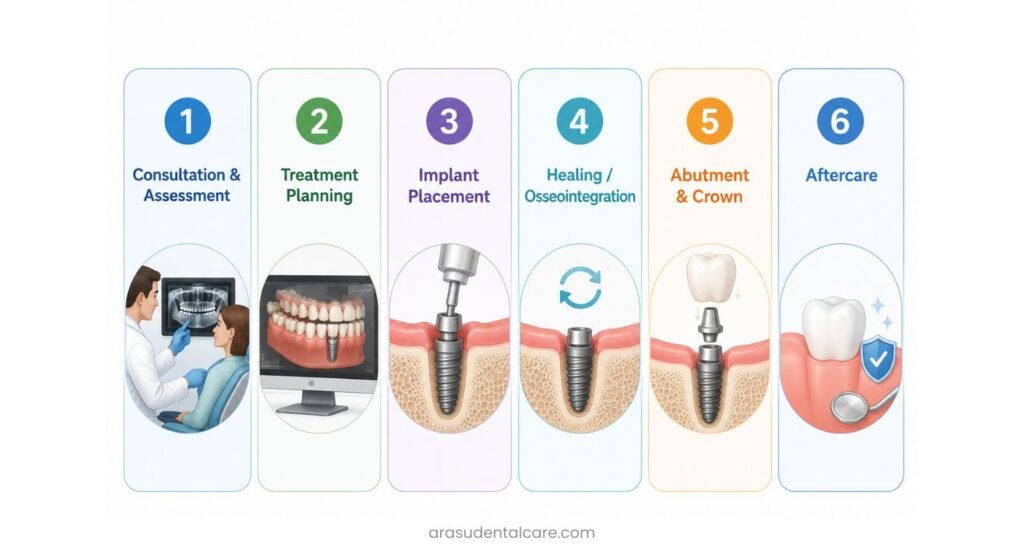
Step 1: Consultation & Assessment
Your dentist evaluates your oral health, bone density, and overall suitability using digital X-rays and 3D imaging.
Step 2: Treatment Planning
Together, you discuss your options, expected timeline, and transparent costs — so there are no surprises.
Step 3: Implant Placement
The titanium post is placed into your jawbone under appropriate anaesthesia for a comfortable experience.
Step 4: Healing (Osseointegration)
Over the following months, your bone naturally fuses with the implant, creating a strong foundation.
Step 5: Abutment & Crown
Once healed, the connector and your custom-made crown are attached — completing your new tooth.
Step 6: Aftercare
You care for your implant just like a natural tooth: brushing, flossing, and regular check-ups.
How Long Do Dental Implants Last?
This is where the long-term value becomes clear. The implant post itself can last a lifetime with proper care.
The visible crown usually lasts 10–15 years before it may need replacement, similar to how natural wear affects any restoration.
By comparison, dentures often need replacing every 5–10 years and bridges every 5–15 years. Over a lifetime, the durability of implants frequently makes them the more economical choice.
Caring for Your Dental Implants
Good news — implant care is simple and mirrors natural tooth care:
- Brush twice daily
- Floss around the implant gently
- Attend regular dental check-ups and cleanings
- Avoid smoking, which slows healing
While implants can’t develop cavities, the gums around them can still develop disease — which is a leading cause of implant failure. Consistent hygiene keeps your investment healthy for the long term.
Frequently Asked Questions
1. Are dental implants worth it for just one missing tooth?
Yes. A single implant replaces one tooth without affecting the neighbouring teeth, unlike a bridge. For long-term oral health and durability, it’s often the most worthwhile choice.
2. Is the dental implant procedure painful?
The placement is performed under appropriate anaesthesia, so you stay comfortable during treatment. Afterward, mild soreness or swelling is normal and usually eased with over-the-counter pain relievers.
3. How long does the whole process take?
From placement to final crown, the process typically takes three to nine months, depending on your healing and whether additional procedures like bone grafting are needed.
4. Can older adults get dental implants?
Absolutely. There’s no upper age limit. As long as you have adequate bone density and good overall health, implants are an excellent option for seniors — including full mouth dental implants solutions like All-on-Four.
5. What if I’ve already lost jawbone?
You may still be a candidate. Procedures like bone grafting, sinus lifts, or basal implants (designed for compromised bone) can make implants possible. A specialist evaluation will confirm your options.
6. Are dental implants safe?
Yes. Titanium and ceramic implants are biocompatible and have a strong safety record. When placed by an experienced oral surgeon, the risk of complications is minimal.
7. Do d