What to Expect During Dental Crown Treatment
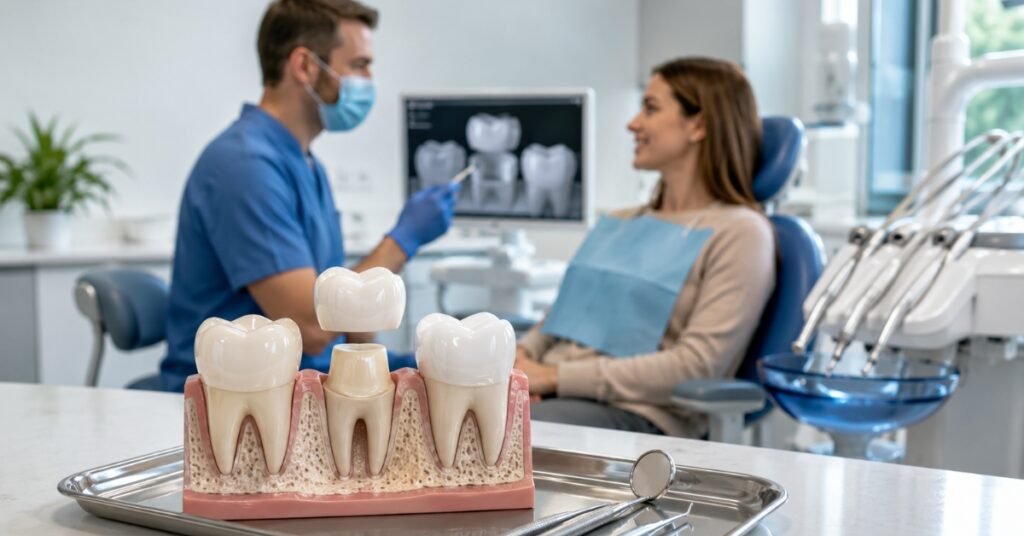
If your dentist has recommended a dental crown procedure, it’s natural to feel a little unsure about what comes next. The good news? A crown is one of the most common and predictable restorative treatments in modern dentistry — and once you understand the steps involved, much of that uncertainty disappears.
A dental crown is essentially a custom-made cap that fits over a weakened, broken, or decayed tooth to restore its strength, shape, and function. At Arasu Dental Care, we believe that when you know exactly what to expect, you walk into the chair feeling calm and confident rather than anxious.
In this guide, we’ll walk you through every stage of the treatment — from your first consultation to caring for your new crown — so you can make an informed decision about your oral health.
What Is a Dental Crown and Why Might You Need One?
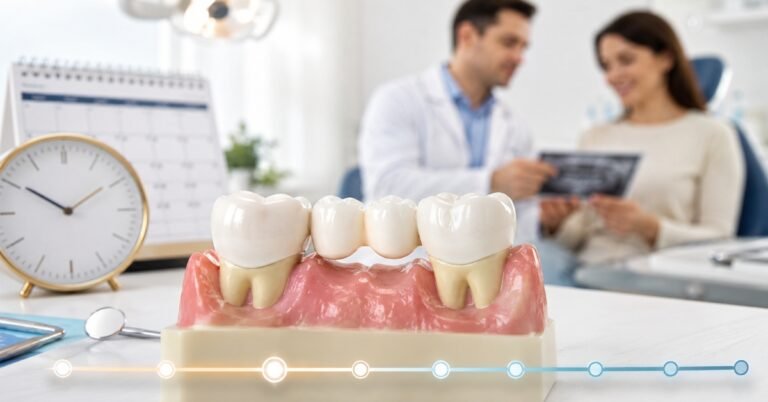
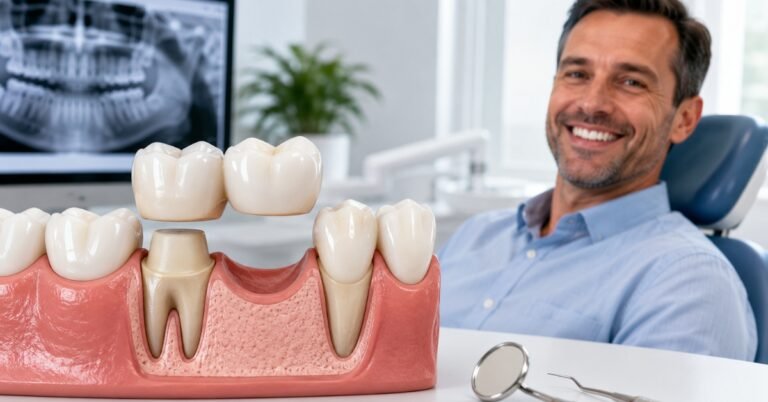
A dental crown covers the entire visible part of your tooth above the gum line, acting like a protective shell. It’s made from materials like porcelain, zirconia, ceramic, metal alloy, or a combination — each chosen based on the tooth’s location and your specific needs.
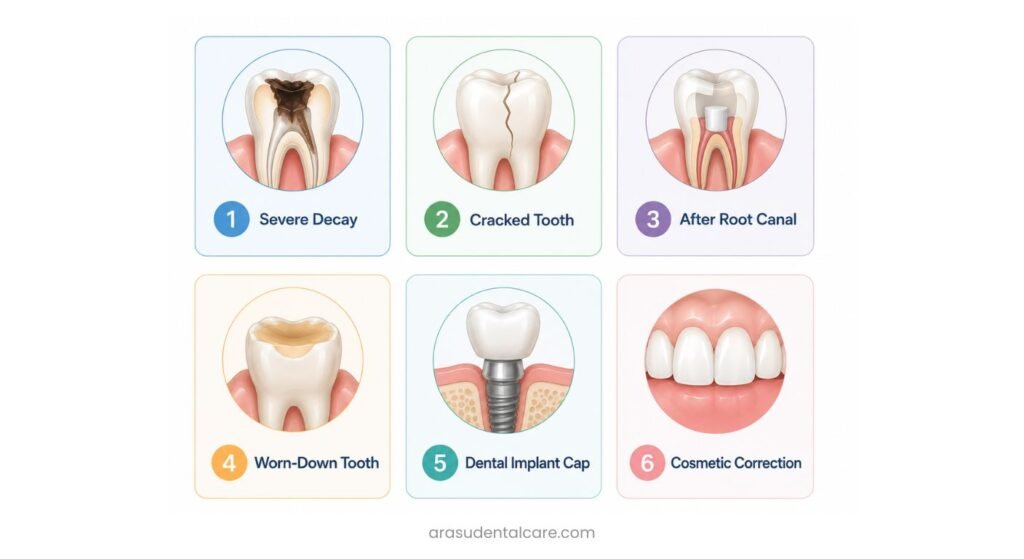
Your dentist may recommend a crown if you have:
- A tooth with extensive decay that’s too large for a filling
- A cracked, fractured, or weakened tooth that needs reinforcement
- A tooth that has undergone root canal treatment and needs protection
- Severe wear from grinding or acid erosion
- A dental implant that requires a visible restoration
- A discoloured or misshapen tooth you’d like to improve cosmetically
The main goal of a crown is to preserve your natural tooth for as long as possible — which aligns with our patient-first philosophy of saving rather than replacing teeth wherever clinically possible.
Types of Dental Crowns: Understanding Your Options
Before the procedure begins, your dentist will help you choose the right crown material. Here’s a quick comparison to help you understand the options.
|
Crown Type |
Best For |
Appearance |
Durability |
|
Porcelain / All-Ceramic |
Front teeth, metal allergies |
Most natural |
Good |
|
Zirconia |
Front & back teeth |
Natural, strong |
Excellent |
|
Porcelain-Fused-to-Metal (PFM) |
Front & back teeth |
Natural with possible dark line |
Very good |
|
Metal Alloy / Gold |
Out-of-sight molars |
Metallic colour |
Longest-lasting |
There’s no single “best” crown — the right choice depends on the tooth’s position, your bite, your aesthetic goals, and your budget. We’ll explain the available options and help you choose the one that best suits your needs.
The Dental Crown Procedure: Step by Step
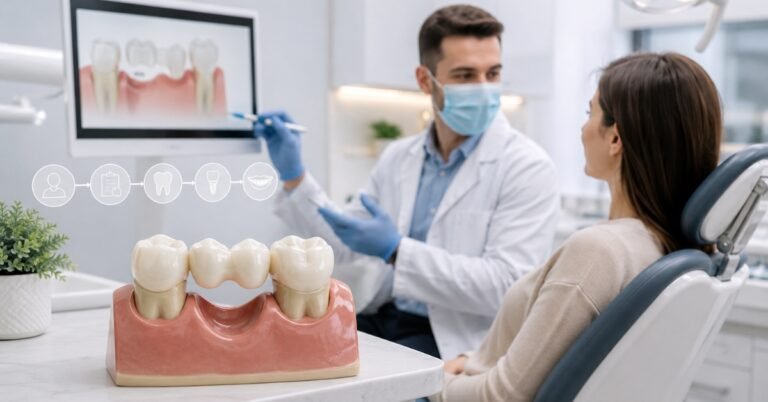
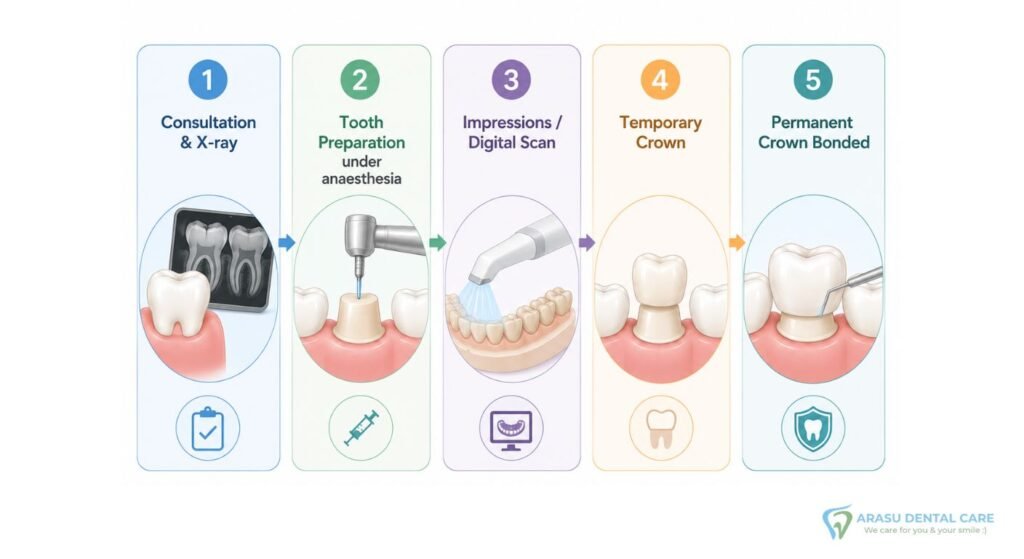
A traditional dental crown procedure usually takes two appointments, spaced about two to three weeks apart. Here’s what happens at each stage.
Step 1: Consultation and Examination
Your journey begins with a thorough evaluation. Your dentist examines the tooth and takes a digital X-ray to check the tooth root and surrounding bone.
This helps confirm whether a crown is the right solution — or whether you may need a root canal first if the decay has reached the nerve. This is also the moment to ask questions about timing, materials, and cost.
Step 2: Preparing and Shaping the Tooth
Once you’ve decided to proceed, the tooth is prepared. Your dentist first numbs the tooth and surrounding gum with a local anaesthetic so the procedure is comfortable throughout.
Next, any decay or old filling material is removed, and a small amount of enamel is reshaped to make room for the crown. If a large portion of the tooth is missing, a filling material may be used to build up a strong foundation.
You’ll feel gentle pressure during this step, but no pain.
Step 3: Taking Impressions
After shaping, your dentist takes an impression of the prepared tooth — either with a putty-like material or a modern digital scanner. An impression of the opposing teeth is also taken to ensure your bite aligns perfectly.
These details are sent to a dental laboratory, where skilled technicians craft your custom crown to match the shade and shape of your natural teeth.
Step 4: Temporary Crown Placement
While your permanent crown is being made, a temporary crown protects the prepared tooth. These are usually made of acrylic or resin and held with temporary cement.
Your temporary crown isn’t as strong as the final one, so a little extra care goes a long way (more on that below).
Step 5: Fitting the Permanent Crown
At your second visit, the temporary crown is removed and the tooth is cleaned. Your dentist then checks the new crown’s:
- Fit along the margins
- Contact with neighbouring teeth
- Bite alignment
- Colour and overall appearance
Once everything looks and feels right, the crown is permanently bonded using strong dental cement. A final bite check ensures there are no high spots, and any minor adjustments are made on the spot.
Same-Day Crowns: A Faster Alternative
Some advanced clinics use CAD/CAM technology (computer-aided design and manufacturing) to create crowns in a single visit. Instead of sending impressions to a lab, a digital scan is used to design and mill a ceramic crown on-site — often within a few hours.
Same-day crowns eliminate the need for a temporary crown and a second appointment. However, they aren’t suitable for every case, so your dentist will let you know if you’re a candidate.
Is a Dental Crown Procedure Painful?
This is the question we hear most often — and the honest answer is that the procedure is performed comfortably under appropriate anaesthesia, so you shouldn’t feel pain during treatment.
After the numbness wears off, it’s normal to experience mild sensitivity to hot and cold or slight gum soreness for a few days. This usually settles on its own, and over-the-counter pain relievers can help.
If you feel sharp pain when biting down, or sensitivity that doesn’t fade after a couple of weeks, let your dentist know — the crown’s height may simply need a quick adjustment.
For patients who feel nervous, sedation options are available to make the experience as relaxed as possible.
Recovery and Aftercare: Making Your Crown Last
With proper care, dental crowns typically last between 5 and 15 years, and often much longer. The key is treating your crown like a natural tooth and protecting the tooth structure beneath it.
Here’s how to care for your crown:
- Brush twice daily with a soft-bristled brush and fluoride toothpaste
- Floss daily, paying attention to the crown margins
- Avoid chewing ice, hard nuts, or extremely sticky foods
- Wear a night guard if you grind or clench your teeth (bruxism)
- Keep up with regular dental check-ups and cleanings
Remember: while the crown itself can’t decay, the natural tooth underneath still can. Good oral hygiene is what protects your investment.
Temporary Crown Care Tips
While waiting for your permanent crown:
- Avoid sticky and chewy foods
- Chew on the opposite side where possible
- Slide floss out sideways rather than lifting it up
- Contact your dentist immediately if it loosens or falls off
Alternatives to a Dental Crown
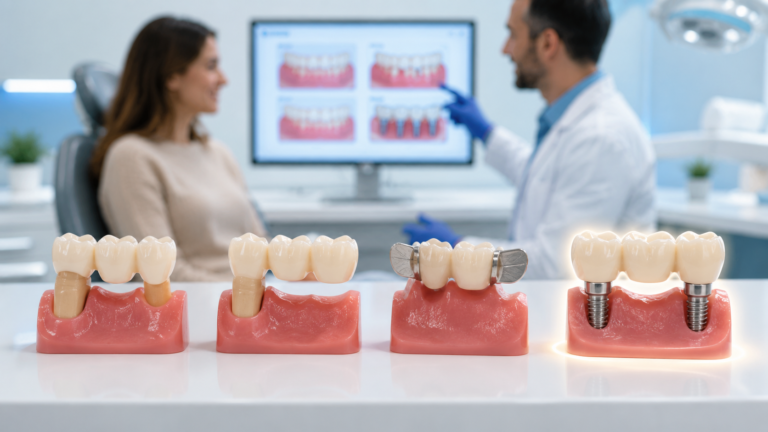
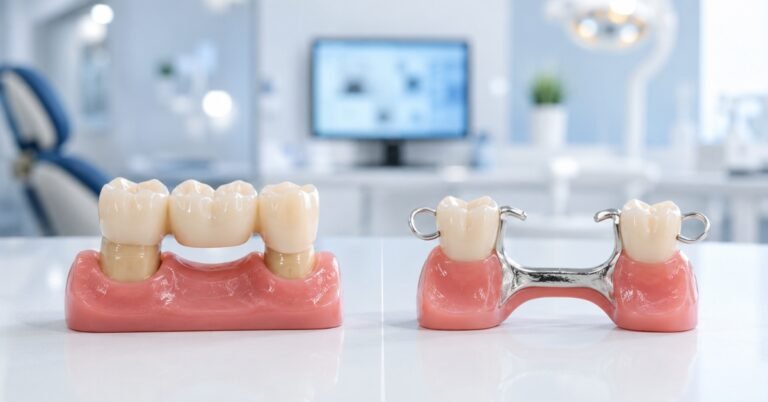
A crown isn’t always the only option. Depending on how much healthy tooth remains, your dentist might suggest:
- Fillings — for smaller areas of damage
- Inlays or onlays — for moderate damage too large for a filling
- Veneers — for cosmetic concerns on front teeth
- Extraction and implant — when a tooth is too damaged to save
Each option has its place, and the right choice always comes down to a clear, honest conversation with your dentist about your specific situation.
Frequently Asked Questions
1. How long does a dental crown procedure take?A traditional crown requires two visits — the first (preparation) takes about 60–90 minutes, and the second (placement) takes 30–60 minutes. Same-day crowns can be completed in a single 2–3 hour visit.
2. Does getting a dental crown hurt?No. The procedure is performed under local anaesthesia, so you’ll feel pressure but not pain. Mild sensitivity afterward is normal and usually fades within a few days.
3. How long do dental crowns last?On average, crowns last 5 to 15 years, and well-maintained crowns can last considerably longer. Lifespan depends on the material, your oral hygiene, and habits like teeth grinding.
4. Can I eat normally after getting a crown?Yes. Once the permanent crown is bonded, you can return to your normal diet. Just avoid biting extremely hard objects. With a temporary crown, chew carefully on the opposite side.
5. What should I do if my crown falls off?Keep the crown safe and clean, avoid chewing on that side, and contact your dentist promptly. In many cases, an undamaged crown can simply be re-cemented.
6. Will my crown look natural?Modern porcelain, ceramic, and zirconia crowns are carefully shade-matched to your surrounding teeth. Most people won’t be able to tell which tooth is crowned.
7. Is the tooth under a crown protected from decay?The crown itself cannot decay, but the natural tooth underneath still can — especially at the gum margins. Daily brushing, flossing, and regular check-ups are essential.
8. Can a crown be placed on a front tooth?Yes. Porcelain or all-ceramic crowns are often the preferred choice for front teeth because they closely mimic the translucency and appearance of natural enamel.
Conclusion: Your Comfortable Path to a Stronger Smile
A dental crown is a safe, time-tested way to restore a damaged tooth — protecting it, improving its function, and helping you smile with confidence again. When you understand each step of the process, the treatment feels far less daunting and far more reassuring.
At Arasu Dental Care, our experienced dental specialists combine modern technology with a comfort-first approach to deliver predictable, long-lasting results. We’ll always explain your options clearly, discuss costs transparently, and help you choose the treatment that’s right for you — never push you toward one you don’t need.
If you have a damaged, decayed, or weakened tooth, don’t wait for the problem to worsen.
📞 Book your consultation today at our dental clinic in rs puram or saibaba colony dental clinic coimbatore branch in Coimbatore. Call us at +91 88380 22157 or WhatsApp +91 96007 56297 — we’re open all seven days, 10 AM to 8:30 PM, to care for you and your smile.