Zirconia Crowns vs PFM Crowns
If your dentist has recommended a dental crown, you’ve probably heard the terms zirconia vs PFM crowns and wondered which one is actually better for your tooth. It’s a fair question — a crown becomes a permanent part of how you bite, chew, and smile for the next 10 to 15 years.
At Arasu Dental Care, we believe the right choice isn’t about which crown is “the best” overall. It’s about which crown is best for your tooth, your bite, and your long-term comfort. This guide breaks down both options honestly — no sales pressure, no jargon — so you can walk into your next appointment knowing exactly what to ask.
What Is a Dental Crown and Why Material Matters
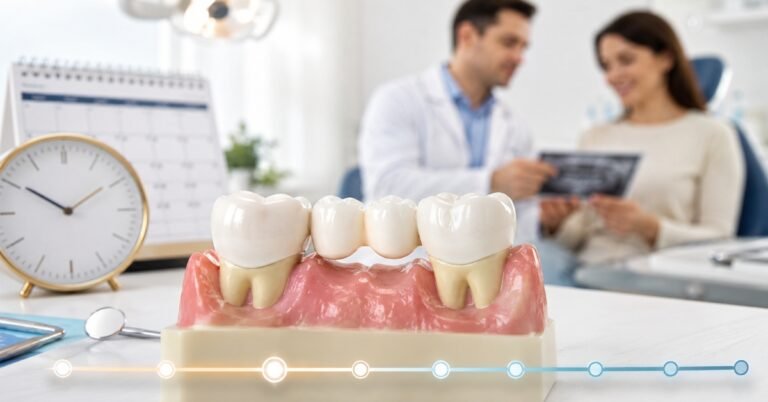
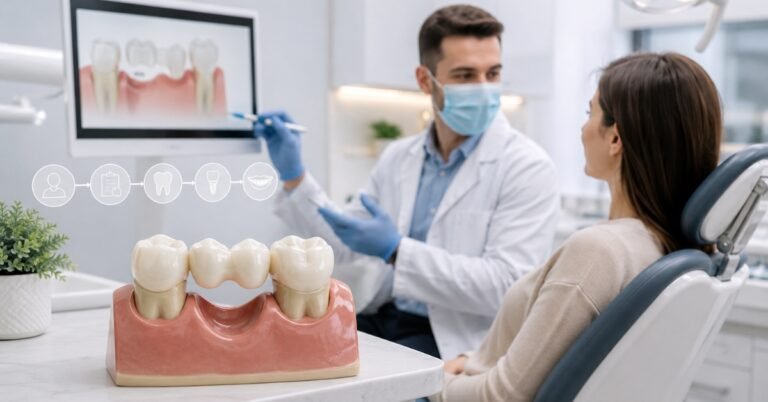
A dental crown is a custom cap placed over a damaged, decayed, or root canal–treated tooth. It restores the tooth’s shape, strength, and appearance.
But a crown isn’t just a cosmetic cover. Every time you chew, grind, or clench, that crown absorbs real biting force. If the material is chosen poorly for your situation, you may experience chipping, cracks, sensitivity, or even early replacement.
That’s why understanding the difference between zirconia and porcelain-fused-to-metal (PFM) crowns matters — it directly affects your strength, appearance, comfort, and lifespan.
What Is a Zirconia Crown?
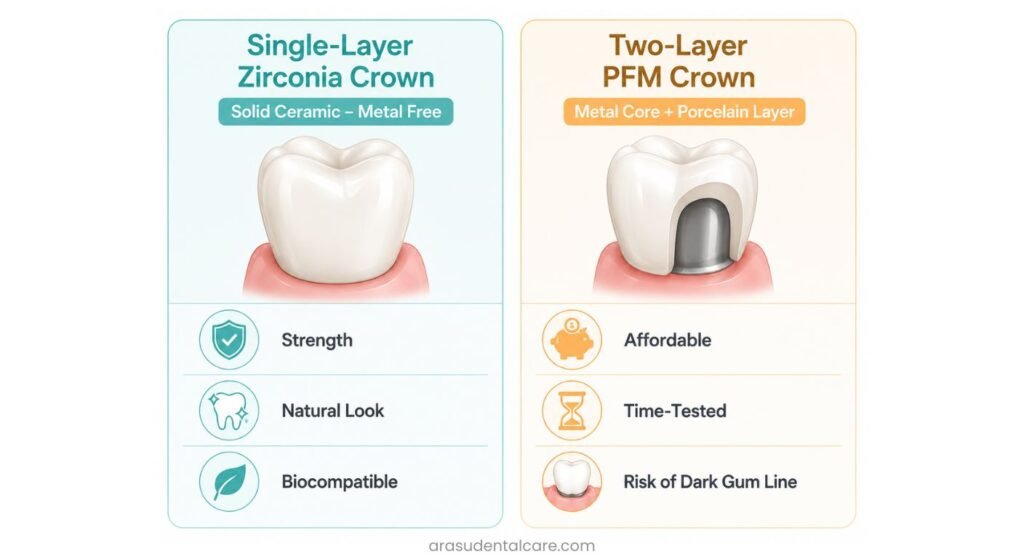
Zirconia crowns are made from zirconium dioxide, a tooth-coloured ceramic originally developed for medical and orthopaedic implants. In dentistry, it’s valued above all for one quality: exceptional strength.
Because it’s milled from a single solid block (monolithic) and contains no metal, zirconia resists chipping and fracture better than almost any other tooth-coloured material available today.
Modern zirconia has also evolved aesthetically. Earlier versions looked opaque, but today’s layered and high-translucency zirconia can closely mimic natural enamel — making it suitable for both front and back teeth.
Zirconia crowns are commonly recommended for:
- Molars and premolars that handle heavy chewing
- Root canal–treated teeth that need reinforcement
- Patients who grind or clench (bruxism)
- People with metal allergies
What Is a PFM (Porcelain-Fused-to-Metal) Crown?
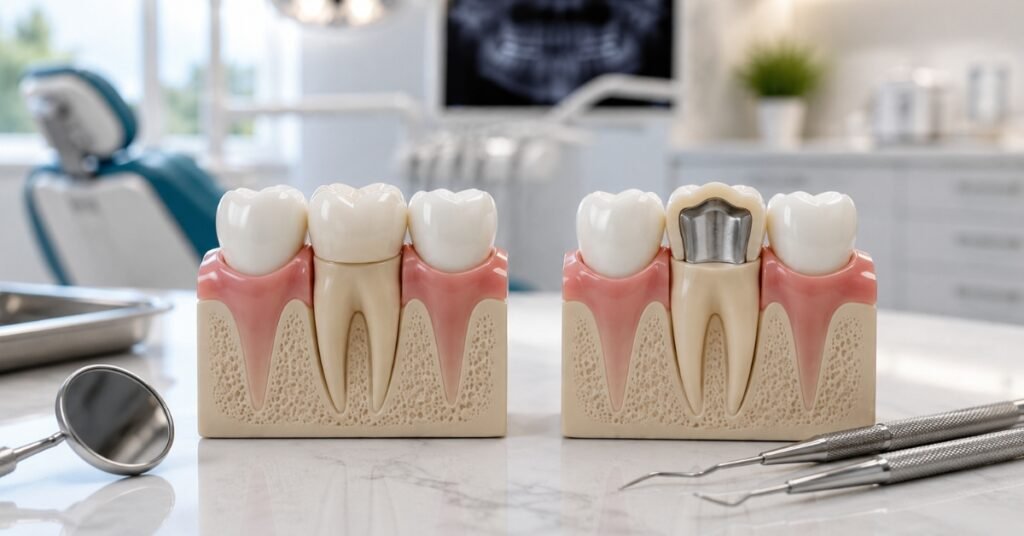
PFM crowns have been a trusted restoration for decades. They are bilayered — a metal substructure provides strength, and a porcelain outer layer gives a tooth-like appearance.
For years, PFMs were the industry standard. They still work well in many cases and remain a cost-effective, time-tested option.
However, PFM crowns do come with limitations that today’s patients should understand:
- The metal core can show as a dark line near the gums, especially if gums recede
- The porcelain layer can chip or fracture under heavy bite force
- Some patients experience sensitivity or reactions to metal alloys (nickel, cobalt, chromium)
Zirconia vs PFM Crowns: Head-to-Head Comparison
Here’s a clear, honest comparison of the two materials across the factors that matter most to patients.
|
Factor |
Zirconia Crown |
PFM Crown |
|
Material |
Solid metal-free zirconium dioxide |
Metal substructure + porcelain layer |
|
Strength |
Very high; resists chipping & fracture |
Strong core, but porcelain can chip |
|
Aesthetics |
Highly natural; no dark gum line |
Good, but may show metal margin over time |
|
Biocompatibility |
Excellent; metal-free |
Generally safe; rare metal allergies |
|
Tooth Reduction |
More conservative (less removal) |
Requires more tooth structure removed |
|
Best Suited For |
Molars, bruxism, front & back teeth |
Budget cases, certain bridge situations |
|
Longevity |
Often 10–15+ years with care |
Typically 10–15 years |
Strength: Which Crown Handles Chewing Better?
If durability is your top priority, zirconia is the clear winner. Studies show zirconia’s flexural strength is significantly higher than the porcelain used in PFM crowns — making it far more resistant to the daily forces of biting and grinding.
According to research published by the National Library of Medicine, zirconia’s high biocompatibility and mechanical strength have made it a preferred choice for modern restorations.
PFM crowns are reliable, but their porcelain layer remains a weak point — particularly for patients who clench or grind. For root canal–treated molars under heavy load, zirconia offers more peace of mind.
Aesthetics: Which Crown Looks More Natural?
For visible teeth in the “smile zone,” appearance carries serious weight.
Zirconia blends beautifully because it’s metal-free, eliminating the risk of a grey shadow at the gumline. High-translucency zirconia transmits light in a way that resembles natural enamel.
PFM crowns can look good initially, but over time — especially with slight gum recession — the metal margin may become visible, creating a noticeable dark line.
For front teeth or smile makeovers, zirconia (or in some cosmetic dental treatment cases, lithium disilicate/e.max) is usually the more natural-looking choice.
Biocompatibility and Comfort
Zirconia is hypoallergenic and metal-free, integrating gently with gum tissue. This makes it an excellent option for patients with metal sensitivities or those who prefer a fully metal-free restoration.
PFM crowns are generally safe, but a small number of patients do react to the metal alloys in the substructure. If you have a known metal allergy, this is worth discussing with your dentist.
Tooth Preservation
One often-overlooked advantage of zirconia is that it requires less tooth reduction. Because zirconia is strong even when made thin, more of your healthy natural tooth structure can be preserved.
PFM crowns typically require more aggressive reduction to make room for both the metal coping and the porcelain layer.
Cost: What Are You Really Paying For?
PFM crowns usually have a lower upfront cost, which makes them attractive for budget-conscious patients. Zirconia crowns generally cost more — but that price reflects their durability, metal-free composition, and natural appearance.
The key is to think in terms of value over time, not just the initial price. A crown that fails early often costs more in the long run.
For current, transparent pricing on crowns at both our R.S. Puram and Saibaba Colony branches, please refer to our website or speak with our team directly. We believe in clear cost discussions with no hidden surprises.
When Is a PFM Crown Still the Better Choice?
Despite zirconia’s advantages, PFM crowns still have their place. Honest dentistry means acknowledging that no single material wins every case.
PFM may be the better option when:
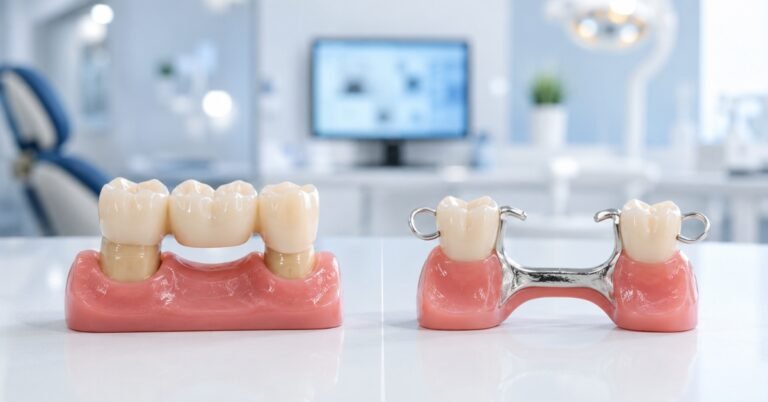
- There is limited vertical space for adequate zirconia bridge connectors
- A restoration must match existing PFM crowns nearby
- Budget is a genuine constraint and aesthetics are secondary
- Certain long-span bridge situations call for a metal substructure
This nuance is supported by guidance from major dental labs and clinical sources, including the American Dental Association, which emphasises individualised material selection based on each patient’s needs.
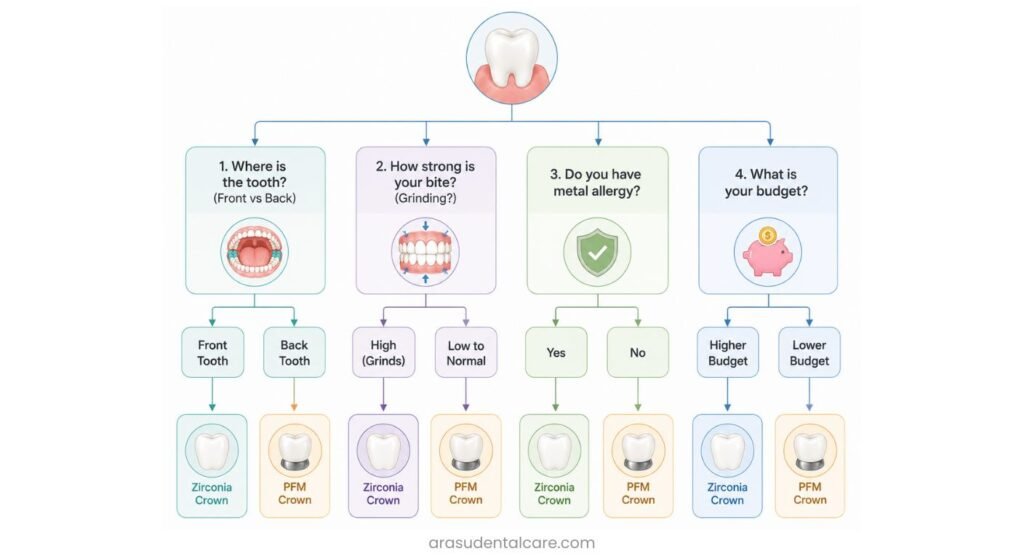
How Dentists Actually Choose the Right Crown Material
A responsible dentist never picks crown material based on price alone. At Arasu Dental Care, our prosthodontists and restorative specialists evaluate several factors together:
- Tooth location (front aesthetic zone vs back chewing zone)
- Amount of remaining natural tooth structure
- Bite force and grinding habits
- Aesthetic expectations
- Gum health and biocompatibility needs
- Long-term stability and budget
When these factors are respected, crown failures become rare — and patients leave with a restoration that looks and feels right for years.
Common Mistakes Patients Make
Many crown problems are avoidable. The most frequent mistakes include:
- Choosing a purely aesthetic crown for a high-stress molar
- Picking the cheapest option for a highly visible front tooth
- Ignoring a grinding or clenching habit
- Rushing the decision without understanding the trade-offs
A good rule of thumb: choose based on function first, aesthetics second, and cost third.
Frequently Asked Questions
1. Which is better, zirconia or PFM crowns?For most modern cases, zirconia offers superior strength, a more natural metal-free appearance, and better biocompatibility. However, PFM remains a reliable and cost-effective choice in specific situations like certain bridges or budget-sensitive cases.
2. Do zirconia crowns last longer than PFM crowns?Both can last 10–15 years or more with good care. Zirconia’s resistance to chipping often gives it an edge in long-term durability, especially for back teeth and patients who grind.
3. Are zirconia crowns better for front teeth?Yes, high-translucency or layered zirconia looks very natural and has no metal margin, making it excellent for visible front teeth. In some cosmetic cases, e.max may also be considered for maximum translucency.
4. Do PFM crowns cause gum problems?PFM crowns themselves don’t cause gum disease, but the metal margin can show as a dark line if gums recede over time. Some patients with metal sensitivities may also experience mild irritation.
5. Is a zirconia crown worth the extra cost?For most patients, yes — the added durability, natural look, and metal-free comfort often justify the price. Think of it as long-term value rather than just an upfront expense.
6. Will a crown cause pain or sensitivity?When fitted correctly under appropriate conditions, neither crown type should cause ongoing pain. Discomfort usually comes from an improper fit or bite, not the material itself — which is why precise fitting matters.
7. Can I switch from a PFM crown to zirconia later?Yes. If an old PFM crown shows a dark line or chips, it can be replaced with a zirconia crown. Your dentist will assess the remaining tooth structure first.
8. Are zirconia crowns safe for people with metal allergies?Absolutely. Zirconia is complet