How to Choose the Right Dental Crown
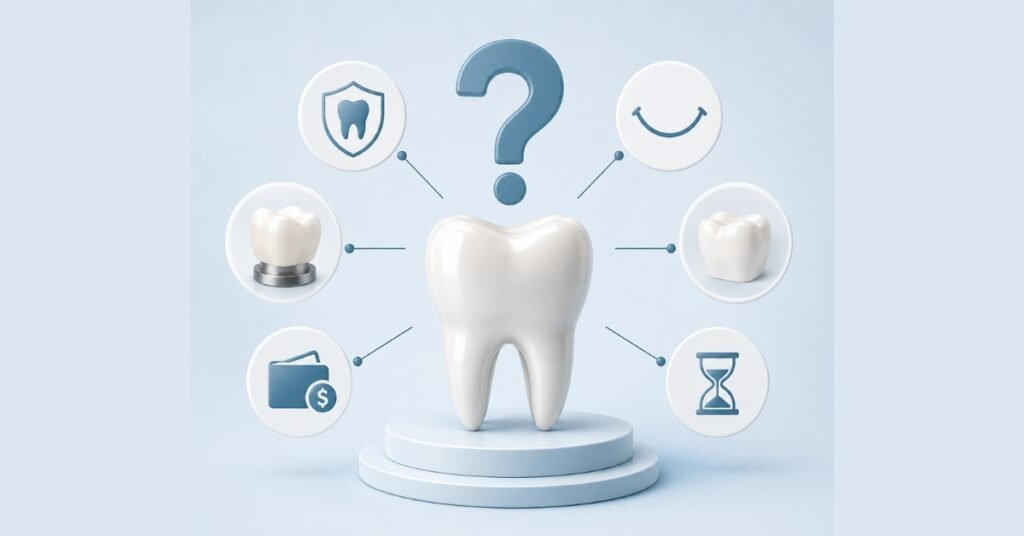
If you’ve been told you need a dental crown, you probably have one big question: which type is right for me? Learning how to choose a dental crown can feel confusing when there are so many materials, price points, and recommendations to weigh. The good news is that the decision becomes much simpler once you understand what each crown does, where it works best, and what matters most for your situation.
At Arasu Dental Care, we believe informed patients make confident decisions. This guide walks you through every option in plain language—so by the end, you’ll know exactly what questions to ask and what your next step should be.
What Is a Dental Crown and Why Might You Need One?
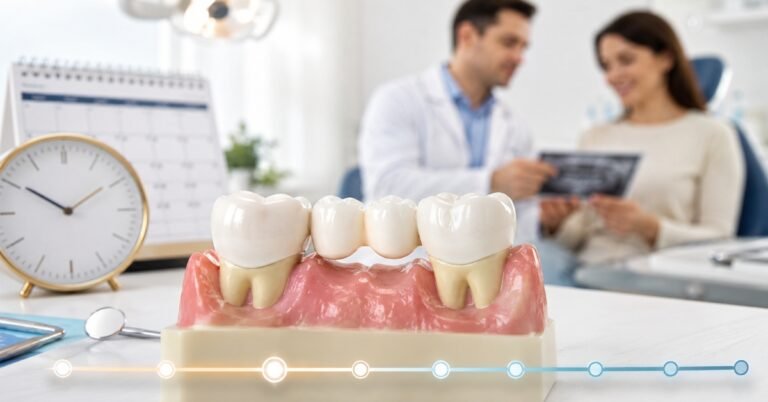
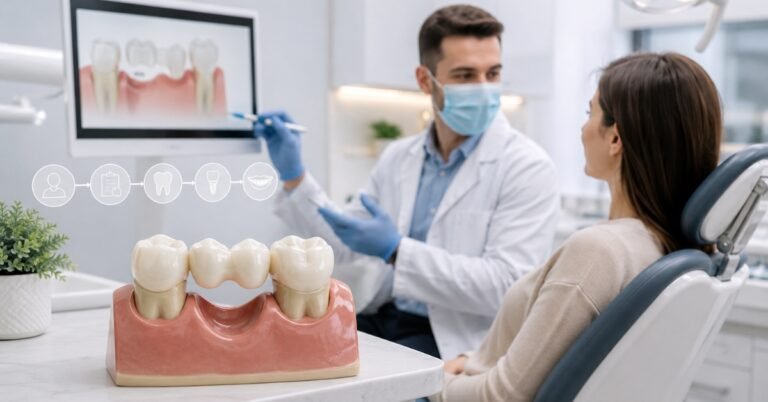
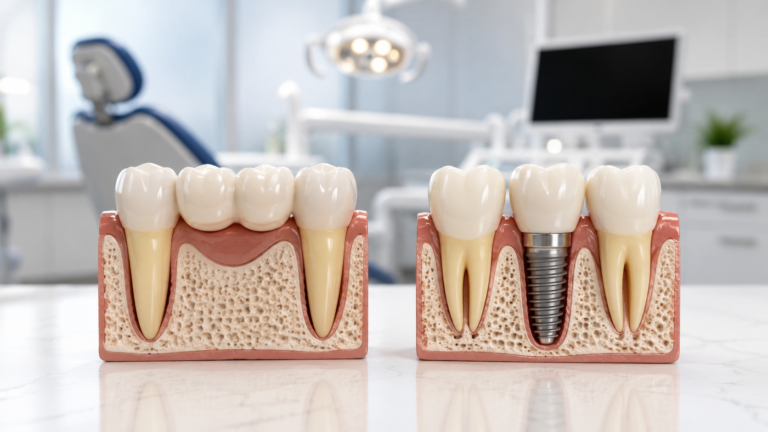
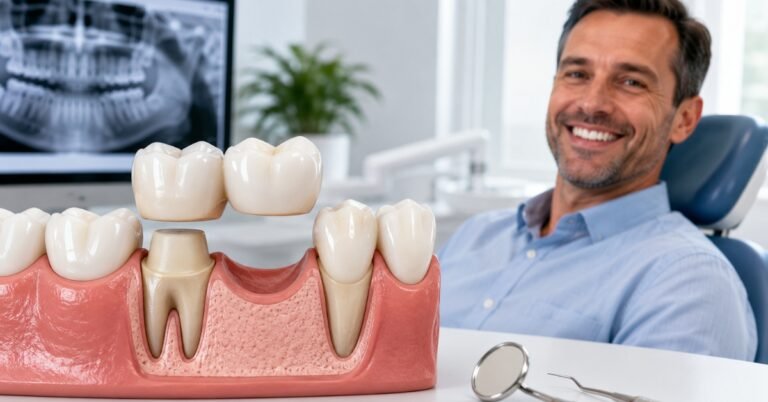
A dental crown is a custom-made, tooth-shaped cap that fits snugly over a damaged or weakened tooth. Think of it as a protective helmet for your tooth—it restores shape, strength, function, and appearance all at once.
To place a crown, your dentist gently reshapes the tooth and bonds the cap securely over it. According to the Cleveland Clinic, crowns can last anywhere from five to fifteen years (and often longer) with proper care.
You may need a dental crown to:
- Strengthen a tooth weakened by a large cavity or decay
- Protect and hold together a cracked or fractured tooth
- Restore a worn-down or broken tooth
- Cover and protect a tooth after root canal treatment
- Restore a dental implant
- Improve the appearance of a severely stained or misshapen tooth
In short, a crown isn’t only about repair—it’s about preserving your natural tooth for as long as possible.
Understanding the Different Types of Dental Crowns
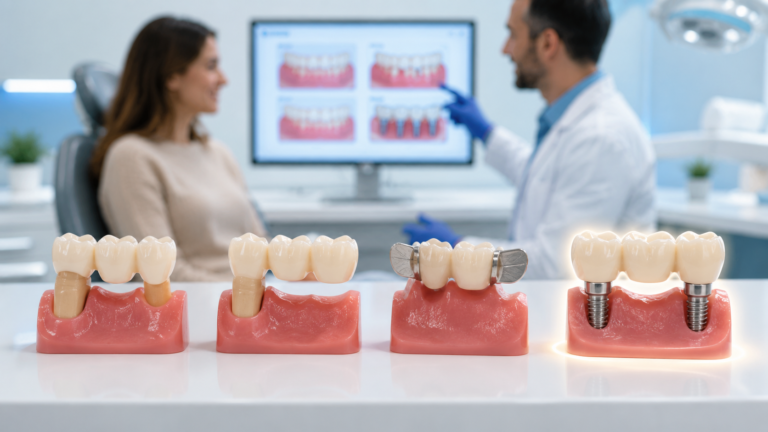
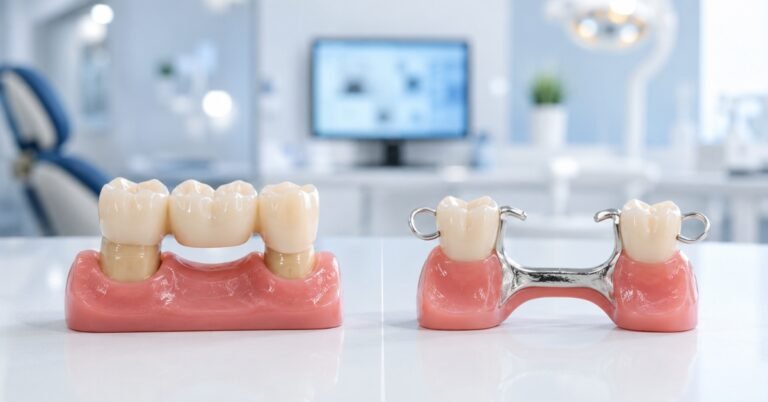
Choosing the right crown starts with understanding your options. Each material offers a different balance of strength, natural appearance, and cost. Here’s a clear breakdown.
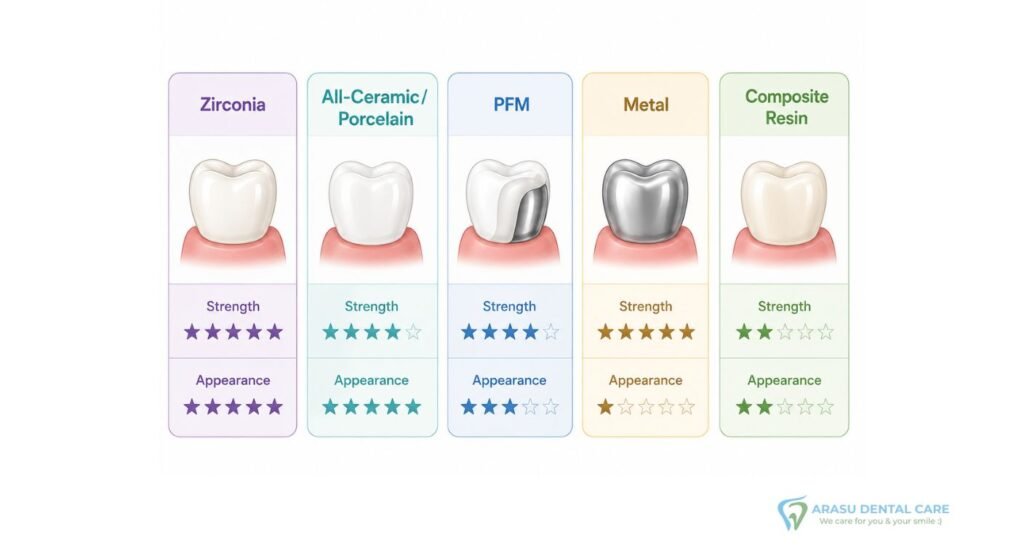
1. Zirconia Crowns
Zirconia crowns are among the strongest options available today. Made from a durable ceramic, they resist chipping and cracking exceptionally well, making them ideal for back teeth and patients who grind their teeth.
Newer translucent zirconia options also look natural enough for visible teeth—giving you strength and aesthetics together.
2. All-Ceramic / Porcelain Crowns
If a natural look is your top priority, all-ceramic crowns are hard to beat. They closely mimic the translucency of real tooth enamel, which is why they’re a favourite for front teeth.
They’re also metal-free, making them a great choice for patients with metal sensitivities. The trade-off is that they’re slightly less durable under heavy biting pressure.
3. Porcelain-Fused-to-Metal (PFM) Crowns
PFM crowns combine a metal core for strength with a porcelain coating for a tooth-like appearance. They’re a reliable, time-tested choice for both front and back teeth.
The main drawback is that over time a thin dark line may appear at the gum line as gums recede, and the porcelain layer can occasionally chip.
4. Metal Crowns (Gold and Alloys)
Metal crowns rarely chip or break and require the least removal of natural tooth structure. They’re extremely long-lasting and gentle on opposing teeth.
The obvious downside is the metallic colour, which is why they’re usually reserved for out-of-sight molars.
5. Composite Resin Crowns
Resin crowns are more affordable but wear down faster and are more prone to fracture. They’re often used as temporary crowns while your permanent restoration is being made.
Comparing Crown Strength, Durability, and Appearance
When deciding how to choose a dental crown, it helps to see all your options side by side. The table below summarises the key differences.
|
Crown Type |
Strength |
Natural Look |
Average Lifespan |
Best For |
|
Zirconia |
Excellent |
Good–Very Good |
15–20+ years |
Back teeth, grinders, durability |
|
All-Ceramic / Porcelain |
Moderate |
Excellent |
10–15 years |
Front teeth, aesthetics |
|
PFM |
Very Good |
Good |
10–15 years |
Front & back teeth, balance |
|
Metal (Gold/Alloy) |
Excellent |
Poor |
20+ years |
Hidden molars, longevity |
|
Composite Resin |
Low |
Moderate |
3–7 years |
Temporary use, budget |
These ranges are general guidance. Your individual results depend on oral habits, bite, and care.
How to Choose the Right Crown for You: Key Factors
There’s no single “best” crown—only the best crown for your specific tooth and needs. Here are the factors that truly matter.
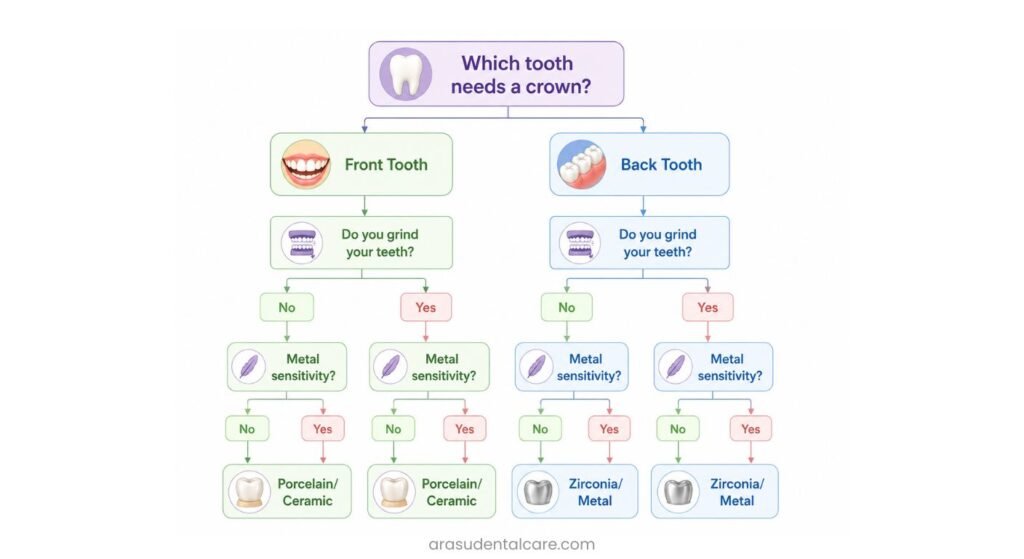
Where Is the Tooth Located?
Front teeth are highly visible, so aesthetics usually come first. All-ceramic, porcelain, or PFM crowns are popular choices here.
Back teeth (molars) handle the heaviest chewing forces, so strength matters most. Zirconia and metal crowns are excellent options for these positions.
Do You Grind or Clench Your Teeth?
If you have bruxism (teeth grinding), durability becomes a priority. Zirconia or metal crowns withstand pressure better and are less likely to crack. Your dentist may also recommend a custom night guard to protect your investment.
Do You Have Metal Sensitivities?
If you’ve reacted to metals before, all-ceramic or zirconia crowns are metal-free and biocompatible—a safer, more comfortable option.
What’s Your Budget?
Crown costs vary by material and complexity. While metal and zirconia tend to last longer, a more affordable option may suit short-term or less visible needs. A high-quality crown is often more cost-effective long term because it reduces the chance of repairs.
What Are Your Aesthetic Goals?
If a seamless, natural smile is important to you—especially for front teeth—porcelain and ceramic crowns deliver the most lifelike results.
What to Expect During the Dental Crown Procedure
Knowing what happens helps reduce anxiety. The process is comfortable and typically completed over two visits.
How the Crown Procedure Works — Step by Step
- Examination & planning — Your dentist evaluates the tooth, gums, and bite to confirm a crown is the right solution and discusses material options with you.
- Tooth preparation — A small amount of enamel is gently reshaped to make room for the crown. This is performed under appropriate anesthesia for your comfort.
- Impressions — Digital or physical impressions are taken so your custom crown fits precisely.
- Temporary crown — A temporary crown protects your tooth while the permanent one is crafted.
- Final fitting — At your second visit, your dentist checks the fit, shape, and colour, then bonds the crown securely in place.
Many clinics also offer same-day CAD/CAM crowns, designed and milled in a single visit. Ask your dentist whether you’re a suitable candidate.
How to Care for Your Dental Crown
A well-cared-for crown can last many years. Good habits protect both the crown and the natural tooth underneath it.
- Brush twice daily with a fluoride toothpaste and soft-bristled brush
- Floss carefully around the crown to prevent plaque at the gum line
- Avoid biting very hard items like ice, pens, or hard nuts
- Wear a night guard if you grind your teeth
- Limit staining foods and drinks for porcelain crowns
- Keep up with regular dental check-ups and cleanings
The American Dental Association recommends routine visits to catch any issues early and keep your restoration in good condition.
Frequently Asked Questions (FAQs)
Which type of dental crown is best?
There’s no universal “best” crown. Zirconia and metal crowns are excellent for back teeth needing strength, while porcelain and all-ceramic crowns are ideal for front teeth where appearance matters most. The right choice depends on tooth location, bite, budget, and personal preference.
How long do dental crowns last?
With proper care, most crowns last between 10 and 15 years. Metal and zirconia crowns can last 20 years or more, while resin crowns typically last 3 to 7 years.
Is getting a dental crown painful?
The procedure is performed under appropriate anesthesia, so it’s comfortable. Some mild sensitivity to hot or cold afterward is normal and usually settles within a few days.
What is the strongest type of dental crown?
Metal (gold alloy) and zirconia crowns are the strongest and most fracture-resistant options, making them ideal for molars and patients who grind their teeth.
Can a dental crown look completely natural?
Yes. All-ceramic and modern zirconia crowns closely match natural teeth in colour and translucency, making them virtually indistinguishable from your real teeth.
Are dental crowns safe for people with metal allergies?
Yes. Metal-free options like all-ceramic and zirconia crowns are biocompatible and safe for patients with metal sensitivities.
How many visits does it take to get a crown?
Most crowns require two visits—one to prepare the tooth and take impressions, and another to fit the permanent crown. Same-day crowns are sometimes possible with CAD/CAM technology.
What’s the difference between a crown and a cap?
There’s no difference. “Cap” is simply a common, everyday name for a dental crown.
Can a damaged crown be replaced?
Yes. If a crown cracks, loosens, or wears down, your dentist can remove it and place a new one. Contact your dentist if you notice looseness, sharp edges, or discomfort.
Do crowns require special care?
Crowns need the same daily care as natural teeth—regular brushing, flossing, and check-ups. Decay can still develop at the crown’s edge, so good hygiene is essential.
Making Your Decision With Confidence
Choosing the right dental crown comes down to understanding three things: where the tooth is located, how much chewing force it handles, and what matters most to you—strength, appearance, or budget. Once you weigh these factors with a trusted dentist, the decision becomes clear and stress-free.
A crown isn’t just a quick fix—it’s a long-term investment in your oral health and your smile. The most important step is sitting down with an experienced dental specialists team who will explain your options honestly and help you choose what truly suits your needs.
Ready to Restore Your Smile?
At Arasu Dental Care, our multispecialty team—including experienced