Is a Dental Crown Necessary After Root Canal Treatment?
You’ve just completed a root canal, the pain is finally gone, and then your dentist mentions one more step — a dental crown after root canal treatment. If you’re wondering whether this is truly necessary or simply an added expense, you’re asking exactly the right question.
The honest answer is: it depends on your specific tooth. In many cases a crown is essential to protect your tooth long-term, but in a few situations it may not be required immediately.
At Arasu Dental Care, we believe in helping you understand why before you decide. This guide explains everything you need to know about crowns after root canal therapy — backed by clinical evidence — so you can make a confident, informed choice.
What Happens to Your Tooth During a Root Canal?
To understand why a crown is often recommended, it helps to know what root canal treatment actually does to your tooth.
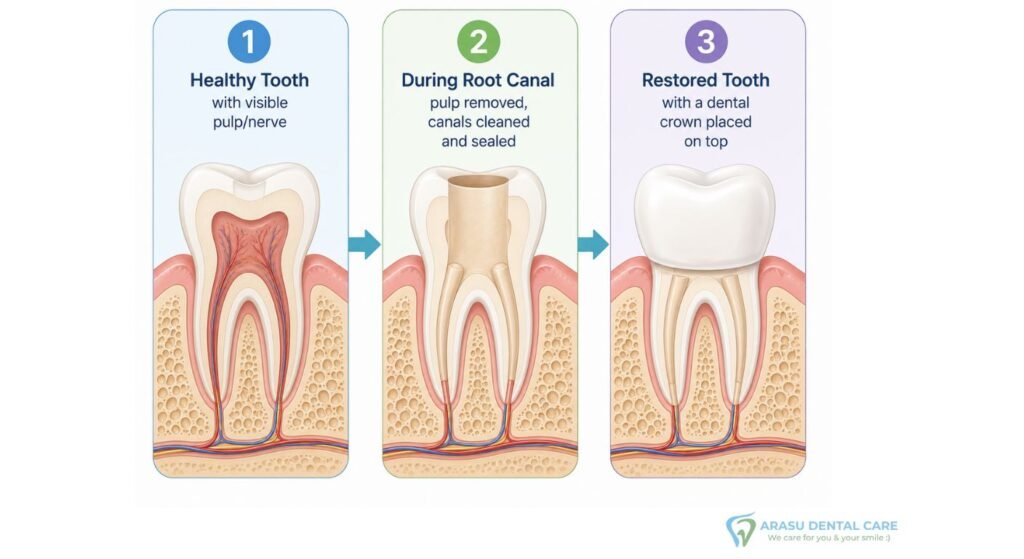
During the procedure, your dentist removes the infected or inflamed pulp — the soft tissue containing nerves and blood vessels at the center of your tooth. The empty canals are then cleaned, shaped, disinfected, and sealed.
This treatment successfully eliminates infection and saves a tooth that might otherwise need extraction. However, it leaves the tooth structurally weaker.
To access the pulp, the dentist must drill an opening into the tooth. Combined with any existing decay or fractures, this removal of natural structure significantly reduces the tooth’s ability to withstand chewing forces.
A root-canal-treated tooth is essentially a non-living tooth. Without its internal blood supply, it can become more brittle and prone to fracture over time — which is precisely where a crown comes in.
Why Is a Dental Crown Recommended After a Root Canal?
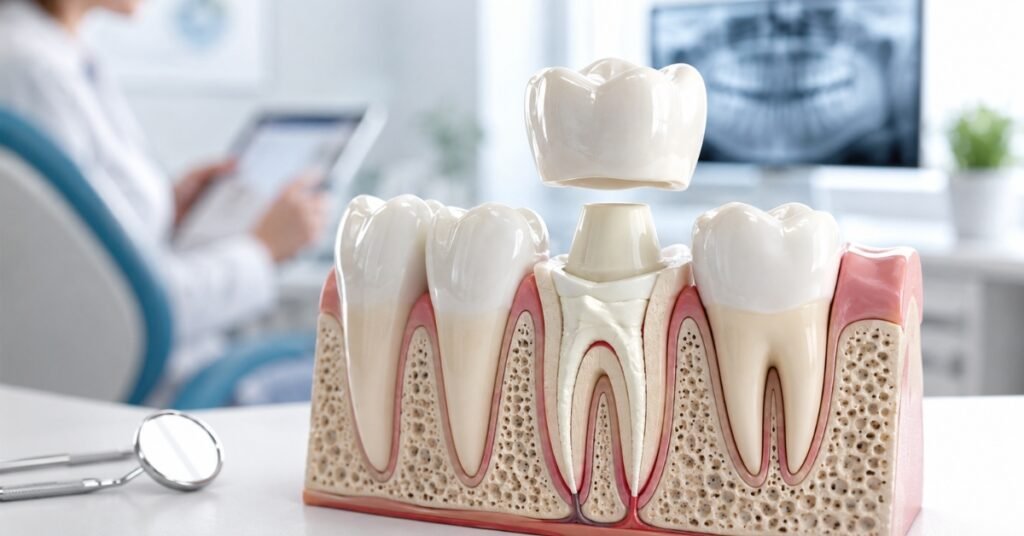
A crown is a tooth-shaped cap that fits over your entire treated tooth, like a protective helmet. Its primary purpose is protection and reinforcement.
Here are the key reasons dentists recommend a crown after root canal treatment in coimbatore:
1. Strengthens a weakened toothA crown distributes biting forces evenly across the whole tooth instead of concentrating stress on fragile areas. This dramatically reduces the risk of cracking.
2. Prevents fracture and tooth lossResearch published in the Journal of Prosthetic Dentistry found that root-canal-treated teeth without crowns were lost at six times the rate of those protected with crowns. (Aquilino & Caplan, 2002)
3. Seals against reinfectionA well-fitted crown adds an extra barrier against bacteria, helping prevent recontamination of the sealed canals.
4. Restores normal functionA crown lets you chew comfortably and confidently, just as you did before the infection.
5. Improves appearanceRoot-treated teeth can darken or grey over time. A crown restores a natural, healthy shade that blends with your surrounding teeth.
When Is a Crown Truly Necessary?
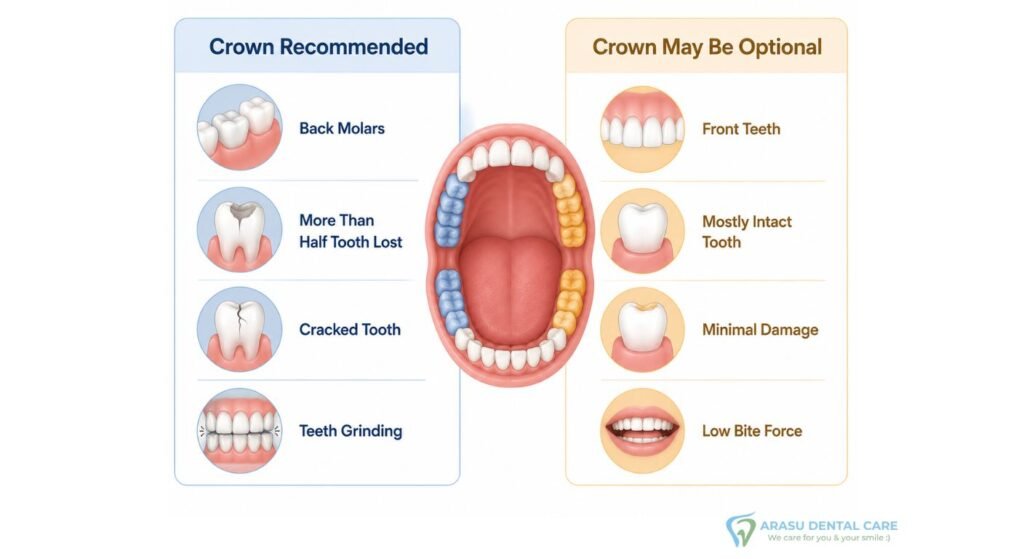
This is the part most patients want clear answers on. The need for a crown depends mainly on where the tooth is located and how much healthy structure remains.
Back Teeth (Molars & Premolars) — Almost Always Need a Crown
Your back teeth do the heavy lifting of grinding and chewing. They absorb enormous bite forces every day.
A root-treated molar without a crown is at high risk of vertical fracture — a split along the tooth’s length that is usually irreparable and leads to extraction.
For these teeth, a crown is strongly recommended in nearly every case.
Front Teeth (Incisors & Canines) — Sometimes Optional
Your front teeth experience much less chewing pressure. If a front tooth still has plenty of healthy structure and only a small access opening, your dentist may restore it with a strong filling instead.
A landmark review in the Journal of Conservative Dentistry confirmed that crown coverage significantly improves survival rates for posterior teeth, while intact front teeth may do well with simpler restorations.
Quick Reference: Do You Need a Crown?
|
Factor |
Crown Strongly Needed |
Crown May Be Optional |
|
Tooth location |
Molars & premolars (back) |
Incisors & canines (front) |
|
Remaining tooth structure |
More than half lost |
Mostly intact |
|
Existing cracks |
Present |
None |
|
Chewing load |
High (grinding teeth) |
Low |
|
Previous restorations |
Multiple fillings |
Minimal |
|
Teeth grinding (bruxism) |
Yes |
No |
When more than half the natural tooth has been lost, a crown becomes essential to hold the remaining structure together.
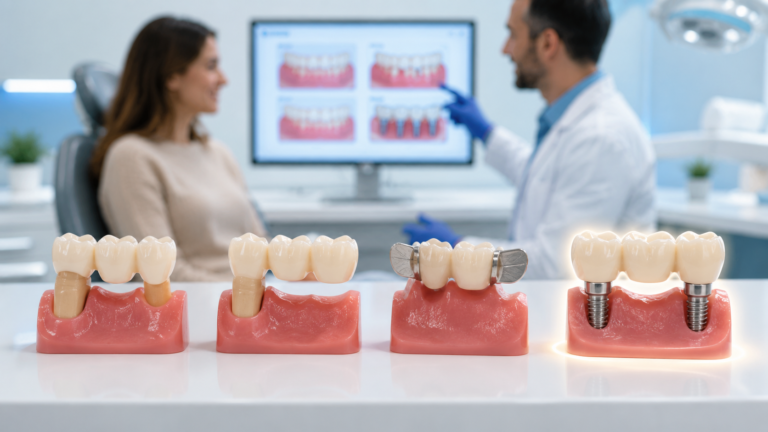
Types of Dental Crowns Used After Root Canal
Choosing the right crown material depends on the tooth’s position, your bite, aesthetics, and personal preference. Here are the common options:
|
Crown Type |
Best For |
Key Advantage |
Consideration |
|
Zirconia |
Back & front teeth |
Extremely strong, natural look, metal-free |
Highly durable |
|
Porcelain / Ceramic |
Front teeth |
Most natural appearance |
Slightly less strong than zirconia |
|
Porcelain-Fused-to-Metal (PFM) |
Back & front teeth |
Good balance of strength and looks |
Possible grey line at gum over time |
|
Metal / Gold |
Out-of-sight molars |
Long-lasting, gentle on opposing teeth |
Metallic colour |
For most root-treated back teeth, zirconia crowns offer an excellent combination of strength and aesthetics. Your dentist will recommend the option best suited to your needs.
How Is a Crown Placed After a Root Canal? (Step-by-Step)
If your dentist recommends a crown, here is what the process comfortably involves:
Step 1 — Tooth AssessmentYour dentist evaluates the treated tooth to confirm it has healed and check how much structure remains.
Step 2 — Build-Up (If Needed)If a large portion of tooth is missing, a post-and-core build-up may be placed to create a strong foundation for the crown.
Step 3 — Tooth PreparationThe tooth is gently reshaped under appropriate anaesthesia to make room for the crown.
Step 4 — ImpressionsDigital scans or physical impressions are taken and sent to the dental lab to craft your custom crown.
Step 5 — Temporary CrownA temporary crown protects your tooth while the permanent one is made (usually one to two weeks).
Step 6 — Permanent Crown FittingAt your next visit, the temporary is removed, and the permanent crown is checked for fit, shade, and bite, then bonded securely in place.
The procedure is performed comfortably, and since the nerve has already been removed, most patients feel little to no discomfort.
How Soon Should You Get a Crown After Root Canal?
Timing matters. Most dentists recommend placing the permanent crown within a few weeks to a few months of completing the root canal.
Leaving a treated tooth exposed for too long increases the risk of fracture and reinfection. In some cases, the tooth may need a little time to settle, but you should not delay the final restoration unnecessarily.
A simple way to remember it: the root canal protects the inside of the tooth, while the crown protects the outside.
How Long Will a Crown Last?
With proper care, a well-made crown on a root-treated tooth can last 10 to 15 years or longer.
Longevity depends on:
- Good daily oral hygiene
- Avoiding hard and sticky foods
- Wearing a night guard if you grind your teeth
- Regular dental check-ups
A root-treated tooth, properly sealed and crowned, can remain stable and functional for many years.
Caring for Your Crowned Tooth
Your crowned tooth still needs everyday care to stay healthy:
- Brush twice daily with fluoride toothpaste and a soft brush
- Floss gently around the crown’s margins each day
- Avoid chewing ice, hard nuts, and extremely sticky foods
- Use an antibacterial mouthwash to reduce plaque
- Attend routine dental cleanings and exams
If you ever notice sensitivity, swelling, a loose crown, or discomfort, contact your dentist promptly. Early attention gives the best outcome.
Frequently Asked Questions
1. Is a crown always necessary after a root canal?No. Back teeth (molars and premolars) almost always need a crown due to heavy chewing forces. Front teeth with minimal damage may sometimes be restored with a filling. Your dentist will assess your specific case.
2. What happens if I don’t get a crown after a root canal?The treated tooth becomes more brittle and is at higher risk of cracking or fracturing — particularly back teeth. A fracture is often irreparable and may lead to extraction, undoing the benefit of saving the tooth.
3. Is getting a crown after a root canal painful?No. Since the nerve has been removed during the root canal, the tooth has no sensation. The procedure is performed comfortably, and most patients experience minimal discomfort afterward.
4. How long can I wait before getting a crown?It’s best not to delay. Most dentists recommend placing the permanent crown within a few weeks to a few months. Waiting too long increases the risk of fracture or reinfection.
5. Which crown is best after a root canal?For back teeth, zirconia crowns offer excellent strength and a natural appearance. Porcelain crowns are ideal for front teeth where aesthetics matter most. Your dentist will recommend the best option for your tooth.
6. Can a root-canal-treated tooth get infected again even with a crown?Yes, though it’s uncommon. Bacteria can occasionally re-enter the sealed canals, or the surrounding gum can develop disease. Regular check-ups help catch any issues early.
7. Do front teeth always need crowns after a root canal?Not always. If a front tooth retains good structure and isn’t heavily damaged, a strong filling may be sufficient. However, severely darkened or weakened front teeth may benefit from a crown.
8. Is a “cap” the same as a crown?