Laser Dentistry Explained: How It Works and Benefits
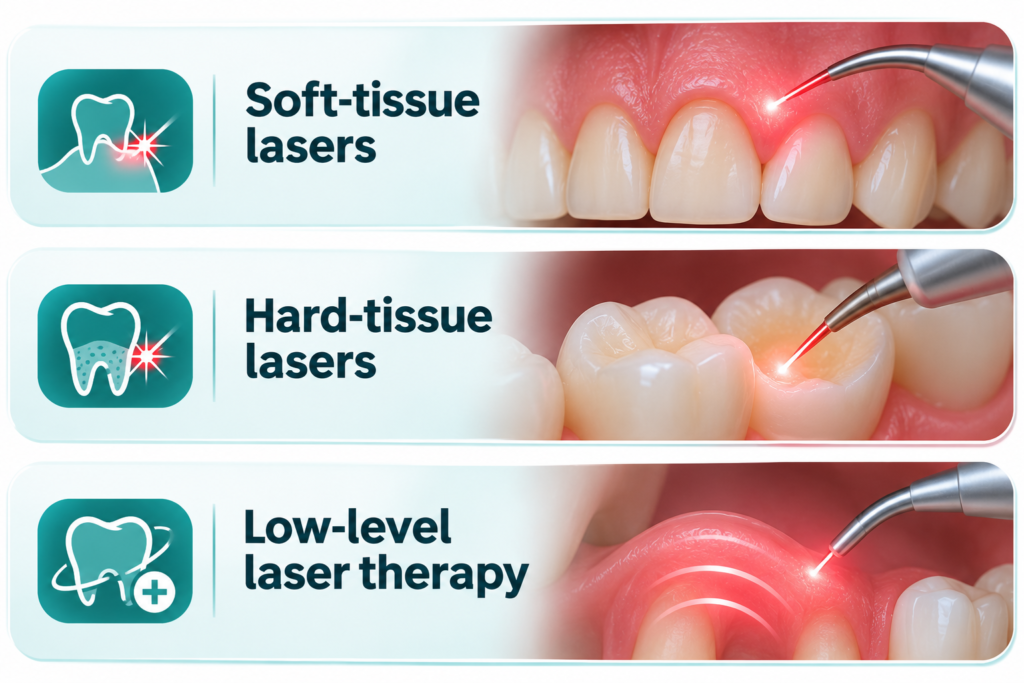
Laser dentistry is the use of a dental laser, a tool that gives out a thin, focused beam of light, to treat the gums and teeth. The light turns into heat at one precise spot, so the dentist can remove diseased tissue, reshape gums or kill bacteria, often with less bleeding than a scalpel. If you have been offered laser treatment, you may be wondering whether it is safer or more comfortable than standard care. This guide explains how a dental laser works, which treatments use it, where its limits lie and what happens at the appointment.
What does a dental laser actually do?
A dental laser turns light into heat at a very precise spot. Depending on the wavelength and settings, that heat can cut or vaporise tissue, seal small blood vessels or kill bacteria. Cleveland Clinic notes that dentists have used lasers since the US Food and Drug Administration approved them for dental use in the 1990s.
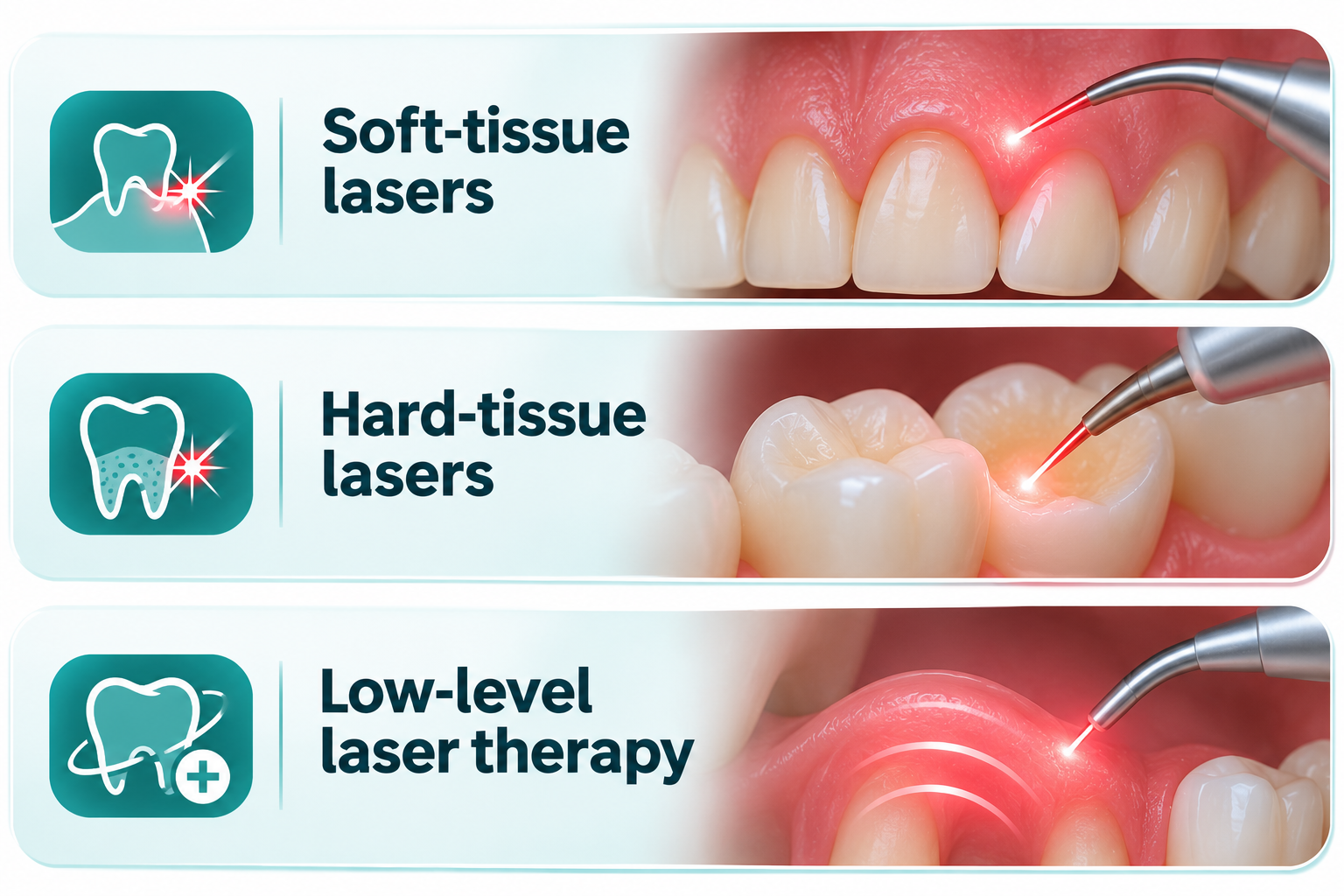
The wavelength decides which tissue the laser acts on, so dentists choose the device to match the job.
| Laser group | Common examples | What it is mainly used on |
|---|---|---|
| Soft-tissue lasers | Diode, CO2 | Gums and other soft tissue |
| Hard-tissue lasers | Erbium lasers | Teeth and bone, because water and tooth mineral absorb their light |
| Low-level laser therapy | Low-power light devices | Supporting healing and easing inflammation, without cutting |
In short, a laser is a set of tools, not a single treatment.
Where are lasers used in dental care?
Lasers are used most often on soft tissue. Common uses include:
- Cleaning infected gum pockets in gum disease, alongside deep cleaning
- Reshaping gum tissue for a more even gumline
- Releasing a tight tongue-tie or lip-tie
- Reducing sensitivity on exposed tooth roots
- Preparing small cavities and roughening enamel before bonding
- Disinfecting the canals during some root canal treatments
For gum disease, laser therapy is usually one step within a wider plan. At our clinic, laser gum treatment in Coimbatore starts with scaling and root planing, which removes hardened deposits from the roots, before the laser cleans each pocket.
Lasers also appear in cosmetic work. Reshaping an uneven gumline is covered in our guide to laser gum contouring, which explains who it suits.
Some in-office whitening systems use light to activate the bleaching gel. If brighter teeth are your goal, our page on teeth whitening in Coimbatore explains the options.
The right use depends on the problem being treated, not on the device.
What can lasers do well, and what are their limits?
Lasers can remove diseased tissue precisely while sparing healthy tissue nearby. On gums, they often cause less bleeding, and many people have fewer stitches and less swelling than after cutting with a scalpel. Some patients also find the quieter equipment easier than the sound of a drill.
The evidence is more mixed than many advertisements suggest. A 2023 systematic review in Photonics reported that lasers can cause small cracks in teeth during restorative work and heat damage to the tooth’s inner pulp if cooling fails. For gum disease, a meta-analysis of 16 trials with 525 patients found that adding a laser to deep cleaning improved most short-term measures. However, a 2025 review found no significant difference at six months or later.
Root canal care shows the same pattern. The American Association of Endodontists’ position statement says laser shaping of the canals has not been proven more effective than standard mechanical cleaning. Our guide to the root canal treatment procedure explains the standard steps.
Lasers may not suit everyone. They cannot be used on teeth that already have fillings in place, according to WebMD’s medically reviewed guide, and many routine procedures still need conventional tools. For children, the American Academy of Pediatric Dentistry treats lasers as one option among several. Parents comparing treatments for a decayed baby tooth may find our explainer on what is a pulpotomy useful.
A laser is a helpful option in suitable cases, not an upgrade for every treatment.
What happens during a laser appointment?
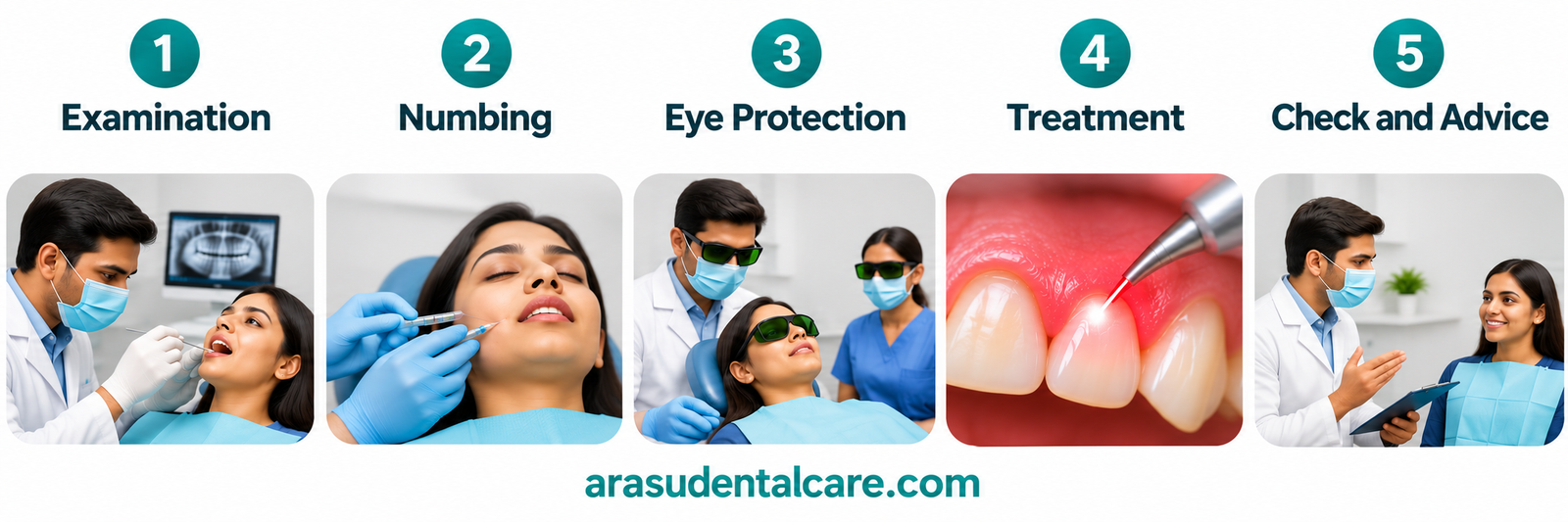
A laser visit follows a familiar clinical routine, with a few safety steps added.
- Examination. Your dentist checks the area and may take X-rays to confirm the plan.
- Numbing. Local anaesthesia is used for most procedures to keep you comfortable.
- Eye protection. You and the team wear glasses matched to the laser’s wavelength.
- Treatment. The dentist guides the laser tip over the area in short, controlled passes.
- Check and advice. The area is reviewed, and you receive aftercare instructions before you leave.
The American Academy of Pediatric Dentistry policy on lasers recommends wavelength-specific protective eyewear and additional training for anyone using lasers. If you feel nervous, ask your dentist to explain each step before starting.
Knowing the sequence in advance makes the visit feel far more predictable.
How does healing go, and when should you call a dentist?
Healing after laser treatment is often quicker than after a scalpel, but it still needs care. Mild soreness or tenderness for a few days is common, and your dentist may suggest soft foods and gentle brushing near the area. Gum treatment is not a one-time fix, and regular maintenance cleanings help the results last.
Seek in-person care straight away if you notice swelling of the face or neck, fever with dental pain, trouble breathing or swallowing, or bleeding that will not stop. Call your nearest Arasu Dental Care branch if any of these appear. If you have diabetes, a heart condition or take blood thinners, tell your dentist and doctor before treatment.
Most people heal well when they follow their aftercare and keep their follow-up visits.
How Arasu Dental Care uses lasers
At Arasu Dental Care, we use a soft-tissue laser mainly for gum treatment, alongside scaling and root planing. We first check whether a laser is the right tool at all. Earliest-stage gum inflammation usually responds to a professional cleaning, while very deep pockets with bone loss may need gum surgery instead.
Nervous first-time patients are welcome to ask us to talk through every step before any treatment begins. We give a written quote after the examination, so you know what to expect before anything starts.
Frequently asked questions
Is laser dentistry safe?
When a trained dentist uses the right laser with protective eyewear, the risks are low. As with any heat-based tool, settings and technique matter.
Will I still need an injection?
Often, yes. Many laser procedures still use local anaesthesia, although some small procedures may need less.
Can lasers treat every cavity?
No. Lasers suit some small cavities, but teeth with existing fillings and many larger cavities still need conventional tools.
Is laser treatment suitable for children?
It can be for selected procedures, such as tongue-tie release. Your child’s dentist will decide based on the procedure and your child’s comfort.
Why do I need to wear special glasses?
Laser light can harm the eyes. Glasses matched to the laser’s wavelength protect you and the dental team.
Does laser treatment cost more?
The cost depends on the procedure, the number of visits and how complex your case is. We give a written quote after examining you.
Will my gums stay healthy after laser gum therapy?
Results depend on daily cleaning and regular maintenance visits. Smoking can reduce how well the gums respond.
Is laser teeth whitening different from other whitening?
The light speeds up the bleaching gel’s action during an in-office session. Results vary with the type of staining on your teeth.
Is a laser right for your treatment?
Lasers give dentists a precise, often gentler option for gum care and selected tooth procedures, but they do not replace every conventional tool. The deciding factor is your diagnosis, not the technology.
This article is general information. A dentist needs to examine you to advise on your own case. If you would like to know whether laser treatment suits you, book an examination at our RS Puram or Saibaba Colony branch.